
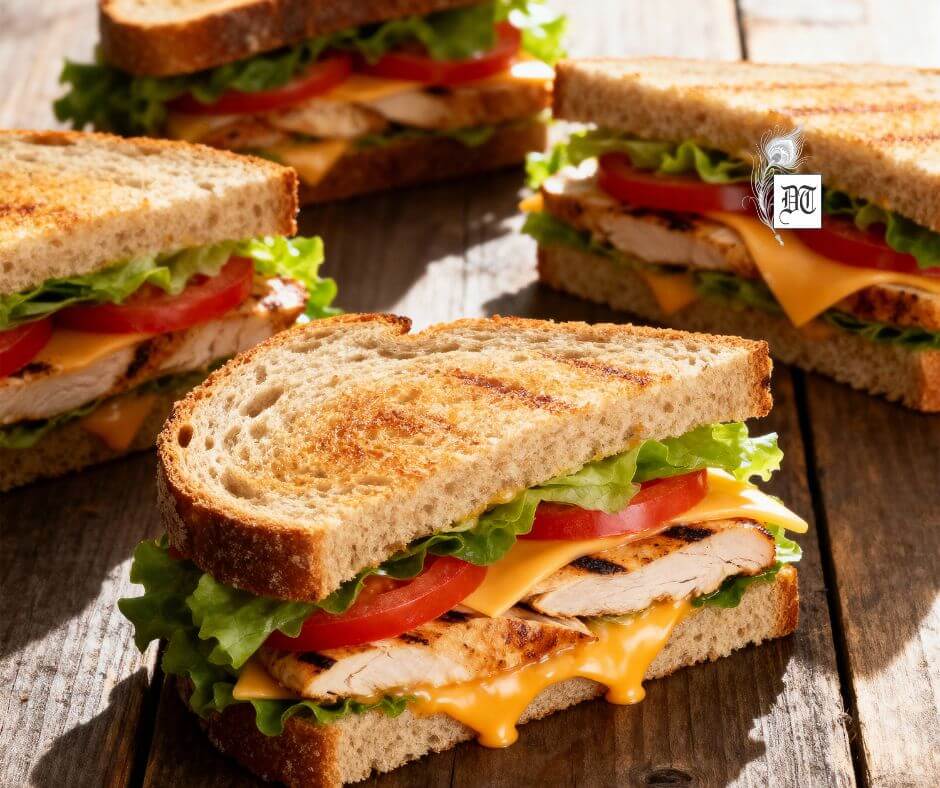

Discover the sandwich’s thieving “passé partout” versatility, born from a gambler’s genius, as Ruchira reveals on DifferentTruths.com.
AI Summary:
· Sandwiches trace back to Lord Sandwich’s 18th-century gambling hacks and ancient Hillel’s wraps.
· Evolved from trenchers and Dutch “belegde broodje” to global icons like Club and Subway subs.
· Homemade delights thrive with diverse fillings, spreads, and tools—ultimate comfort food!
I’ve always viewed the sandwich as a “passé partout” (which originally meant a master key often used by thieves), implying it’s a versatile food that can fit in with nearly everything, almost anywhere.
How many of us are aware that we owe the existence of this ubiquitous yet timeless dish to a gambling enthusiast? The sandwich is named after Lord John Montagu, the 4th Earl of Sandwich, an English noble from the eighteenth century. According to popular belief, Lord Sandwich often asked his valet to bring him roast beef served between two slices of toasted bread during long gaming sessions (cribbage and other card games) at public gambling houses. He preferred this convenient meal because it allowed him to continue gambling without needing a fork and knife and helped keep his hands off the cards.
Despite its association with the British lord, the concept of the sandwich predates him by centuries. In the first century BC, the Jewish sage Hillel the Elder is said to have wrapped meat from the Passover lamb with bitter herbs in matzah, a flat, soft unleavened bread. This practice is rather similar to the modern wraps that are widely popular today.
Throughout Western Asia and North Africa, flatbreads of various types have long been utilised to scoop or wrap small amounts of food for convenience in eating.
During the Middle Ages in Europe, thick slabs of coarse, stale bread, known as “trenchers”, doubled up as plates. After a meal, the food-soaked trenchers were either given to dogs, offered to beggars or consumed by diners without sufficient resources. The immediate culinary precursor to the English sandwich can be traced back to the 17th-century Netherlands, where taverns featured beef hanging from the rafters. They would cut it into thin slices and serve it with bread and butter, which illustrates the concept of the Dutch “belegde broodje”, an open-faced sandwich.
Most of us are familiar with the club sandwich, also known as a clubhouse sandwich. It is a three-layered sandwich comprising three slices of bread (traditionally toasted), sliced poultry, fried bacon, lettuce, tomato, and mayonnaise. It is often cut diagonally into quarters or halves and held together with the help of toothpicks.
Talking of sandwiches, the ‘Subway’ brand is hugely popular on a global scale. Did you know that the name “Subway” comes from the word “submarine”, an underwater vessel? In fact, the first Subway location in Bridgeport, Connecticut (US), was named “Pete’s Submarines” because the shape of its sandwiches resembled that of a submarine. Even today, the bread used for these sandwiches is long and rounded, and when it’s filled with various ingredients, it resembles a submarine.
The method of sandwich making varies widely. For instance, the commonplace ‘toast sandwich’ is made in a square metal contraption fitted with long handles to hold it over the gas flame. Its electrical avatar has a square shape and a hard plastic body. In either process, each sandwich invariably splits into two neat, smooth triangles.
Then you have the more sophisticated grill sandwich maker. The ribbed appearance of the grilled slices is a visual delight. Moreover, you can make soft, medium, or hard ones depending on how long you allow each sandwich to stay within the machine.
So much for the commercial aspects; making sandwiches at home is as easy as ABC. Provided you have enough quantity of bread at home, you are spoilt for choice regarding the stuffing or filling (call it what you like): fresh tomato, lettuce, shredded cabbage, cottage cheese, yellow cheese, egg (boiled, scrambled or omelette), leftover potato/vegetable patties/cutlets/tikkis, not forgetting your residue curry from the night before’s dinner.
However, a ‘spread’ is a sine qua non for a sandwich to be successful and tasty. Pick and choose from butter, mayonnaise, curd, yoghurt and, yes, even olive oil in some cases!
Although hordes of consumers are wont to use a sandwich as a snack or even lunch, I personally feel it is more of a comfort food than a snack. After a hard day’s work, biscuits, cookies, and chips won’t satisfy your cravings. On the contrary, a few bites into a thick, sumptuous sandwich will suppress your hunger pangs. So, what are you waiting for? Reach out for a sandwich right away!
Picture design by Anumita Roy

Born in Guwahati and raised across Delhi and Punjab, Ruchira Adhikari Ghosh is an alumna of Sacred Heart Convent, Ludhiana. She holds a master’s degree in English literature from Punjab University, Chandigarh, and a postgraduate diploma in Journalism. With nearly 25 years of experience in print, web, and television media, she has carved a niche as a feature writer. Her writing focuses on women’s issues, food, travel, and literature, reflecting both versatility and depth.



 By
By
 By
By

 By
By
Thank you for a delicious, tummy-rumbling, mouth-watering read!