
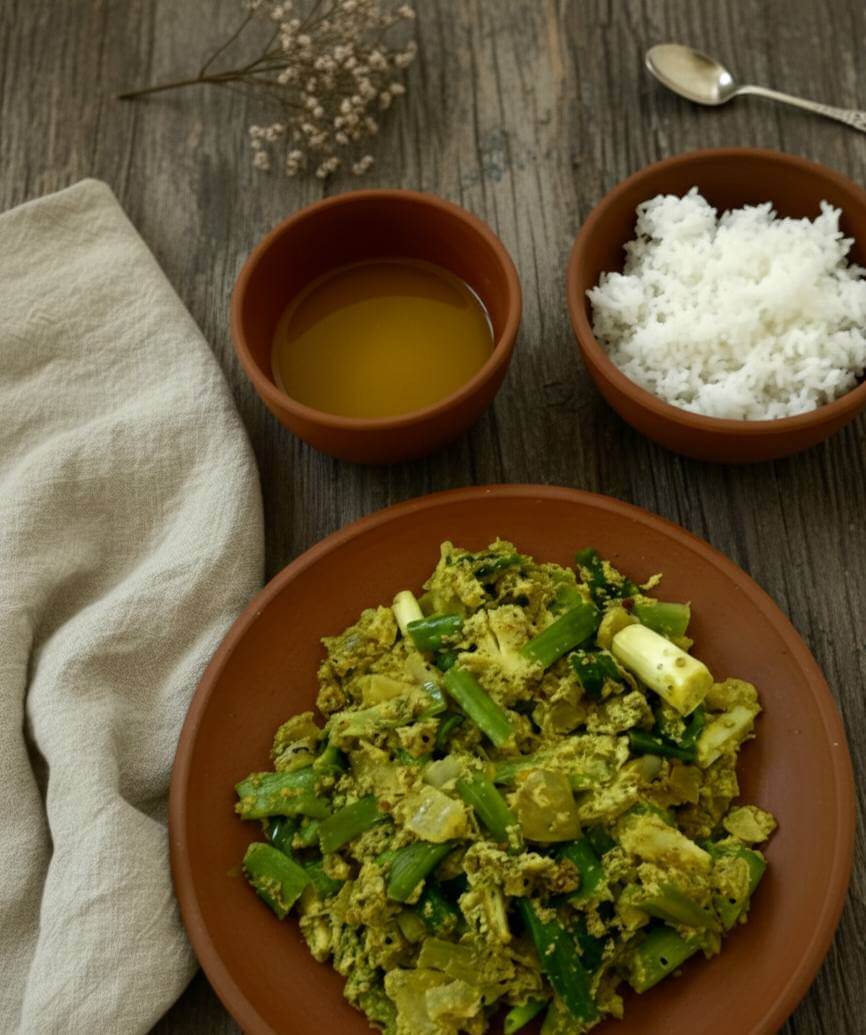

Sarika shares a nostalgic winter recipe for piyajkoli posto at DifferentTruths.com, celebrating the soulful, earthy flavours of Bengali home cooking.

AI Summary
· Cultural Heritage: Explores the seasonal significance of onion stalks (piyajkoli) in traditional Bengali households and family memories.
· Culinary Diversity: Highlights how regional spices and family-specific techniques transform simple ingredients into unique, heartwarming comfort food.
· Recipe Spotlight: Provides a step-by-step guide to making Piyajkoli Posto, featuring nutty poppy seeds and pungent mustard oil.
Have you ever noticed those long, green stalks with tiny white buds peeking out at the winter market? In Bengali homes, they are called piyajkoli (onion greens), the tender stem and bud of the onion plant. Simple, seasonal, and full of character, this humble green carries with it stories of warmth, kitchens filled with aroma, and meals shared around the table.
Growing up, I remember seeing these vibrant greens mostly during winter. They would appear in the markets between November and February, fresh and crisp, carrying the cold air’s freshness. Today, they are available almost throughout the year, but somehow winter piyajkoli still feels special, sweeter, fresher, and nostalgic.
Bengalis have a habit of incorporating almost everything into their cooking, and onion greens are no exception. They are paired with fish, eggs, potatoes… the list goes on. Each home has its own way of preparing them. In India, food changes every few kilometres, shaped by dialect, culture, climate, and family traditions. Yet, all are Indian.
I remember one of my colleagues of African origin being genuinely surprised when she learned that the same vegetable can taste completely different in different homes. Not just different regions — different families. Every household carries its own recipe, its own touch, its own memory. That is the beauty of Indian food.
Over the years, our food habits have changed so much from what our parents raised us on. I still try to cook traditional dishes whenever I can. It’s ironic how many vegetables I disliked as a child, yet now I wait eagerly to cook and enjoy them.
A few days ago, on a quiet winter afternoon, I made piyajkoli posto. And I truly savoured it.
The gentle sweetness of piyajkoli mingles with golden, caramelised onions.
The earthy depth of poppy seeds is comforting and wholesome.
A sharp, lively drizzle of mustard oil.
And the mischievous fire of fresh green chillies.
Some dishes don’t just fill the stomach; they warm the heart.
Pause. Savour. Simply enjoy.
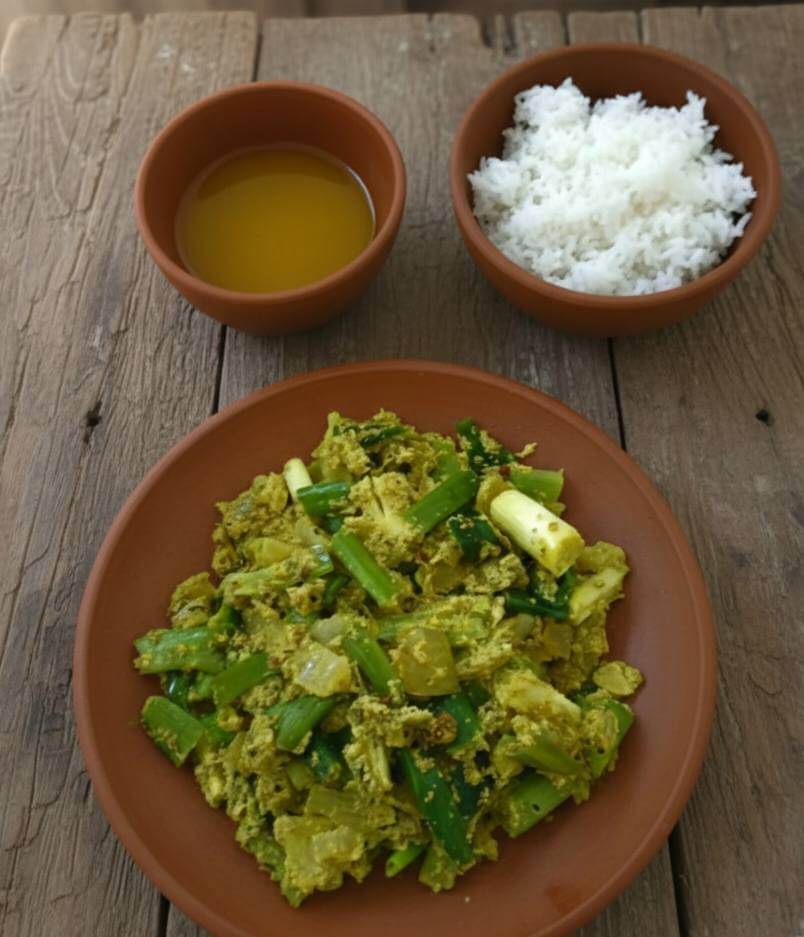
Onion Greens Poppy Seed (Piyajkoli Posto)
A humble, comforting dish where soft onion greens meet the nutty richness of posto — best enjoyed with hot steamed rice.
Ingredients
- 2 bundles of onion greens
- 3 tbsp posto (poppy) seeds
- 3 onions, finely sliced
- 6 green chillies, slit
- 1 tsp turmeric powder
- 4 tbsp mustard oil
- Salt to taste
- ½ tsp panch phoron
Method
1. Soak the poppy seeds in warm water for about 20 minutes. Drain and blend into a smooth paste with 2 tbsp water and 3–4 green chillies. Keep aside.
2.Cut the onion stalks into 1½-inch pieces. Wash well and keep ready.
3.Heat 3 tbsp mustard oil in a kadhai (wok). Add panch phoron and let it splutter beautifully.
4.Add the sliced onions and remaining green chillies. Sauté until the onions turn soft and translucent.
5.Add the chopped onion stalks. Sprinkle salt and turmeric. Cook on a medium flame until the stalks become tender and slightly soft.
6.Stir in the pesto paste and mix well. Cook for another 4–5 minutes on moderate heat. If it looks too dry, splash a little water to keep it moist.
7.Drizzle the remaining mustard oil generously on top for that authentic aroma.
Serve hot with steamed rice and enjoy the simple, earthy goodness.
Photos by the author

A teacher, day dreamer, random experimental cook and some hit and miss photography, and at last love to call myself a full time mother.


 By
By
 By
By

 By
By