
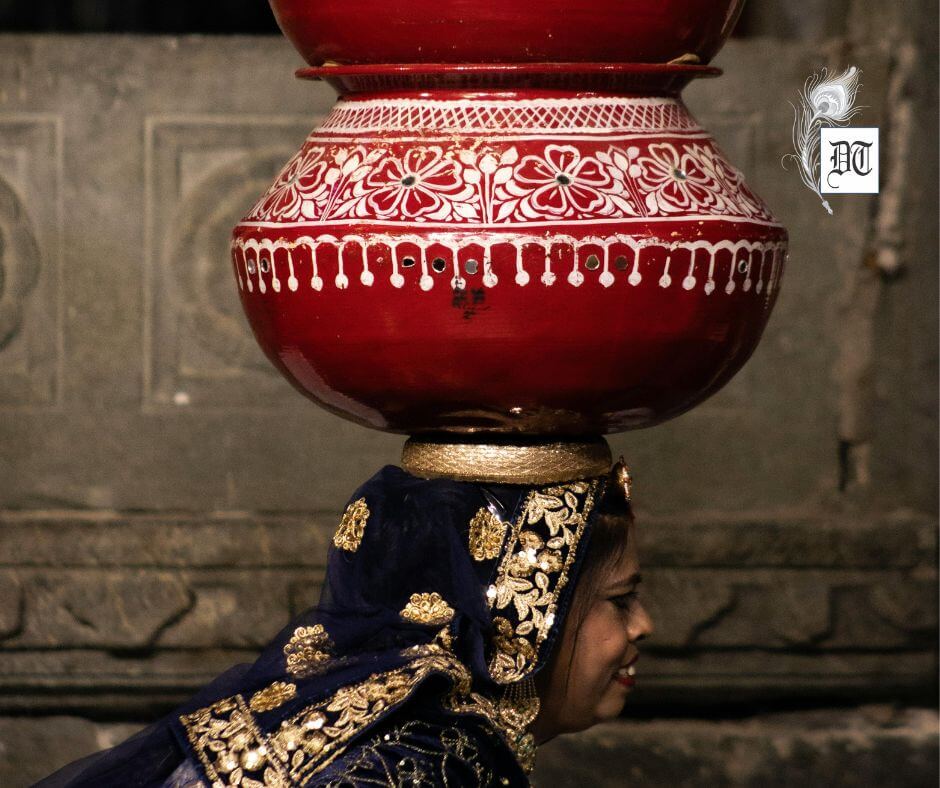
Dr Madhumita exploresfolk culture’s vibrant soul: traditions, songs, dances, and rituals binding communities across generations, in her research article for Different Truths.
AI Summary
- Definition and Essence: Folk culture encompasses traditional expressions like songs (e.g., Tusu, Baul), tales, festivals, theatre (Jatra), and crafts (Pattachitra) of common people, passed orally, reflecting community identity, beliefs, and rural life—distinct from elite, institutionalised culture.
- Etymology and Scholarly Views: ‘Lok’ (folk) means masses (from Sanskrit ‘lokate’); ‘Sanskriti’ (culture) implies refinement. Scholars like Dwivedi and Upadhyay define it as dynamic traditions, preferring ‘Lok-Sanskriti’ over ‘folklore’ for its breadth, including spiritual/secular elements.
- Elements and Importance: Features oral traditions, regional arts/dances, and agriculture-linked rituals; faces globalisation threats but is vital for heritage preservation, social cohesion, and cultural resilience in modern times.
Abstract
Folk culture refers to the traditional cultural expressions, beliefs, practices, and art forms rooted in the daily life of ordinary people, often passed down orally or through communal practices across generations. It is shaped by the socio-economic conditions, environment, and spiritual beliefs of a community, reflecting their collective identity and worldview. Unlike elite or classical culture, folk culture evolves informally and exists outside institutional or formal structures.
The forms of folk culture are diverse and regionally specific, including:
- Folk songs (e.g. Tusu, Bhadu, Gazi songs) that express emotions, rituals, seasonal changes, and local legends.
- Folk tales and oral narratives, which transmit moral values, historical memory, and communal wisdom.
- Folk festivals and rituals, often connected to agriculture, life-cycle events (birth, marriage, death), and local deities.
- Folk theatre and performance arts like Pala Gaan, Jatra, and Baul songs, which blend storytelling, music, and dramatisation.
- Folk crafts and visual arts, including pottery, embroidery, paintings (e.g., Pattachitra, alpana), and woodwork, which carry symbolic and aesthetic meanings.
Introduction
Folk culture is dynamic yet deeply rooted in tradition, adapting to changing times while preserving core values. It plays a crucial role in maintaining social cohesion, expressing collective memory, and resisting cultural homogenisation. In the modern context, folk culture faces both challenges of survival due to globalisation and opportunities for revival through documentation, festivals, and digital platforms.
Folk culture is the living expression of a community’s shared traditions, values, and ways of life, transmitted from generation to generation through oral, performative, and participatory means. Rooted in rural settings and everyday experiences, folk culture represents the collective creativity of ordinary people, often outside the boundaries of formal education or institutionalised art. It is shaped by nature, environment, livelihood, and local belief systems, and serves as a vital reflection of a community’s identity and worldview.
Unlike elite or classical culture, which is typically codified and preserved through texts or institutions, folk culture survives and evolves through oral transmission, imitation, and community participation. It is dynamic and adaptable, yet deeply anchored in tradition. Whether through songs, stories, rituals, festivals, or visual art, folk culture offers insight into how people interpret their world, express emotions, celebrate life events, and deal with social or spiritual concerns.
The forms of folk culture are diverse and vary by region, language, and social context. Common forms include folk songs, oral epics, folk theatre (such as Pala Gaan), seasonal festivals (like Tusu and Bhadu), ritual practices, proverbs, and folk crafts. These expressions not only provide entertainment but also transmit ethical values, historical memory, and communal knowledge.
In today’s rapidly modernising world, folk culture faces both challenges of preservation and opportunities for revival. Recognising and studying its various forms is essential for understanding the richness and resilience of local cultures, as well as for preserving and safeguarding intangible cultural heritage.
Folk culture is the collective representation of a society or community’s traditional cultural expressions, beliefs, customs, folklore, folk songs, folk dances, folk arts, language, and lifestyle. This culture is passed down orally and practically from generation to generation and reflects people’s daily lives, beliefs, and social values. It is manifested in the everyday practices of common people—such as their traditions, customs, festivals, folk songs, dances, handicrafts, food, clothing, and folk tales.
Folk culture serves as an identity marker of a particular region or community, reflecting the lifestyle, traditions, and emotions of its people. This culture is more prevalent in rural and traditional societies than in urban or educated communities.
The term folk culture is formed from the combination of two words: ‘folk’ and ‘culture’. Together, it signifies the culture of the people, or the culture that exists among the common masses. The term also conveys a specific form of culture that can be distinguished from mainstream or elite culture. To understand folk culture, it is useful first to examine the meanings of the words folk and culture separately and then explore their combined significance.
The word ‘folk’ is derived from the Sanskrit root ‘lokadarśane’ with the suffix ‘ghañ’, meaning “to see” or “the one who sees.” Its verb form in the present tense (laṭ-lakāra) is lokate, meaning “he sees.” Thus, the word lok (folk) came to refer to “those who see”—that is, the general masses or common people who observe and experience life. The Hindi word ‘log’ (people) is also derived from the same root, signifying ordinary citizens or the general public. Therefore, lok implies the collective populace of a country or society.
The word lok has existed in Indian literature since ancient times, including in the Vedas. In the Rigveda, lok is used in many places to refer to ordinary people, and sometimes the word jan is also used as a synonym. The great grammarian Panini, in his treatise Ashtadhyayi, mentions the words lok and sarvalok (all people), recognising lok as distinct from the sacred or Vedic realm. Vararuchi, in his Vartikas, and Patanjali, in his Mahabhashya, also used the term lok in the sense of common people. Similarly, Maharishi Vyasa used the term lok in the Mahabharata to refer to the general public.
Definition of ‘Lok’ by Scholars
While presenting the definition of the word ‘Lok’, the renowned Hindi scholar Acharya Hazari Prasad Dwivedi has written: “The meaning of the word ‘Lok’ is not merely ‘province’ or ‘rural’; rather, it refers to the entire populace spread across cities and villages whose practical knowledge is not based on books. These people, in comparison to the refined, tasteful, and cultured individuals of the cities, are more accustomed to a simple and natural way of life. They are the ones who produce all the necessary things required to sustain the luxurious and delicate lifestyle of the refined classes.”[1]
Dr Kunjbihari Das has presented the interpretation of the word ‘Lok’ in the following manner: “The people who live in more or less primitive conditions outside the sphere of sophisticated influences.”[2]
Definitions of Culture by Scholars
The word “Sanskriti” (Culture) is derived from the Sanskrit root ‘kṛ’ with the prefix ‘sam’. According to Sanskrit grammar, when the prefix sam is added to the root kṛ, words like ‘sanskriti’ (refinement) and ‘sanskara’ (sacrament or refinement) are formed.
Acharya Hazari Prasad Dwivedi states: “Culture is the highest culmination of a human being’s diverse spiritual efforts.”[3]
Sanskriti is the name of a refined state of being — that is, a stage of human life where one’s natural attachments and aversions have been purified. This purification, this refinement, must occur through a balanced harmony of one’s innate desires, aspirations, tendencies, and restraints. It is here that culture takes birth. We can say that the collective expression of the inner, fundamental instincts of contemporary life is what constitutes culture. To attain culture, one must delve into the depths of life. The truth, beauty, and goodness hidden behind the outer layers of the physical world — culture constantly strives to recognise and realise that. Its goal is to move from inertia to consciousness, from body to soul, from form to emotion.
Now, regarding its manifested form, culture is seen in civilisation, i.e., conduct and thought, global traditions, craftsmanship, and the mediums through which it is expressed are art, literature, etc.
A definition of culture that aligns well with present-day perspectives. In fact, the way culture was understood in ancient times is not exactly how it is understood today. In classical Sanskrit literature, instead of the word Sanskriti, terms like Sanskara and Sanskriya were commonly used. Although some scholars have made relentless efforts to trace the use of the term Sanskriti in ancient Indian texts, the instances where the word appears are insufficient to convey the modern meaning of the term.
In today’s context, the term Sanskriti is considered synonymous with the English word ‘culture’.
From an etymological standpoint, the word ‘culture’ is derived from the Latin root ‘colere’, which gives rise to the word ‘cultura’ — meaning to worship and to cultivate.
Some scholars draw parallels between culture and cultivation, suggesting that just as agriculture involves the proper development of plants to yield good crops, culture refers to the method or process by which the spirit of humanity is nurtured and flourishes among people.
According to other scholars, culture refers to those ideals that, when applied to various aspects of a nation or society’s way of life and social relationships, inspire people from the standpoint of humanity.
Definitions of Folk Culture by Scholars
According to Dr Harsh Kumar, “Folk culture is a living and organised form of a particular society’s traditions, folk songs, dances, proverbs, and religious beliefs, which is fundamentally based on collectivity.”
As per the Encyclopaedia, “Folk culture is the cultural heritage that is passed down orally and through tradition from generation to generation, and it reflects the everyday life, beliefs, and traditions of the common people in a society.”
The Broad Form of Folk Culture
Dr Krishnadev Upadhyay, a discerning critic and scholar of folk literature and folk culture, referencing the views of Acharya Hazari Prasad Dwivedi, wrote that “the subjects included under culture are divided by him into two categories:
(1) Spiritual Elements, (2) Worldly (Secular) Elements.
Under spiritual elements, he includes:
1. Beliefs related to the afterlife, 2. Ideas concerning salvation and heaven, 3. Paths of spiritual practice, 4. Ideals of life, 5. Religious doctrines
Similarly, under worldly (secular) elements, he includes:
1. Various rites and rituals of human life, 2. Social celebrations, 3. Festivals and fairs, 4. Means of entertainment, 5. Lifestyle, 6. Clothing and attire, 7. Ornaments and cosmetics, 8. Food and beverages, 9. Social conventions, 10. Folk beliefs, 11. Accepted customs, 12. Art, 13. Craftsmanship, 14. Traditions, 15. Practices. [4]
Dr Upadhyay’s Views on the Term ‘Folklore’ and the Appropriateness of ‘Folk Culture’,
Dr Krishnadev Upadhyay has suggested the term ‘Lok-Sanskriti’ (folk culture) as a completely appropriate equivalent for the English word folklore. According to him, there can be no better synonym for folklore in Hindi than this. In fact, there has been considerable disagreement among scholars regarding a suitable Hindi equivalent for the term folklore. Before discussing these differing opinions, it is essential to consider the etymological meaning of the word folklore. The word folklore is a combination of two words: (1) Folk and (2) Lore. The word folk is derived from the Anglo-Saxon word folc, which corresponds to Volk in German. Dr Barker, while explaining the term folk, states that it refers to an entire community or race that is generally distant from civilisation. However, if the term is understood in a broader sense, it may also include all people of a civilised nation. But in the context of folklore, folk typically refers to the non-elite or uncultured people. The second word, lore, is derived from the Anglo-Saxon word lar, which means learned or knowledge. Thus, the literal meaning of folklore becomes “knowledge of the uncultured or common people.”[5]
In translating folk into Hindi, three terms are generally considered: gram (village), jan (people), and lok (folk/masses). Pandit Ramnaresh Tripathi firmly advocated for the use of the word gram (village), and accordingly, he preferred the term gram-geet (village songs) for folk songs. However, upon closer examination, gram fails to capture the full essence of folk as it is limited to villages. Today, even people of lower socioeconomic backgrounds living in metropolitan cities sing such songs for entertainment.
The word jan could include all living beings, and in the Vedas, it is used for the common masses. However, the word lok carries an ancient cultural tradition. It is found frequently in the Vedas, in Panini’s Ashtadhyayi, and in the Bhagavad Gita. Between jan and lok, the latter is considered more appropriate.
Renowned historian and archaeologist Dr Vasudev Sharan Agrawal suggested lok-varta (folk discourse/news) as a suitable Hindi equivalent for folklore. He based this term on texts prevalent in the Vaishnava tradition, such as Chaurasi Vaishnavon ki Varta and Do Sau Bavan Vaishnavon ki Varta.
However, Dr Krishnadev Upadhyay raised several objections to the use of lok-varta. Firstly, the term does not appear comprehensive enough. It primarily conveys the idea of folk discussions or reports. Moreover, in Sanskrit literature, lok-varta has been used with different meanings—such as rumour, gossip, or popular hearsay.
The renowned Sanskrit lexicographer Pandit Vaman Shivram Apte, in his Sanskrit-English Dictionary, has defined Lok-Varta as “popular report” or “public rumour.” Sir Monier Williams also interpreted it similarly. Thus, due to this semantic limitation, Dr Agrawal’s suggestion of lok-varta is not considered appropriate.
Acclaimed Hindi scholar Acharya Hazari Prasad Dwivedi, while addressing the debate over the proper Hindi equivalent of folklore, remarked: “Even in those countries where folklore is being thoroughly and carefully studied, there is disagreement among scholars regarding what should and should not be included under folklore. What some scholars define as folklore, others do not accept. However, generally, folk tales, folk songs, regional native stories, proverbs, and riddles are considered part of folklore. In countries like France and Scandinavia, traditional crafts, arts, and industries are also considered part of folklore—but such aspects are not adequately represented by the term folk literature.
Therefore, many Indian scholars consider the term ‘folk culture’ (lok-sanskriti) more appropriate. In India, folk literature has come to denote the oral, narrative-based literature prevalent among the common people, while folk culture refers to the crafts, arts, and practices associated with folk life.”[6]
From this statement, it becomes clear that according to Acharya Hazari Prasad Dwivedi, folk songs and narratives may be classified under folk literature, but the study of crafts, arts, industries, traditions, and rituals associated with folk life should be addressed under the umbrella of folk culture. Thus, the term ‘lok-sanskriti’ as promoted by Dr Krishnadev Upadhyay is also endorsed by Acharya Dwivedi.
Hence, we see that folk culture (lok-sanskriti) is a broad term. It encompasses the entirety of beliefs, religious values, social customs, rituals, traditions, festivals, practices, lifestyle, thoughts, and worldview of the common people from ancient times to the present.
Folk culture is like the lifeblood flowing through the veins of folk life—not only giving it existence but also propelling it forward. It is not a rigid or static concept but one of dynamic vitality, filled with softness and charm.
The rich expression found in folk songs on the vast canvas of folk life infuses folk culture with energy. The consciousness of life rooted in folk beliefs and traditional lifestyles is best expressed through the term folk culture.
Thus, folk culture can rightly be called the living spirit of folk life. Folk culture is a collective representation of the traditional cultural expressions of a specific society or community, reflecting folk life, beliefs, and social values. It is developed by common people and is mainly preserved in the form of oral traditions, art, music, dance, literature, and customs.
Folk culture is the soul of any society. It reflects our traditions, beliefs, and ways of life. While modernity and globalisation are bringing changes to folk culture, it is important to preserve and promote it so that future generations remain connected to their cultural roots.
Folk culture is not merely a relic of the past—it is a priceless treasure of both the present and the future.
Elements and Nature of Folk Culture
Folk culture is composed of various elements, whose nature varies depending on time, place, and community.
1. Oral Tradition: Folk culture is primarily preserved orally. Folk tales, folk songs, proverbs, and riddles are passed down from one generation to another through oral transmission.
Examples: Stories from the Panchatantra, tales of Akbar-Birbal and Tenaliram, folk songs, and sohar songs (sung during childbirth).
2. Regional Diversity: Every region has its own unique folk culture, which evolves according to the climate, language, traditions, and lifestyle of the area.
Examples: Ghoomar dance and Padharo Mhare Desh folk song of Rajasthan, Bhangra and Giddha dances of Punjab, Babul music of West Bengal.
3. Religious and Social Beliefs: Folk culture is deeply influenced by religious beliefs, stories of deities, and social faiths.
Examples: Chhath puja in Bihar and Uttar Pradesh, Ganga Aarti in North India, and Kanwar Yatra celebrated in various parts of India.
4. Folk Art and Handicrafts: Art and craftsmanship hold a significant place in folk culture. Each region has its own traditional arts that reflect its cultural identity.
Examples: Gond painting of Madhya Pradesh, Pattachitra art of West Bengal, Meenakari and Blue Pottery of Rajasthan.
5. Traditional Music and Dance Music and dance are especially important in folk culture. These are performed on special occasions, festivals, or rituals.
Examples: Lavani dance of Maharashtra, Garba of Gujarat, Jhoda and Chanchari dances of Uttarakhand.
6. Culture Connected to Agriculture and Lifestyle: Folk culture is deeply connected to agriculture, seasonal changes, and the working-class lifestyle. Farmers, labourers, and rural communities celebrate their festivals, songs, and customs according to the agricultural cycle and seasonal shifts.
Examples: Bihu (Assam) – harvest festival, Pongal (Tamil Nadu) – agricultural celebration, Makar Sankranti (celebrated in different parts of India).
7. Folk Literature and Traditional Tales: Folk literature holds a vital place in folk culture, comprising folk tales, legends, fairy tales, proverbs, and riddles.
Examples: The story of King Vikramaditya and Betal, folk songs like Birha, Kajri, Sohar; proverbs like “Naach na jaane aangan tedha” (literal translation, one blames the circumstances when lacking skill and the English proverb: a bad workman quarrels with his tools).
Conclusion
Folk culture represents the living traditions, practices, and collective expressions of a community that have evolved organically over generations. Rooted deeply in the everyday lives of common people, it reflects their beliefs, values, customs, and worldviews. Unlike classical or elite culture, which is often documented and institutionalised, folk culture thrives through oral transmission, collective memory, and community participation.
The various forms of folk culture—such as folk songs, dances, tales, proverbs, festivals, rituals, art, and crafts—are not merely artistic expressions but are intrinsically linked to the social, economic, and spiritual lives of the people. These forms serve both aesthetic and functional purposes, offering entertainment, education, moral guidance, and a sense of identity and continuity.
In essence, folk culture is dynamic and adaptive. It evolves with time while retaining its core values, and it plays a crucial role in preserving cultural diversity and fostering a sense of community. As societies modernise, understanding and preserving folk culture becomes all the more important to maintain a connection with our collective heritage and to ensure that the voices of grassroots traditions continue to enrich the broader cultural landscape.
Keywords: Folk culture, oral tradition, indigenous knowledge, community expression, rituals and customs, traditional practices, folk songs, folk music, folk theatre (pala gaan, jatra), folk art and crafts, storytelling, local deities, rural traditions, agricultural festivals, seasonal rituals, cultural identity, collective memory, intangible cultural heritage, syncretism, transmission of culture, non-literate traditions, socio-cultural practices, regional diversity, popular beliefs, heritage preservation, etc.
Notes
[1] Acharya Hazari Prasad Dwivedi, Janpad, Vol. 1, Issue 1, p. 65
2. Dr. Kunjbihari Das, A Study of Orissan Folklore
3 Acharya Hazari Prasad Dwivedi, Ashok ke Phool, Bharat ki Sanskritik Samasya, p. 40
4 Acharya Hazari Prasad Dwivedi, Ashok ke Phool, Bharat ki Sanskritik Samasya, p. 81
5 Dr Krishnadev Upadhyay, Lok Sanskriti ki Ruprekha, p. 20
6 Acharya Hazari Prasad Dwivedi, Janpad, Vol. 1, Issue 1, p. 65
References
1. Ansari, Dr Paraveen Nizam, Lok Sahitya Ke Vividh Ayaam, Edition- 2016, Vishwavidyalaya Prakashan, Varanasi.
2. Acharya Hazari Prasad Dwivedi, Janpad, Vol. 1, Issue 1,
3. Dr Kunjbihari Das, A Study of Orissan Folklore
Acharya Hazari Prasad Dwivedi, Ashok ke Phool, Bharat ki Sanskritik Samasya,
4. Acharya Hazari Prasad Dwivedi, Ashok ke Phool, Bharat ki Sanskritik Samasya,
5. Dr Krishnadev Upadhyay, Lok Sanskriti ki Ruprekha
Picture design by Anumita Roy

Dr Madhumita Ojha, a Hindi literature scholar, specialises in folk literature, cultural studies, gender, and marginalised narratives. She earned an MA and PhD in Hindi from Presidency University, plus a BEd from Mahatma Gandhi International Hindi University, Wardha. Author of Folk Literature and Culture, she has published extensively on Kinnar narratives, LGBTQ representation, women’s studies, and Dalit literature. She serves as a guest lecturer at the Hindi University, Howrah, Kolkata.

 By
By
 By
By
 By
By
 By
By
Thank you for an edifying read!