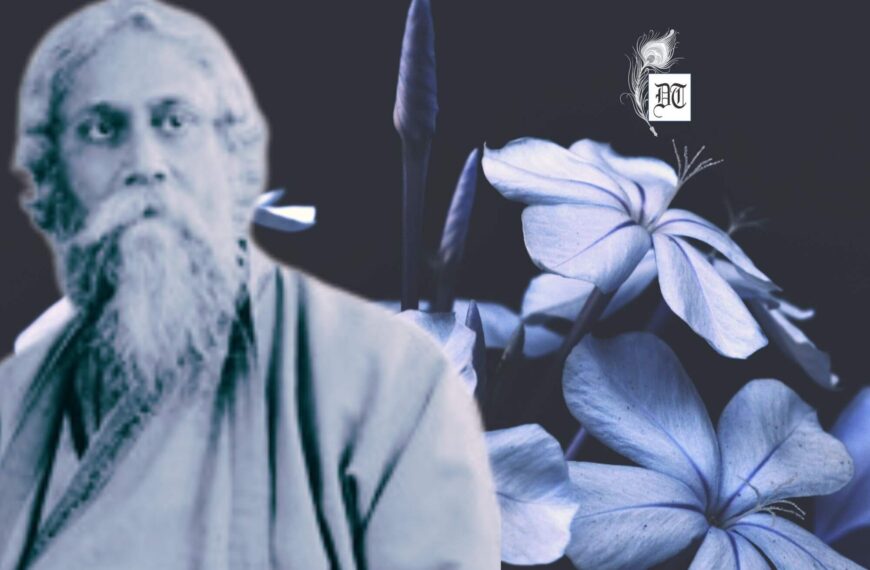

As Rabindranath Tagore is remembered on Baishe Srabon, Ruchira explores his timeless lunar fascination on DifferentTruths.com.
AI Summary
· Lunar Inspiration: Rabindranath Tagore’s deep connection with nature and the moon was profoundly shaped by his time managing rural estates in contemporary Bangladesh.
·Philosophical Depth: Across iconic lyrics like ‘Chander Hashee’ and ‘Aaj Jyotsna Raate’, the moon mirrors human emotions, romantic longing, and spiritual solitude.
· Microcosm and Macrocosm: The poet masterfully intertwines personal tears of sorrow and separation with the majestic, tidal forces of the cosmos.
It is that time of the year again when Tagore aficionados from around the world remember and celebrate him in silence and tears. It was in the first week of August, way back in 1941 (Baishe Srabon, or 22nd Sravana), that the great poet bid adieu to this mundane world. Since the Bengali ethnic calendar is lunar, the actual date hovers between the 7th and 9th of August every year.
The Bard wrote and composed on a diverse array of subjects, as numerous as the stars in the sky. Nature, in all its manifold aspects, is a recurring theme in his work.
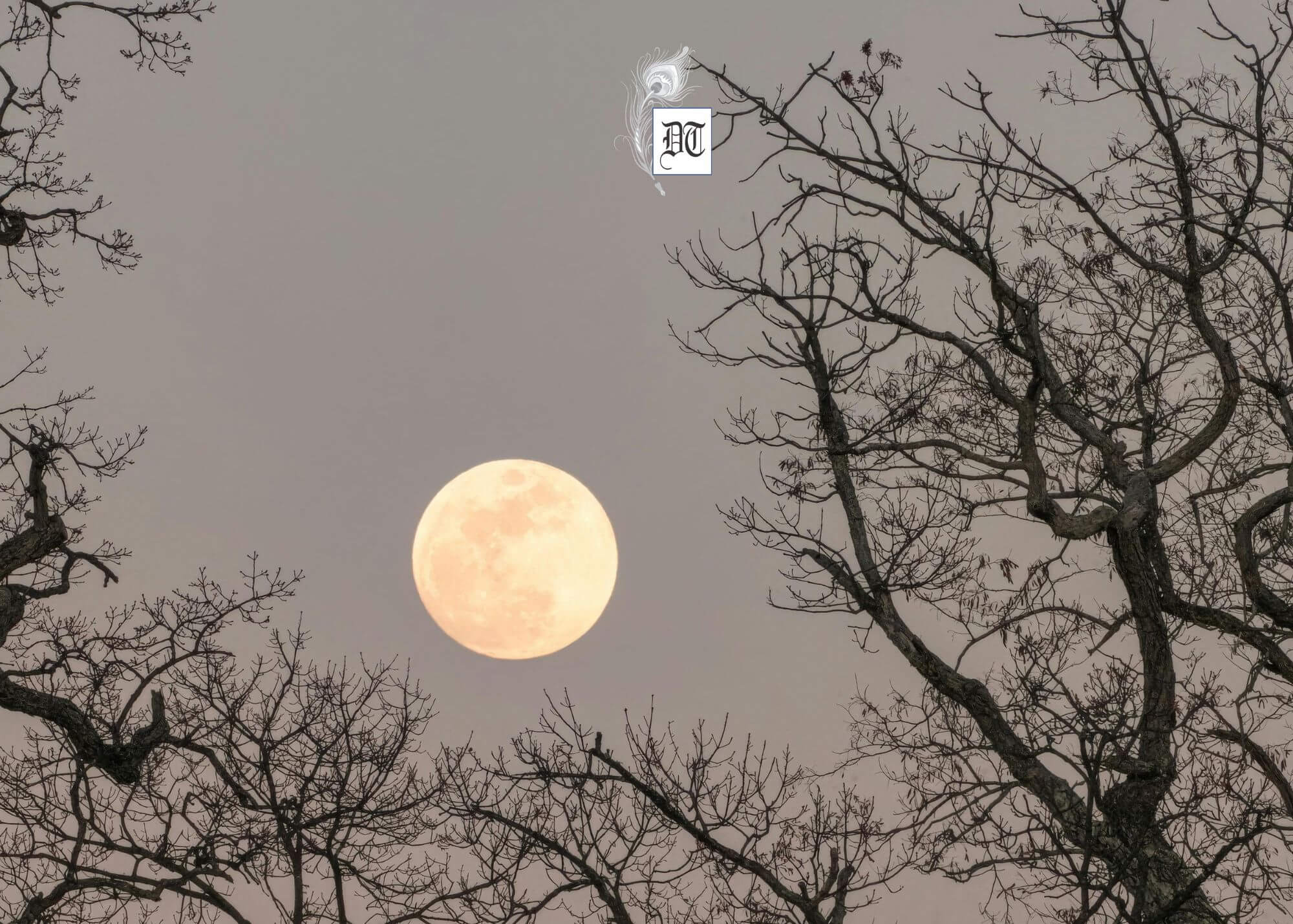
The moon has held iconic status in human civilisation across religion, poetry, art, and mythology. From a scientific viewpoint, the moon’s gravitational forces create high and low tides in Earth’s oceans and seas. It is not surprising that the moon has profoundly influenced the poet’s psyche and emotions.
Tagore’s lunar infatuation – shall we call it that? – is endless. This trait may be ascribed to his life’s circumstances. Tagore was deputed to manage the family’s sprawling estates in what is now contemporary Bangladesh. Away from the din and bustle of erstwhile Calcutta, the young poet was exposed to primaeval nature. He was intoxicated and charmed in the same breath. The moon is assigned larger-than-life dimensions through all his works.
Let us consider a few prominent examples. Who has not heard the beautifully romantic song “Chander hashi bandh bhengechhe” (the world is flooded with silvery moonbeams)?
Or this equally popular number: “Aaj Jyotsna raate shobai gecche bonay” (On this full moon night in spring, with a gentle breeze blowing, people are eagerly heading to the parks and woodland to enjoy themselves). At a cursory glance, it may seem highly romantic as well. However, there is a subtle philosophical twist: the protagonist decides not to join the revellers; instead, he remains indoors, awaiting the Divine, who may choose to visit his humble dwelling on an impulse.
Another brilliant example is “Purno Chander mayaye aaji” (spellbound by the moonbeams, my thoughts and emotions have lapsed into a nostalgic mode; my feelings have gone awry).
Since the full-orbed moon is believed to cause high tides, the poet, submerged in a welter of emotions, asks the moon to bear witness to his heart-wrenching experiences. This phenomenon is shown in “O Chand chokher jawler laglo jowar dukher parabare”. The protagonist’s tears of anguish have mingled with the waters of the ocean of sorrow. The microcosm and macrocosm of grief are thus inseparable.
In the poignant, nostalgic “Shedin dujone dulechhinu bonaay”, the lover reminisces about a stroll taken by the lovelorn couple, during which the moon rose in all its magnificence as if to light up their path. It was a magical, once-in-a-lifetime moment.
In “Aaaj Sraboner Purnima te”, the poet laments to the moon for provoking sadness and heartache instead of the expected joy of the night.
There are innumerable lyrics with references to the moon; it would be apt to wind up with an intensely lyrical, charming and picturesque song: “O amaar chander alo aaj phaguner sondhakaley dhora diyecho.” The narrator is overjoyed to behold how the moon has enlivened the lovely spring evening by scattering radiance, joy and good cheer.
Picture design by Anumita Roy

Ruchira Adhikari Ghosh brings a liberal, wide-ranging outlook shaped by extensive travel across India and abroad. Educated at Holy Child School, New Delhi, Sacred Heart Convent, Ludhiana, and Panjab University, Chandigarh, she holds a Master’s in English Literature and a postgraduate diploma in Journalism and Mass Communication. With three decades in media, she writes on travel, books, music, performing arts, women’s issues, and especially food, drawing inspiration from rich life experiences. She is our Features Editor.


 By
By