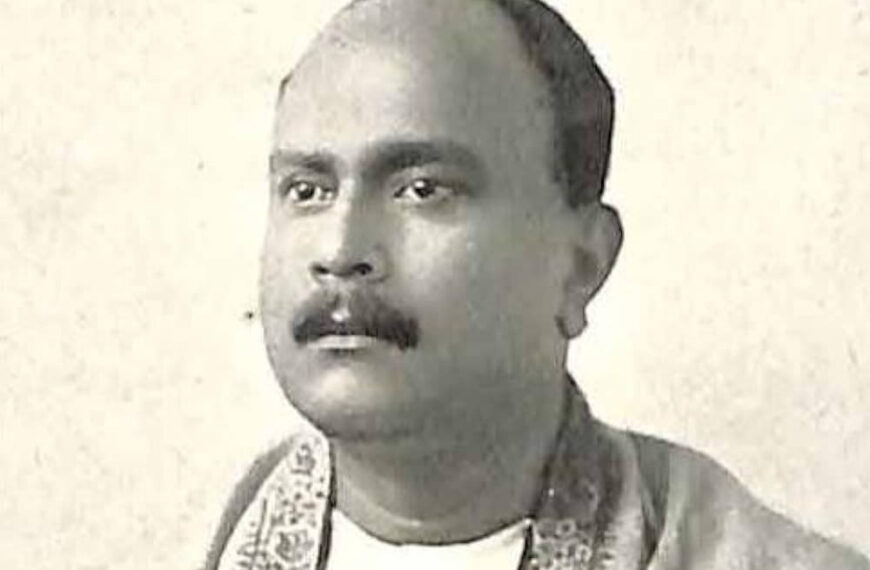
Rita profiles “Kantakobi” Rajanikanta Sen: A Bengali luminary whose timeless verse and melodies wove spiritual depth with fervent nationalism, exclusively for Different Truths.
Rajnikanta Sen (July 26, 1865 – September 13, 1910), affectionately enshrined in Bengali cultural history as “Kantakobi,” stands as an eminent luminary of the late 19th and early 20th centuries.
His artistic oeuvre, deeply embedded within the rich tapestry of Bengali literature and music, is a testament to a singular genius who masterfully interwove profound spiritual introspection, fervent nationalistic zeal, and an innate, sophisticated musicality into the very fabric of his verse and melodic creations.
Rajanikanta’s poetic voice is distinguished by its crystalline clarity, unadorned directness, and a pervasive, heartfelt sincerity that profoundly resonates with the discerning reader. He possessed a remarkable ability to address intricate philosophical and emotional paradigms through an accessible lexicon, thereby ensuring his verses garnered widespread appreciation across the societal spectrum.
At the very core of his poetic endeavour lies his formidable body of devotional (bhakti) verse. A fervent adherent of the Brahmo Samaj, Rajanikanta’s spiritual compositions are suffused with an intimate, personal communion with the divine. They eloquently articulate themes of profound surrender, unwavering faith, enduring hope, and the perennial human yearning for spiritual succour. His devotional songs, frequently rendered in the evocative ‘kirtan’ style, transcended mere hymns to become a source of profound solace and inspiration for countless souls.
With consummate artistry, he employed quotidian metaphors to illuminate recondite spiritual verities, thereby rendering his philosophical insights eminently relatable. The humility and earnestness evident in his supplications are a hallmark of his devotional poetry, wherein he frequently portrays himself as a humble supplicant, ever seeking divine grace.
Running parallel to his spiritual inclinations, Rajanikanta emerged as a voice for patriotism and societal amelioration. The burgeoning Swadeshi movement, gathering formidable momentum during his lifetime, found in his poetry a zealous and articulate champion. His patriotic songs are far from mere jingoistic slogans; rather, they are impassioned evocations of an abiding love for the motherland, urgently exhorting compatriots to confront injustice and embrace self-reliance.
Melodies such as “Mayer deoya mota kapad mathay tule nere bhai” burgeoned into anthems of the nascent independence movement, igniting nationalistic fervour with their poignant imagery and fervent appeal. His patriotic poems frequently celebrated the opulent cultural patrimony of Bengal and India, instilling a profound sense of pride and collective identity. He also adroitly addressed pressing social concerns, advocating for justice, equity, and moral rectitude within his lyrical frameworks.
The inherent lyrical quality of Rajanikanta’s poetry is irrefutable. Even when divested of musical accompaniment, his verses possess an intrinsic rhythm and an ethereal melody. This is, in part, attributable to his meticulous attention to prosodic elements—metre, rhyme, and lexical selection—which allowed his verses to flow with an effortless grace. His deployment of vivid imagery and evocative language conjures precise tableaux in the reader’s imagination, whether he is delineating the exquisite beauty of the natural world, the intricate convolutions of human emotion, or the sublime majesty of the divine.
Rajanikanta Sen was not solely a poet of distinction; he was, moreover, a prolific and profoundly gifted composer who, with remarkable acumen, set most of his verses to music. His contributions to Bengali music are of considerable importance, as he immeasurably enriched the genre with his distinctive style and multifaceted influences.
His compositions are chiefly characterised by their melodic richness and profound emotional resonance. He drew inspiration from an expansive spectrum of musical traditions, artfully fusing elements of Hindustani classical music (particularly lighter classical forms such as thumri and dadra), Kirtan (devotional singing distinguished by its unique melodic and rhythmic contours), Baul (the autochthonous folk music of Bengal’s itinerant minstrels, renowned for its spiritual and philosophical depth), and Tappa (a semi-classical form celebrated for its intricate melodic flourishes). This ecumenical approach enabled him to forge a singular sonic identity that was simultaneously classical in its foundations and accessible in its expression—a compelling blend of tradition and innovation.
In his devotional compositions, Rajanikanta adroitly employed specific ragas and talas to conjure the desired spiritual ambience. His musical settings for his bhakti poems are frequently contemplative, serenely beautiful, and profoundly affecting, meticulously crafted to elevate the listener’s spirit. The melodic lines, though often deceptively simple, are imbued with a profound resonance, allowing the lyrical content to command primacy whilst augmenting its emotional impact.
Conversely, his patriotic songs as a composer are often vibrant, spirited, and profoundly rousing. He utilised more dynamic rhythms and readily accessible melodies to ignite passion and instil courage. These compositions were conceived for popular consumption, and their infectious tunes ensured their widespread currency during the fervent period of the freedom struggle. The felicitous amalgamation of unadorned folk melodies with more sophisticated classical structures rendered them appealing to a broad demographic, thereby effectively conveying their potent messages.
Rajanikanta’s compositional methodology was intrinsically interwoven with his poetic vision. He composed with the emotional content and semantic nuances of his lyrics perpetually in mind, ensuring that the musical framework flawlessly complemented and amplified the textual meaning. This symbiotic relationship between poetic expression and musical creation is precisely what endows his songs with their enduring power. He unequivocally demonstrated how a poet’s profound sensitivity to language could be harmoniously conjoined with a composer’s astute comprehension of melody and rhythm to forge a complete and utterly captivating artistic experience.
Notwithstanding the personal adversities he endured and a life tragically curtailed, Rajanikanta Sen bequeathed an inestimable legacy of poetry and music. His compositions continue to be sung and treasured, not merely for their historical gravitas but equally for their timeless aesthetic beauty, profound spiritual resonance, and an enduring capacity to stir the very depths of the human heart. He remains an inspirational exemplar, one who leveraged his prodigious artistic talents to foster both spiritual awakening and an abiding national pride.
Picture from IMDb

Born in Shillong, Rita Biswas Pandey’s diverse career spans education and corporate life. A North Eastern Hill University graduate, she holds multiple certifications in social welfare and computer studies. Retiring from UPS to pursue her passion, now a Delhi resident, is a published author (Tinkonya, Yuddha and Kabita somogro ). She also enjoys singing, poetry recitation,sketches, cooking, photography, Blogging and vlogging, sharing her life with her husband, Vinod, and their beloved pet, Titu.


 By
By
 By
By