
Ruchira states that Tagore’s eternal quest for the elusive “Paran Sakha” merges divine love, Vaishnava bhakti and human longing in soul-stirring melodies for Different Truths.
Tagore, the versatile genius, shall always remain an enigma for literature connoisseurs and aficionados across the globe. One may try very hard, but it is rather impossible to fathom the depths of his creativity. For instance, in the realm of love, Tagore had infused different aspects and subdivisions, as one might say in common parlance: there is divine love, worldly, earthly love, the Bauls’ (wandering minstrels) definition of love, love as interpreted by the legendary mediaeval poet Vidyapati, and lastly love according to Vaishnava Dharma, propagated and highlighted by Sri Chaitanya Mahaprabhu, the mediaeval Bhakti saint.
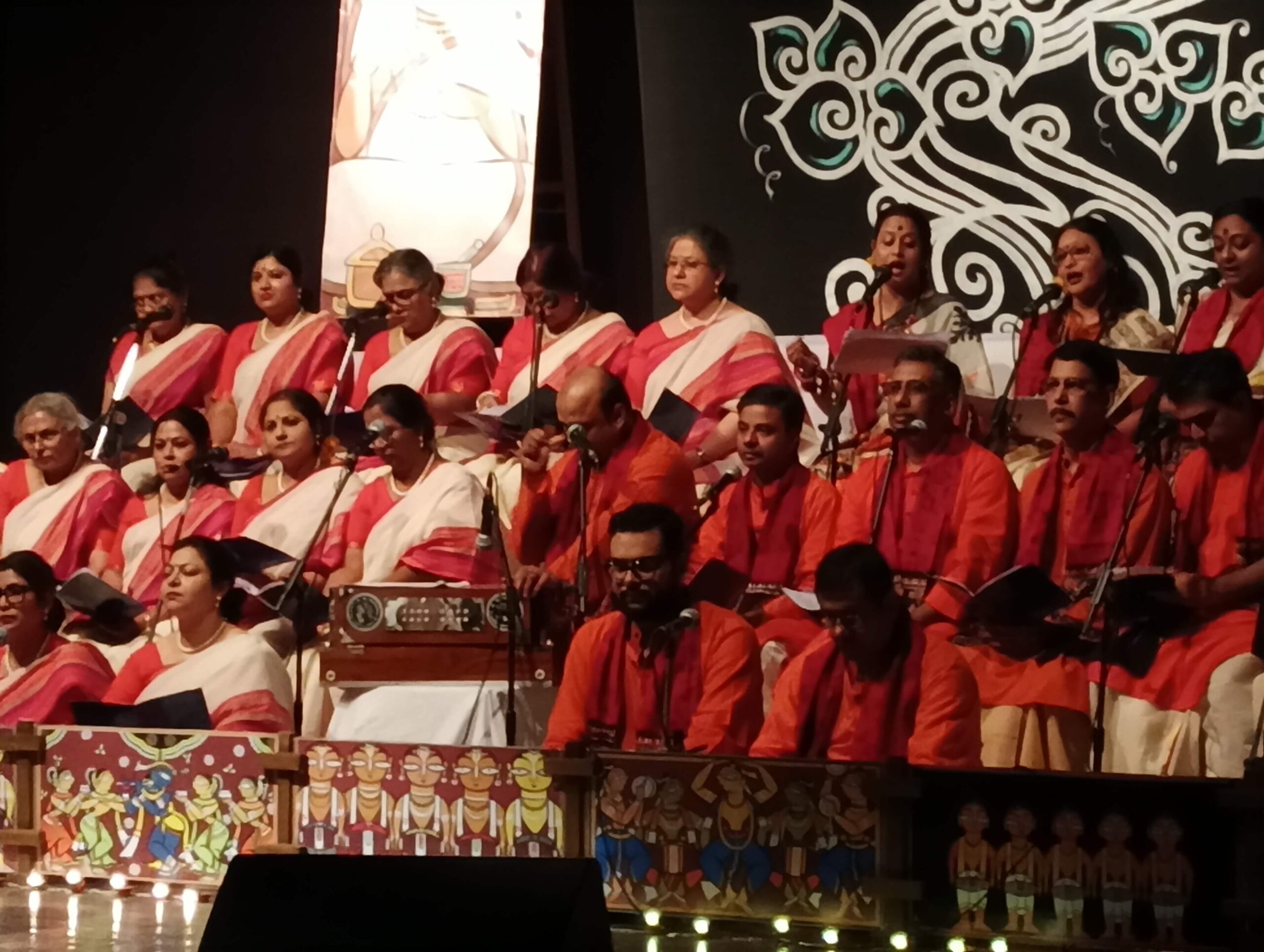
For a lay music enthusiast like me, exploring multifarious aspects is always a highly pleasurable experience. Little wonder, therefore, when I got invited to a Tagorian cultural event titled “Paran Sakha Bondhu… Tagore’s views on Vaishnava Dharma” recently, I was thrilled. The presentation was by Sanjato, a musical troupe based in Delhi.
In Tagore’s lexicon, the term “Paran Sakha” literally translates to “Friend of the heart”, or perhaps an alter ego or soulmate. Tagore’s unquenchable thirst and lifelong quest for Moner manush or Paran Sakha (as you please), who remains perpetually intangible and elusive, are only too well known.
In Vaishnava dharma (philosophy), this boundless yearning takes on a distinct form. The seeker transforms into a Bhakta, or devotee, who longs for the Supreme Lord, often referred to as the beloved. Various names, including Krishna, Hari, Gopala, and Govinda, are used to hail him.
The goal is seeking fulfilment of love, the divergent paths notwithstanding. And I am sure everyone will agree, Tagore must be given credit for successfully synchronising all these paths into one compact entity in his innumerable lyrics, poetry, and drama.
On this occasion mentioned above, a few notable numbers included “Choron dhoni shuni tobo nath” (I hear your footsteps, O Lord), “Na bujhe karey tumi bhash ale ankhi jawlay, (how, unwittingly, you left someone in tears and agony), followed by “Ohey Jibono Ballabha” (O Lord of my life), set in pure kirtan style.
As the event progressed, a solemn, devotional atmosphere was ushered in by a soulful musical rendition of Jaya Jaya Deva Hare – a paean to Lord Krishna culled from Gita Govinda – another mediaeval poet Jayadeva’s magnum opus in Sanskrit.
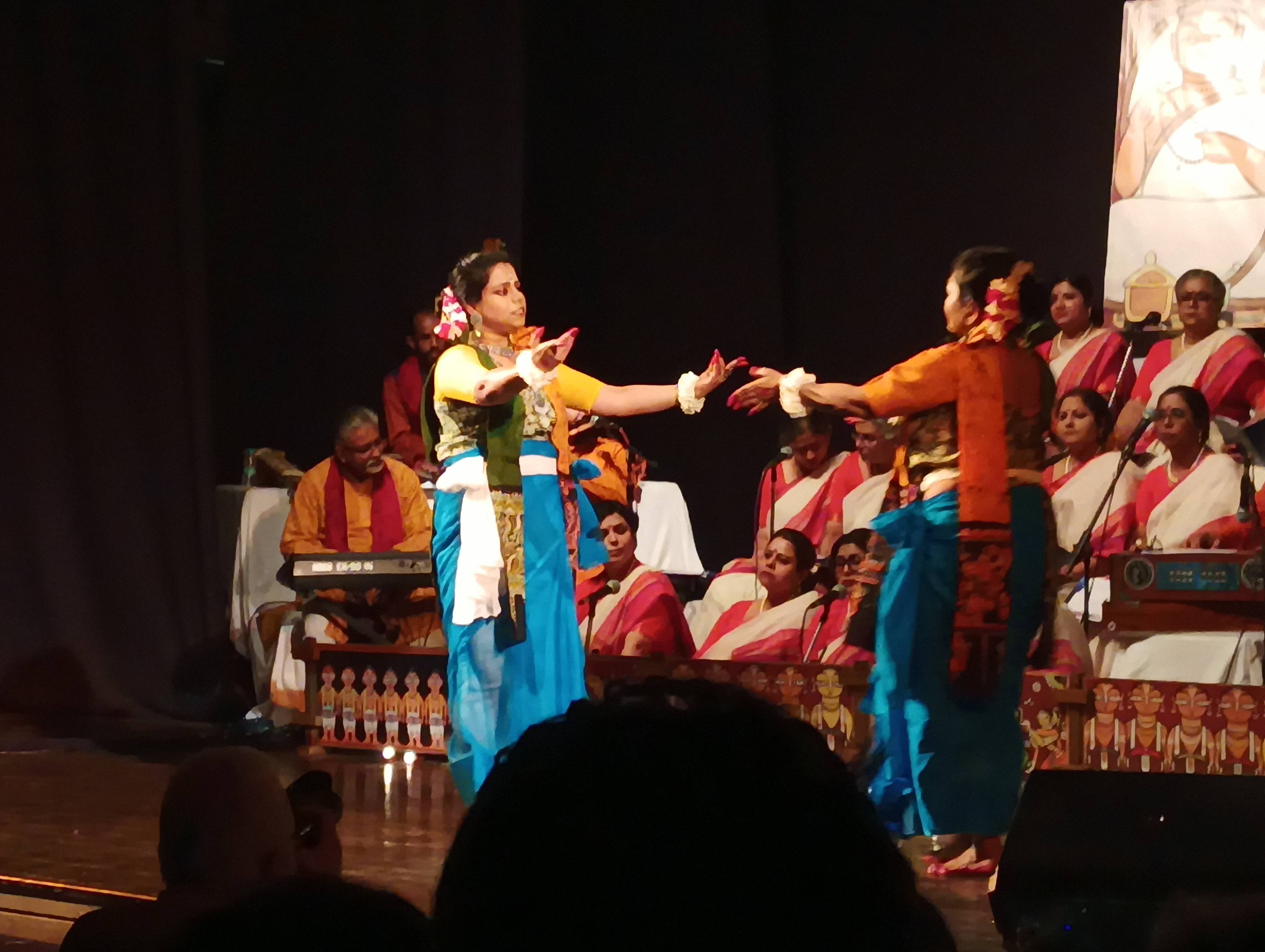

This was followed by a few more popular Tagore melodies such as “Ami kaan pete roi” (I listen keenly at the closed door leading to the inner crevices of my heart) and “Maajhe majhe tobo dekha payi” (Why do I catch only occasional glimpses of Thee, O Lord), with their plaintive notes tugging at the heartstrings of the listener, in the process heightening the yearning for a union between the mortal (read human) lover and the forever elusive beloved.
For the tremendous amount of hard work behind the scenes – flawless scripting and selection of songs – kudos to the bashful, unassuming Datta Roy (an accomplished singer herself), who heads the group.
Credit must also be given to the highly efficient moderators, including Shuddho Banerjee, a former Tollywood film personality. The instrumentalists, familiar faces at most events organised by the local Bengali Diaspora, gave a commendable performance as usual.
Later that night, as I walked homeward, a significant line from one of the songs, “Ekhono tare chokhe dekhini sudhu banshi sunechi” (I hear Him playing on the and yearn to meet Him just once), lingered in my mind, which aptly summed up the essence of the evening’s show.
Photos sourced by the author

Born in Guwahati and raised across Delhi and Punjab, Ruchira Adhikari Ghosh is an alumna of Sacred Heart Convent, Ludhiana. She holds a master’s degree in English literature from Punjab University, Chandigarh, and a postgraduate diploma in Journalism. With nearly 25 years of experience in print, web, and television media, she has carved a niche as a feature writer. Her writing focuses on women’s issues, food, travel, and literature, reflecting both versatility and depth.
 By
By
 By
By
 By
By