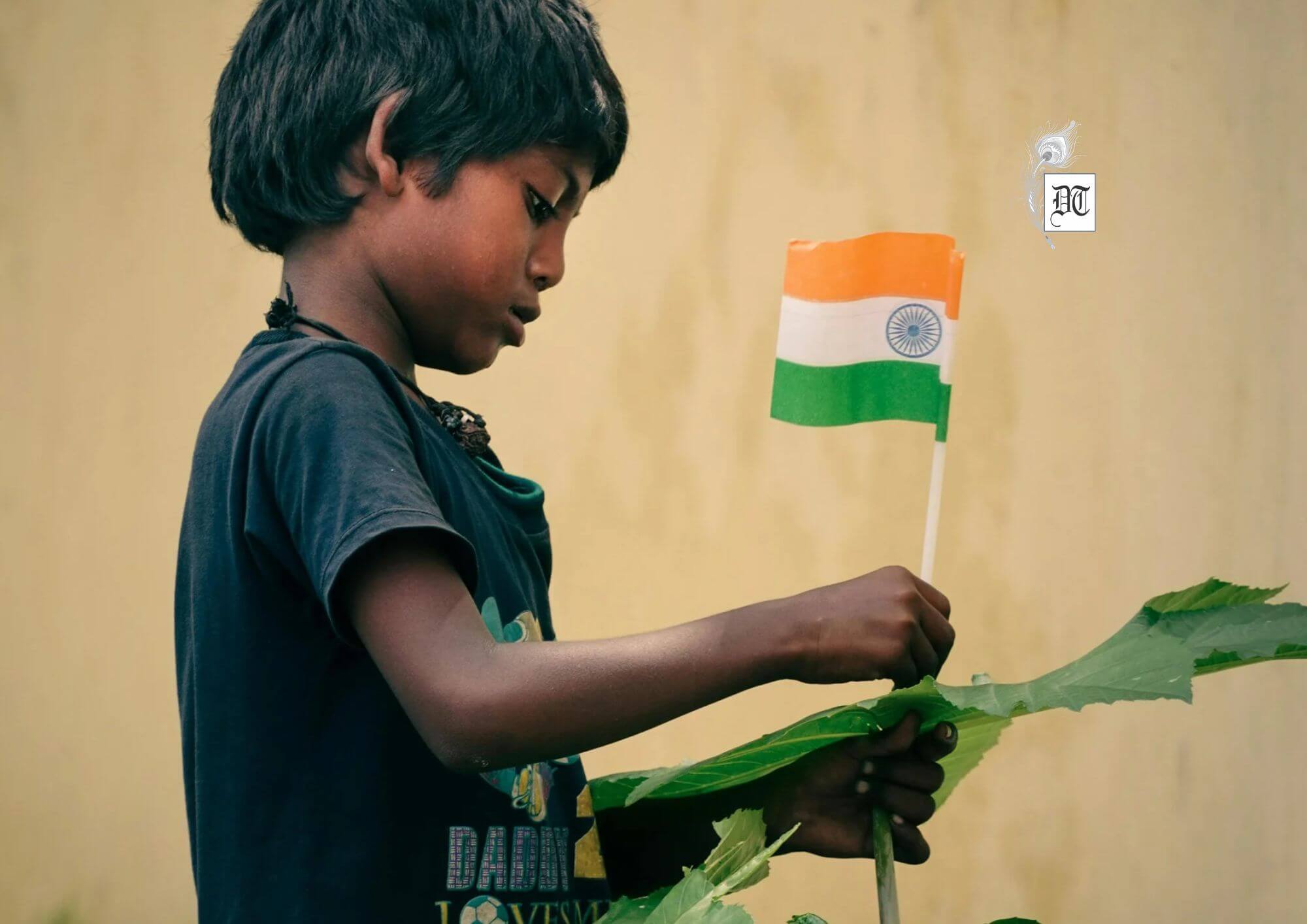
Dirgha explores the paradox of symbolic reverence masking inequality, reflecting on systemic marginalisation for DifferentTruths.com.
Key Takeaways
- Symbolic vs Lived Reality: Elevating groups through reverential titles like “Harijan” or “Devi” does not dismantle systemic discrimination or guarantee real-world safety and autonomy.
- The Trap of the Pedestal: Idealising women through traditional roles can act as a tool of control, restricting their freedom and tying their dignity to unrealistic expectations.
- Fundamental Rights Over Roles: Safety and respect should never be conditional upon achieving an idealised identity; human beings deserve dignity simply for being human.
India has a long tradition of placing certain people on pedestals. Dalits were once called “Harijan,” or “children of God,” while being subjected to untouchability, exclusion and degrading forms of labour. Women, meanwhile, are often called Devi, Shakti, Mata or Durga and are associated with purity, power and honour. But what happens when reverential language exists alongside the denial of ordinary human dignity? Can calling someone divine become a substitute for treating them as equal?
The recent rape of a 17-year-old girl at Aastha Kunj Park near Delhi’s Kalkaji Mandir brings this contradiction into sharp focus. According to reports, three men posed as police officers, separated the girl from her male friend and sexually assaulted her. The three accused were subsequently arrested. The incident is particularly disturbing because it occurred near Kalkaji Mandir, a temple dedicated to Kali, a powerful feminine figure. Yet the deeper irony is not simply that violence happened near a temple associated with feminine power. It is that symbolic reverence for women does not necessarily translate into respect for women’s freedom, safety or dignity.
The history of the word “Harijan” offers a useful, though not identical, comparison. Mahatma Gandhi used the term, meaning “child of God”, for communities subjected to untouchability. The term was intended to challenge the degrading status attached to these communities. However, BR Ambedkar and others criticised the term because it placed oppressed communities within a framework of benevolent uplift rather than equality. Ambedkar preferred terms such as “Dalit” and “suppressed classes”. History shows that a respectful or elevated name, by itself, cannot dismantle the social structures that produce inequality.
The same contradiction can be seen in the language used for women. Calling a woman Devi or Shakti may appear respectful, but it does not automatically give her autonomy. A woman does not become deserving of safety because she is a mother, daughter, sister, Mata or goddess. She deserves safety because she is a human being. The problem begins when women are valued primarily through idealised roles while their ordinary freedom is restricted.
This comparison should not erase the differences between caste oppression and gender oppression. They have different histories, structures and forms of discrimination. The point is narrower: both histories raise questions about what happens when symbolic honour exists alongside material inequality. A community can be described as “people of God” while being denied equality. A woman can be described as a “goddess” while being judged, controlled or subjected to violence.
This is also where the idea of the subaltern becomes useful. The term broadly refers to people whose voices and agency have been pushed to the margins by larger social structures. Dalit communities have historically been marginalised through caste and untouchability, while women have been marginalised through patriarchal control over their bodies, mobility, sexuality and choices. These forms of marginalisation are not the same, and Dalit women can experience the intersection of caste and gender in particularly complex ways. The comparison, therefore, lies not in equating their experiences but in examining the distance between symbolic recognition and lived equality.
The Kalkaji case also raises the familiar problem of victim-blaming. Human Rights Watch has documented how survivors of sexual violence in India are often questioned about their clothing, behaviour, sexual history or choices, shifting attention from the violence committed against them to the way they supposedly behaved. Such thinking creates an unfair burden: the woman is expected to explain why she was present, why she trusted someone, why she travelled somewhere or why she was outside at a particular time. The more important question should be why someone believed they had the right to violate her.
Safety precautions can certainly matter, but they cannot become the primary responsibility of women. The responsibility for sexual violence belongs to the person who commits it. Society and institutions also have responsibilities to create public spaces where women can move freely without having to calculate the possibility of violence constantly.
The pedestal itself can become a problem. A goddess is idealised, but an ordinary woman is expected to behave according to social expectations. She may be praised for sacrifice but criticised for anger, sexuality, independence, clothing, relationships, or simply being out late. In this way, reverence can become another form of control. The woman is respected as an ideal but not necessarily accepted as a complete human being with desires, choices and imperfections.
The history of “Harijan” reminds us that language of honour cannot, by itself, dismantle inequality. Calling someone a “child of God” does not abolish untouchability. Similarly, calling a woman “Devi” does not automatically make her free. Respect becomes meaningful only when it exists beyond words and symbols, in everyday treatment, institutions, public spaces and personal relationships.
The question, then, is not whether India worships women enough. It is whether women are allowed to live as ordinary human beings without having to earn dignity through an idealised identity. A woman should not have to be a Devi, Mata, Shakti, mother, daughter or sister to deserve safety. A Dalit person should not have to be called Harijan to be recognised as worthy of dignity.
India does not need more pedestals. It needs fewer reasons to put human beings on them in the first place.
Picture design by Anumita Roy

Dirgha Datar is an MA English with Communication Studies student at Christ (Deemed to be University), Yeshwanthpur Campus, Bengaluru. Originally from Madhya Pradesh, her academic interests include Dalit literature, caste politics, representation, and contemporary Indian society. Her academic engagement with literature focuses on questions of caste, identity, marginalisation, and social representation. She is particularly interested in exploring how literature and cultural narratives engage with lived experiences and structures of inequality in contemporary Indian society and culture.


 By
By

 By
By