


Discover Lopamudra’s hauntingly lyrical prose poetry on DifferentTruths.com, a visceral, unyielding tribute to a plundered daughter of the soil.
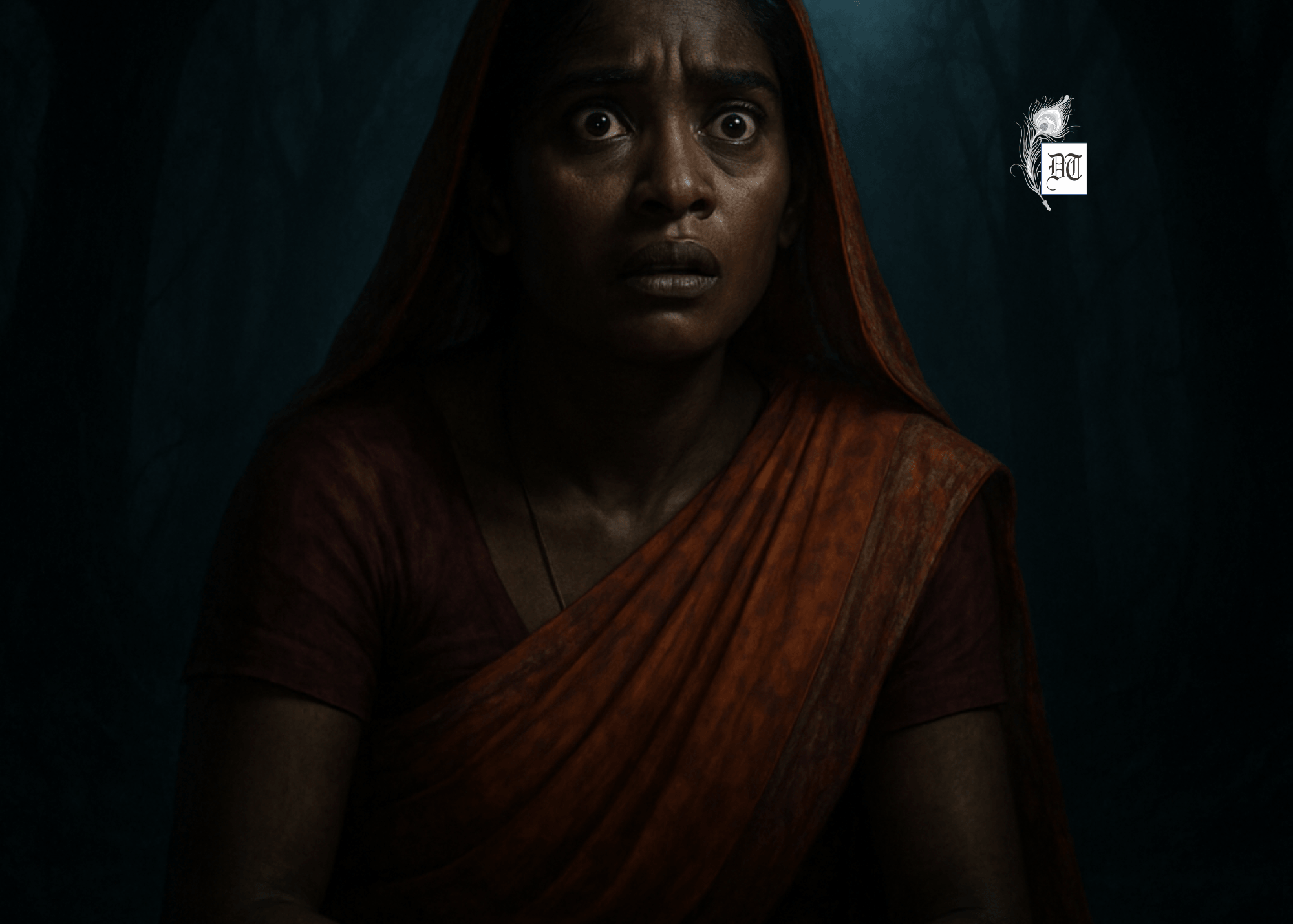
The lush forests cocooning the valley echo the tale of the maiden, the daughter of the tropical tree. Her story resonates in the morning dewdrops that drench the seed of the shimul flower when it germinates after a momentary spell of rain; a thousand tales are woven around her surreal presence, taking myriad shapes and forms, swelling up in the bosom of the water bodies.
Not even her absence, ‘the incense of burning flesh’, can refrain the valley from whispering her name.
Listen carefully; your ears will feel the rhythmic murmuring as the leaves of those tropical plants carry their voices far across the valley, resounding in yet another forest terrain; all they chronicle is how exotic she felt in her own skin, how the best of young, spirited men were enamoured with her charm, and how herds of young boys adored her tumult, her remarkable range, and her femininity.
Not even her absence, the frayed edges of the narrative they found along with the remnants of her body, can refrain the valley from whispering her name.
A daughter of the forest father and the green valley, whose mothering she experienced, she slept, unabashed, pure and fulfilled, beneath the shaded canopy of the trees, and then, as if struck by a magic spell, disappeared into the bodies of the trees cocooning her. She would touch the eager, inviting bodies of each tree, spreading out the green foliage with her supple hands, and they called out her name, echoing in the wetlands all around. In the first spell of each dawn, she would be reborn as the partner of the Sun God, who would protrude from her skin and remain deeply entrenched in her every pore. And then, at the stroke of every night, her doors and windows would open to take in the wild, gushing wind and the thousand storms that wreaked havoc on the wetlands.
Not even her absence, stunning the bhumi putras, the men of the soil, the animals, the insects, and the flora and fauna into stillness, could shut the way for her memories.
They spread her fire and earth; told the tales of the tattered, mangled foetuses bespattered with blood from her fertile womb; and left her to perish, cold and forlorn, in the folds of the dense jungle, the daughter of the soil whose skin was once warm, like molten gold. They shut her voice forever, the bhumi kanya, who sang and dissented the proverbs of Mother Earth, a force to reckon with, in the wetlands of India, Bangladesh, Sri Lanka, the islands of the far, mystic orient.
Plundered in the dense, dark night, amid the pockets of the jungle, her fire, her unmistakable spunk, burnt the valley for one last time when she clung to the branches of the tropical trees, frail, counting her last breaths. The branches, the barks of the trees, the leaves, and the unknown streams in the wetland assured her that she would still be the unvanquished, crown-less queen for posterity.
Remember, don’t you, plunderers and sinners? You all joined in unison to love her, to embrace her essence, to have your ‘fair share’ of her bounties?
Not even her absence, reverberating amid the dying forest and the ravaged valley, could alter the narrative which they collectively wiped out. They all breathe her essence as a living, lingering reminder, whispering her name.
*‘The incense of burning flesh’: Ref. A Brave and Startling Truth by Maya Angelou
Poet’s note: An eco-feminist prose poem, written during the National/Global Poetry Month 2026 in honour of Mother Nature, who is a metaphorical representation of us women, inspired by a poetic prompt given by fellow poet and writer Sunita Singh.
Picture design by Anumita Roy

Lopamudra Banerjee is an author, poet, translator, and editor with nine solo books and six anthologies spanning fiction, nonfiction, and poetry. Her work has earned recognition in India and the USA. Recent notable books include a collaborative poetry collection with Priscilla Rice, We Are What We Are (1st Prize, New York Book Festival 2024); her translation of Mallika Sengupta’s Kabir Bouthan as The Bard and His Sister-in-Law (Honorary Mention, Paris and Hollywood Book Festivals 2024); and Draupadi theke Nijashwi (2025).

 By
By
 By
By
 By
By
 By
By