
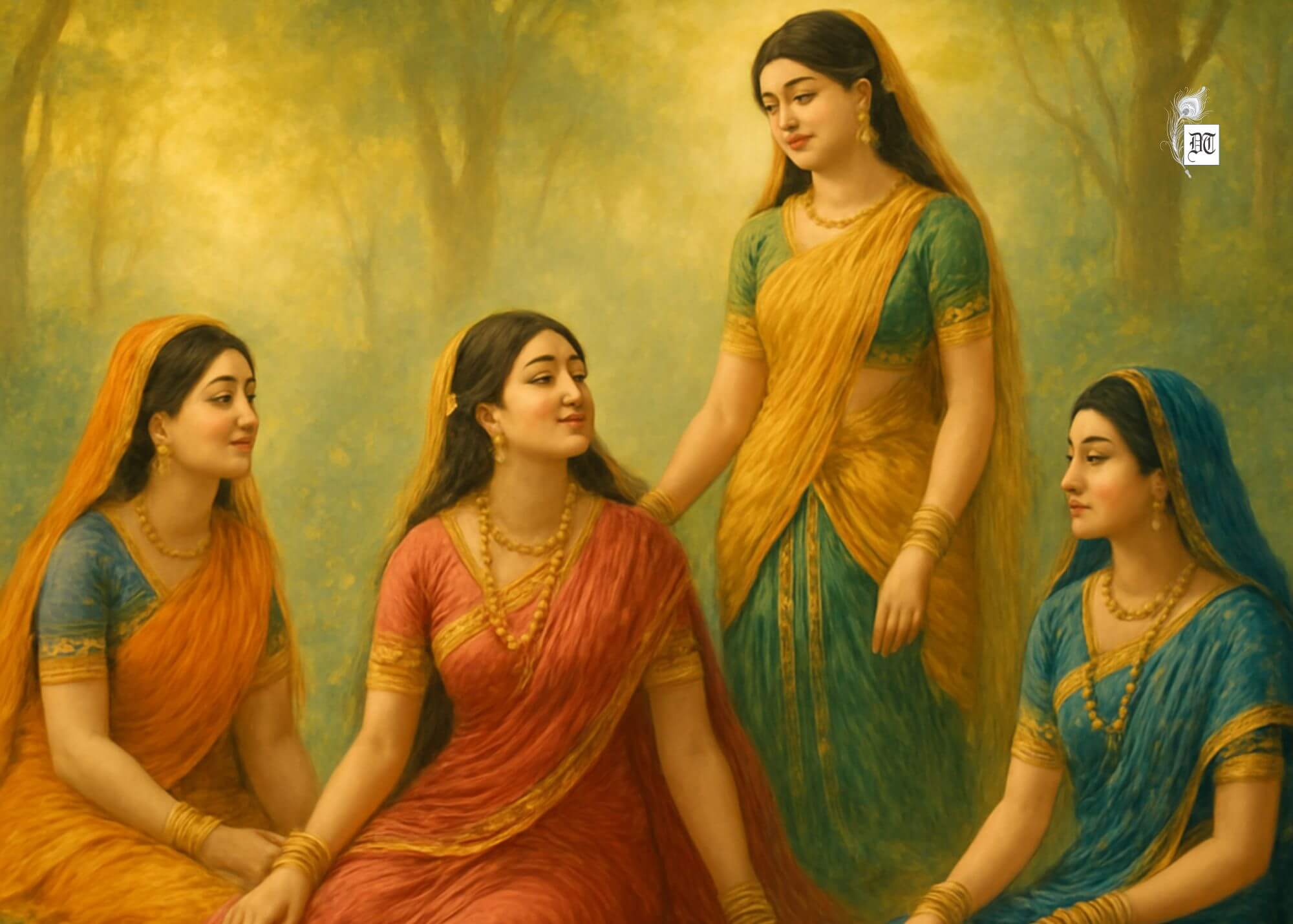
Sohini explores the complex bond between ancient spirituality and modern feminism for DifferentTruths.com, challenging simplistic contemporary gender binaries.

AI Summary
- Cosmic Feminine vs. Patriarchal Reality: While Hindu philosophy elevates the feminine as Shakti—an essential, cosmic force interdependent with the masculine—historical practice across centuries frequently devolved into deeply restrictive patriarchal structures.
- Radical Voices of Reclamation: Foundational texts feature intellectually autonomous women like Gargi, Draupadi, Sita, and Damayanti who challenged authority, choice, and justice, offering a fertile ground for modern feminist reclamation.
- An Unfolding Dialogue: Sanātan Dharma’s decentralised, evolving nature allows continuous reinterpretation, proving that the tension between tradition and progress is not a contradiction but a living, unfolding debate.
To many modern observers, the words Sanātan Dharma and feminism appear almost irreconcilable. One evokes ancient ritual, hierarchy, and tradition; the other, resistance, equality, and modern liberation. Yet this apparent contradiction reveals less about Hindu philosophy itself and more about the simplifications through which both religion and feminism are often viewed in contemporary discourse.
Sanātan Dharma — often understood broadly as the philosophical and spiritual tradition underlying Hinduism — contains some of the oldest surviving reflections on feminine power in world civilisation. Unlike many religious systems where divinity is overwhelmingly masculine, Hindu thought elevates the feminine to cosmic necessity. The universe itself is animated through Shakti: primordial feminine energy. Saraswati governs wisdom, Lakshmi prosperity, Durga protection, Kali transformation and destruction. Even Shiva, in metaphysical symbolism, is inert without Shakti. Consciousness requires energy; transcendence requires creation.
This is not merely decorative mythology. It reflects a philosophical principle: masculine and feminine are interdependent forces, neither complete in isolation.
And yet, history tells a more uncomfortable story.
Indian society, like nearly every civilisation, evolved through deeply patriarchal structures. Women’s freedoms fluctuated across centuries depending on region, caste, economics, politics, and colonial influence. Child marriage, restrictions on education, inheritance inequalities, and social conservatism became realities that often stood in sharp contrast to the spiritual language of reverence surrounding women. Critics, therefore, ask an important question: if the feminine was so sacred, why were actual women so frequently denied autonomy?
The answer may lie in distinguishing between philosophy and social practice.
Sanātan Dharma is not a single centrally governed religion with one prophet or one fixed doctrine. It is a vast civilisational framework layered with scriptures, epics, folk traditions, philosophical schools, and local customs accumulated over millennia. Within it exist both liberating and restrictive interpretations of womanhood. To read it honestly requires acknowledging both.
What makes Hindu tradition a uniquely fertile ground for feminist reinterpretation is that many of its foundational texts already contain women who speak, challenge, choose, and resist.
Gargi Vachaknavi, in the Brihadaranyaka Upanishad, publicly debates the sage Yajnavalkya on the nature of reality and consciousness before an assembly of scholars. Maitreyi questions whether wealth can grant immortality, privileging spiritual inquiry over domestic security. Draupadi, in the Mahabharata, openly interrogates kings and elders after being gambled away in a royal court, demanding to know whether a man who has lost himself has any right to wager his wife. Her question becomes not merely personal outrage but a constitutional crisis about justice and dharma itself.
Even figures traditionally interpreted through submissive ideals reveal unexpected complexity under closer reading. Sita, often flattened into an emblem of obedience, repeatedly demonstrates moral autonomy, courage, and fierce dignity. In several retellings, she refuses humiliation, challenges Rama’s decisions, and ultimately chooses self-withdrawal over conditional acceptance.
Then there is Damayanti, perhaps one of the most quietly radical women in classical Indian literature. In the Nalopakhyana, she chooses her own husband in a swayamvara despite the gods themselves competing for her hand. Later abandoned in the forest, she survives through intelligence, resilience, and strategic action rather than passive dependence. Her devotion is conscious, not submissive; her dignity remains intact even amid suffering.
These women complicate simplistic binaries between “traditional” and “liberated”.
The modern feminist engagement with Sanātan Dharma, therefore, does not always emerge through rejection. For many Indian women — in India and across the diaspora — it emerges through reclamation. The question is no longer whether feminism can exist within Hindu tradition but which voices within the tradition are amplified.
This debate has gained urgency in contemporary global culture, where religion is frequently framed either as an oppressive relic or an untouchable identity marker. Yet Sanātan Dharma resists such easy categorisation. Its decentralised nature allows continuous reinterpretation. Unlike rigid orthodoxy, Hindu thought historically evolved through commentary, debate, and philosophical plurality.
That flexibility may be precisely why feminist readings continue to flourish within it.
None of this absolves the very real injustices women continue to face in religious and social spaces. Romanticising ancient spirituality while ignoring present inequalities serves no one. But neither does reducing one of the world’s oldest traditions to caricature. The same civilisation that produced restrictive customs also produced some of the earliest recorded female philosophers in human history.
Perhaps the tension between Sanātan Dharma and feminism is not a contradiction to be solved but a dialogue still unfolding.
A famous Sanskrit line declares, “Yatra nāryastu pūjyante ramante tatra devatāḥ” — “Where women are honoured, there the gods rejoice.”
The challenge of modern India, and indeed of all societies balancing tradition with progress, lies not in repeating such ideals ceremonially but in asking whether they are truly being lived.
Picture design by AI

Sohini Roychowdhury is a renowned Bharatanatyam dancer, choreographer, artistic director, speaker, social activist, and professor of Natyashastra. She founded Sohinimoksha World Dance & Communications in Madrid/Berlin/Kolkata/New York. A visiting professor of dance at 17 universities worldwide, she won several awards, including the “Mahatma Gandhi Pravasi Samman” by The House of Lords, the Priyadarshini Award for Outstanding Achievement in Arts, and the Governor’s Commendation for Distinguished World Artiste. She has also authored several books, including ‘Dancing with the Gods’.
 By
By
 By
By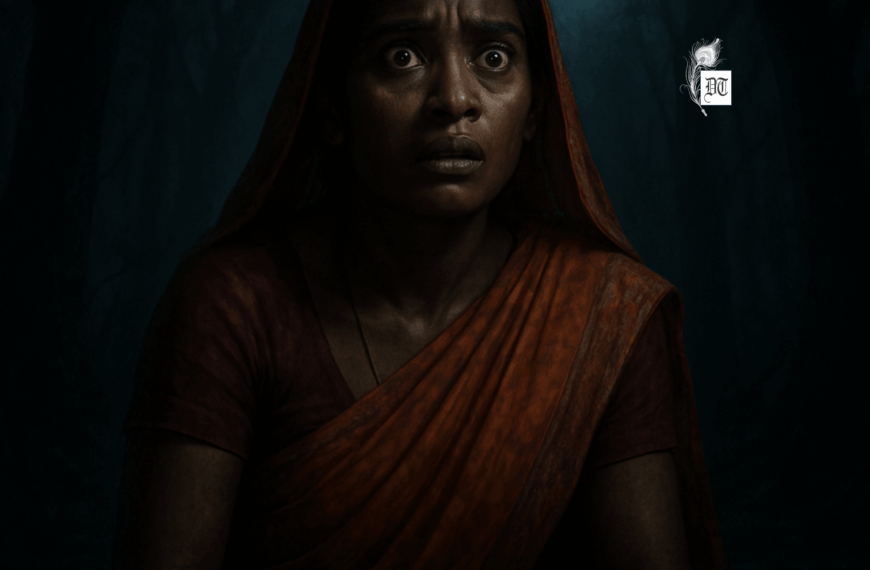
 By
By
 By
By