
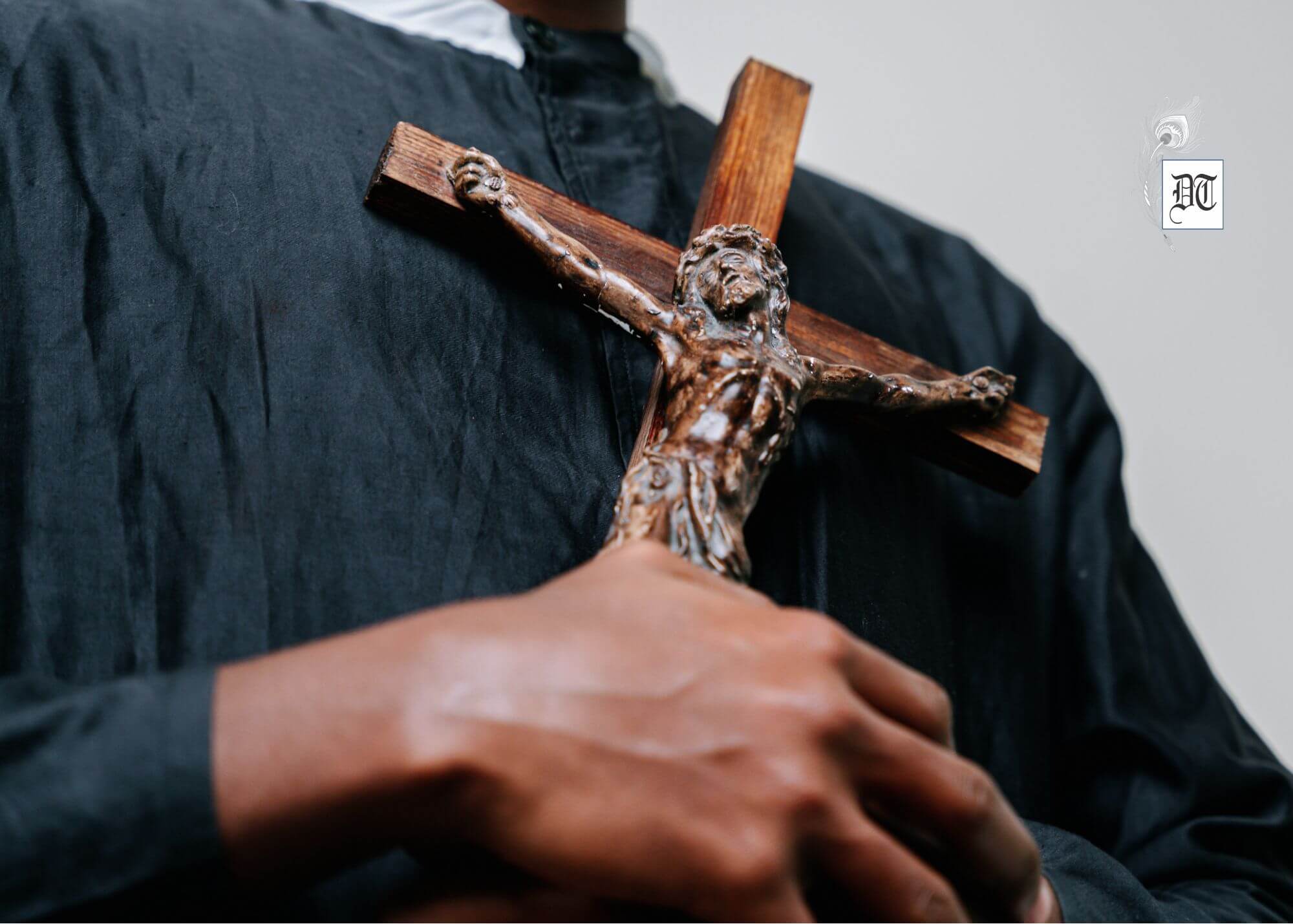
Akash explores the profound theological paradox of Good Friday for DifferentTruths.com, uncovering why this day of sacrifice remains central.
Inbox
AI Summary
- Theological Paradox: Analyses why a day of suffering is deemed “good” through the lens of divine purpose and salvation.
- Redemptive Suffering: Explores the crucifixion as the ultimate act of atonement, transforming an instrument of death into a symbol of victory.
- Prerequisite for Easter: Establishes Good Friday as the essential, sombre prelude necessary for the joy and promise of the Resurrection.
In the grand theological theatre of Christianity, few appellations are as paradoxical, as semantically arresting, and as spiritually profound as Good Friday. At first glance, the term appears almost oxymoronic—how can a day commemorating agony, betrayal, abandonment, and the brutal execution of the divine be deemed “good”? Yet, within this apparent contradiction resides one of the most luminous truths of Christian metaphysics: that goodness is not always synonymous with pleasure, nor is suffering inherently devoid of redemptive value.
Good Friday, the day marking the crucifixion of Jesus Christ at Calvary, is not “good” in the quotidian, hedonistic sense of comfort or felicity. Rather, its goodness is soteriological, about salvation and teleological, directed towards an ultimate, divine purpose. It is a day where human sinfulness and divine mercy converge in a cataclysmic yet salvific encounter.
To apprehend why Good Friday is “good”, one must traverse beyond the superficial lexicon of modern language into the deeper etymological and theological substrata. Some scholars suggest that “Good” in Good Friday may be a linguistic corruption of “God’s Friday”, thereby signifying its sacredness rather than its emotional tenor. Others argue that “good” reflects an older English usage, connoting holiness or piety. Yet, even if one were to dismiss these philological conjectures, the intrinsic goodness of the day remains irrefutable within the Christian doctrinal framework.
The crucifixion represents the apotheosis of divine love, a love so inexhaustible, so prodigiously magnanimous, that it embraces suffering not as an end but as a means to redemption. In the Passion narrative, the figure of Christ is not merely a passive victim of Roman brutality or Judaic conspiracy; he is, in the words of the New Testament, the Lamb of God who willingly assumes the sins of humanity. The horror of the cross is thus transfigured into a cosmic act of atonement.
Herein lies the paradoxical splendour of Good Friday: it is the day on which evil appears triumphant yet is ultimately vanquished. The crucifixion, an instrument of humiliation and death, is reconstituted into a symbol of victory and life. The cross, once a sign of imperial oppression, becomes the axis mundi: the spiritual centre around which the drama of salvation revolves.
Moreover, Good Friday compels a profound existential introspection. It confronts humanity with the stark reality of its own moral frailty while simultaneously offering the consolatory assurance of divine grace. In a world often enamoured with triumphalism and superficial success, Good Friday introduces a counter-narrative: that true victory may be born out of apparent defeat and that suffering, when imbued with purpose, can be transformative.
The “goodness” of Good Friday is also inextricably linked to its eschatological promise. Without Good Friday, there can be no Easter. The resurrection is predicated upon the crucifixion; glory emerges from grief, and life from death. Thus, Good Friday is not an isolated moment of despair but a necessary prelude to the jubilant crescendo of Easter Sunday. It is the dark canvas upon which the resplendent hues of resurrection are painted.
In the liturgical traditions of many churches, Good Friday is observed with solemn austerity: stripped altars, muted hymns, and contemplative silence. This ritualistic minimalism is not merely ceremonial; it is pedagogical. It teaches the faithful to dwell in the discomfort of suffering, to resist the temptation of premature consolation, and to recognise that redemption often necessitates endurance.
From a philosophical vantage point, Good Friday challenges the hedonistic calculus that equates goodness with immediate gratification. It posits a more nuanced moral ontology, wherein goodness is aligned with sacrifice, selflessness, and the transcendence of ego. In this sense, Good Friday is not merely a historical commemoration but a perennial ethical paradigm.
One might also discern in Good Friday a universal resonance that transcends confessional boundaries. The motif of redemptive suffering is not exclusive to Christianity; it finds echoes in various religious and philosophical traditions. However, in the Christian narrative, this motif attains its most dramatic and personal expression in the figure of Christ, whose crucifixion is both a historical घटना and a metaphysical घटना—simultaneously temporal and eternal.
In conclusion, Good Friday is “good” not because it is pleasant, but because it is purposeful; not because it is joyous, but because it is justifying. It is the day on which love is tested to its extremity and found inexhaustible. It is the day on which मृत्यु is confronted and, paradoxically, defeated. It is the day that reminds humanity that even in its darkest hour, there exists the संभावना of redemption.
Thus, to call it “Good Friday” is not an exercise in linguistic irony but an affirmation of a profound theological truth: that the greatest good may emerge from the greatest suffering and that in the shadow of the cross lies the promise of eternal light.
Picture design by Anumita Roy

Akash Paul, a renowned criminologist, theologian, historian, and demonologist, and the author of four globally acclaimed textbooks, pioneered post-crime analysis in criminology and comparative religious studies in theology. His expertise spans criminal profiling, sexual offences, Christianity, religious history, and Indian history, with research interests in Ancient Indian History and the Indian Freedom Struggle. An insightful critic of contemporary society, he also writes poetry, short stories, and novels, blending creativity with profound societal analysis.



 By
By
 By
By

Awesome article. Amen.
Marvelous article in this particular day 💖💖✨✨