


Ruchira reminisces that Desi comedy mocks brutal Indian parenting of the past, rife with corporal punishment, comparison, and the “spare the rod” mindset, for Different Truths.
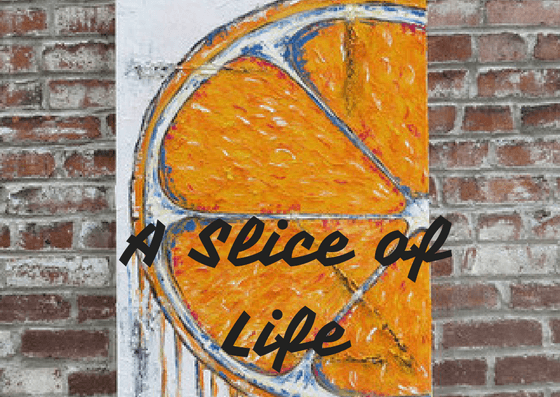
The moment you come across any desi comedy film (Bollywood or otherwise), meme, or serial on the subject of the “traditional Indian parenting system and style,” the motifs and images appearing before your eyes are those of rolling pins, indoor slippers, wooden cloth hangers, spatulas, brooms, hand fans fitted with long sturdy handles (a noted species being the Bengali taal pataar pakha, i.e., an entire palm leaf dried and dexterously moulded into hand fans), et al. A majority of these items are commonplace countrywide.
I can confidently bet that a majority of the children born between the 1930s and the 1970s are familiar with the aforementioned methods of chastisement and discipline.
Why this violent form of child rearing? Apparently, parents and guardians of earlier decades were indoctrinated, staunch believers of the axiom, “Spare the rod, spoil the child” (a contribution of their colonial rulers?)
Indian couples have long been renowned for their strong penchant for large families filled with multiple children who bring sunshine, laughter, and joy (termed ‘raunaq’ in Urdu) to their homes. They were dedicated to providing the best for their children, often making small sacrifices to ensure their happiness and well-being. However, when it came to the question of discipline, they failed, and miserably so. The moment the kid made a faux pas or indulged in a prank, either of the parents (in some cases, both) seemed to lose their composure.
Having said that, not all individuals of the earlier generations were subjected to what is colloquially termed as dholai (bashing, thrashing). The luckier ones escaped with just a few slaps, ear twists (kan mola), or loud reprimands and scolding from furious parents and guardians.
The firstborn or older children would have to bear the brunt of “disciplining” methods, both verbal and physical, while the younger ones would wriggle out of it glibly. For the simple reason that they observed and detected the older siblings’ loopholes and pitfalls and smartly avoided them to escape punishment.
I was the first surviving child after two tragedies, so my father was over-possessive about me. He wanted me to be a perfect child, cherubic, as good as gold. Therefore, even my smallest pranks, misdeeds or bad behaviour could not be overlooked. Naturally, many times my sibling would get me into soup, conveniently wriggling out of it himself! I admit my father was harsh. However, this harshness and severity would give way to remorse and regret; he would hold me close, shower hugs and kisses, and shed tears of remorse.
My parents, like their peers, had this odious habit of comparing their children with the wards of their friends, relatives, siblings, and colleagues. I excelled in academics, ranking among the top five in my class, yet they would compare me to their numerous nephews and nieces. It was loathsome, I tell you; it effectively infused me with a so-called inferiority complex which has clung to me to date.
I have bones to pick with my parents on yet another count. They had only ‘academics’ on their minds…they didn’t exactly discourage but were indifferent to dance and vocal music, which are part and parcel of typical Bengali homes. So now here I am, speeding towards my 60s with no special talent to my name. Sadly, I have never been able to emerge as the heart and soul (read performer) at any private, homely mehfil.
Now consider this: In recent years, there has been a paradigm shift in handling young children. Ultra-modern parents totally skip the process – both beating and verbal reprimand – lest the princess, apple of the eye or Raja Beta, feel hurt, bruised, nay traumatised.
The result is spoilt brats. I remember how, many years ago, my mother lovingly teased our neighbour’s toddler. The rude fellow responded with an unprintable word! His grandma, accompanying him nonchalantly, planted a kiss on his cheek as if he had done something heroic!
Conversely, sensing their parents’ lack of reaction, many children today are becoming rude, ill-mannered, cold, and curt, displaying not even the slightest politeness towards elders, relatives, or visitors. Some children become bothersome, always complaining for toys, gadgets, and expensive treats.
Due to the rat race, coupled with speedy lifestyles, parents tend to pamper children, and cater to their whims – covertly bribing to keep them quiet and under control—blissfully unaware that doing so would create a yawning abyss between adults and juniors, thereby throwing elements of trust, faith, confidence, and filial affection to the winds. The kids were likely to regard their parents as mere ATMs, and the chasm would only deepen.
It’s encouraging to note that social workers, psychiatrists, and psychological counsellors are engaging in substantial research, experimentation, and innovation in the field of child psychology. In my modest opinion, contemporary parenting methods must be in sync with the ground realities and requirements, albeit with a smattering of old-world table of values.
Picture design by Anumita Roy

Ruchira Adhikari Ghosh brings a liberal, wide-ranging outlook shaped by extensive travel across India and abroad. Educated at Holy Child School, New Delhi, Sacred Heart Convent, Ludhiana, and Panjab University, Chandigarh, she holds a Master’s in English Literature and a postgraduate diploma in Journalism and Mass Communication. With three decades in media, she writes on travel, books, music, performing arts, women’s issues, and especially food, drawing inspiration from rich life experiences. She is our Features Editor.

 By
By
 By
By

 By
By