
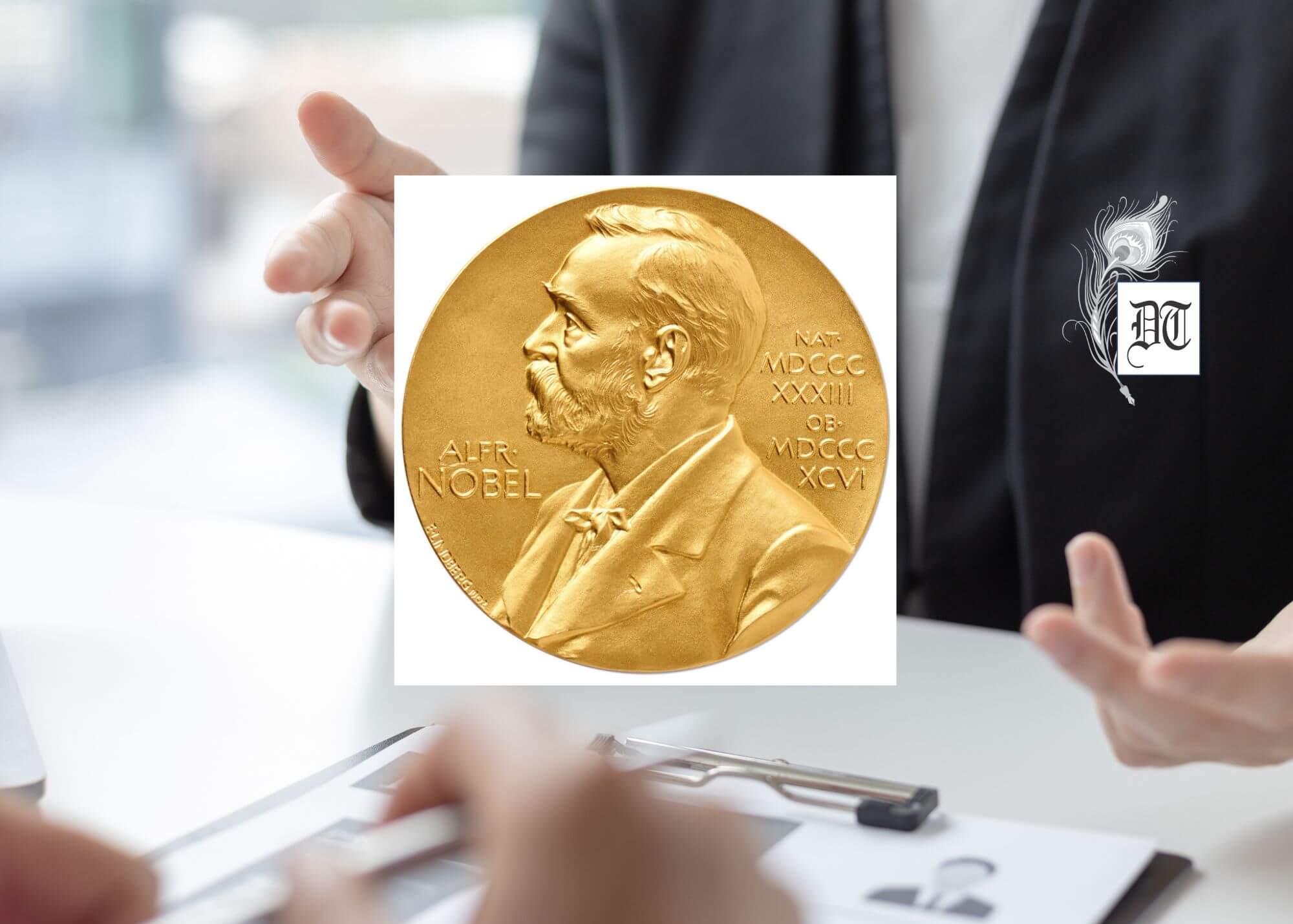

Dr Partha critiques the Nobel Peace Prize, once a beacon of hope, now mirrors power politics—rewarding an empire’s obedience over genuine resistance and justice, exclusively for Different Truths.
When Alfred Nobel wrote that his prize should honour those who “shall have done the most or the best work for fraternity between nations,” he could hardly have imagined that, a century later, the Nobel Peace Prize would become a political weapon.
This year’s award again exposes that distortion. The Committee has chosen a figure whose record aligns less with peace than with power—someone complicit, directly or indirectly, in systems of war and oppression. The justification is the story itself: the Peace Prize today honours obedience to the empire, not resistance to it.
History shows the pattern. Henry Kissinger received the prize in 1973, while U.S. bombers ravaged Cambodia and Laos; his co-awardee Lê Đức Thọ refused the honour in protest. Barack Obama accepted it in 2009, then expanded drone wars. Aung San Suu Kyi turned from democracy icon to silent witness to the Rohingya genocide. The Nobel Committee routinely rewards those who manage the aftermath of violence, not those who defy it.
Equally revealing are the silences. Noam Chomsky and Edward Said, whose lifelong work exposed the intellectual foundations of war and colonialism, were never considered. Greta Thunberg is lauded on magazine covers but not in Oslo. Grass-roots groups such as Brooklyn for Peace, and humanitarian networks like World Central Kitchen, feed and shelter thousands without fanfare—yet remain invisible to the Nobel gaze. Writers like Naomi Klein, who connect capitalism’s logic to climate catastrophe and conflict, stand outside the frame entirely.
This is the Journalism of Exclusion in prize form. The Nobel Committee, like the corporate media that glorifies its selections, filters morality through acceptability. It performs a moral theatre where the “good” are those who fit within the polite boundaries of Western diplomacy. Every ceremony becomes a broadcast spectacle: a winner’s speech on global television, corporate sponsors applauding, pundits proclaiming “hope.” Meanwhile, bombs fall, refugees starve, forests burn.
The truth is that peace cannot be awarded by the architects of war. A genuine Peace Prize would come from those who suffer wars, not those who profit from them—the children of Gaza and Sudan, the miners of Congo, the women saving forests in the Amazon. It would honour the unknown teacher, nurse, or aid worker who builds peace without medals or cameras.
Until that happens, the Nobel Peace Prize remains a glittering act of propaganda. It reassures the powerful that moral virtue is still on their side, even as their policies destroy lives and lands. Citizens everywhere must see through the hoopla, question who decides what “peace” means, and refuse to mistake ceremony for conscience.
History will not remember the Oslo banquets. It will remember the people who built peace with their hands, their hunger, and their hearts—and were never invited to the stage.
Picture design by Anumita Roy

Dr. Partha Banerjee is a human rights activist, writer, educator, media critic, and musician. Born and raised in Calcutta, Banerjee now lives in New York with frequent visits to India. His books and articles are in English and Bengali. He has written both professional and popular articles on a diverse array of subjects. He has also translated Bengali short stories, poetry and songs. He’s involved with the Bengali and Indian immigrant communities.

 By
By
 By
By
 By
By