
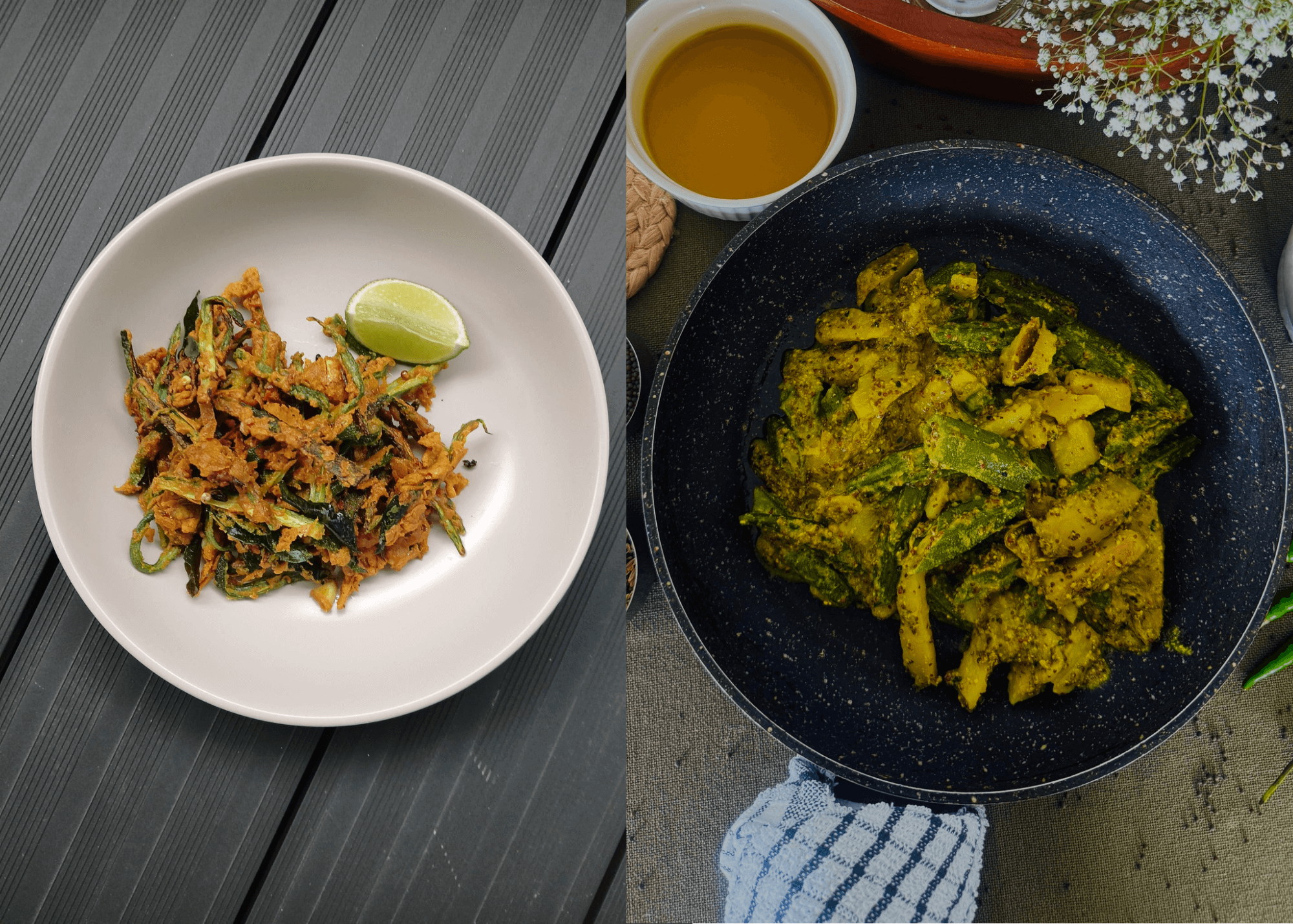

Sarika’s nostalgic tribute to a mother’s love, summer kitchens, quiet resilience, and the timeless recipes that keep family stories alive, exclusively for Different Truths.

Summers back then were chaotic, yet full of warmth. For us, it was all fun—school holidays, cousins visiting, mangoes, games, and laughter. But now, as a mother myself, I realise what a whirlwind it must have been for Maa.
She never let us see her struggle. She handled everything with quiet grace—no complaints, no signs of exhaustion. The house would be packed with guests, the heat outside relentless, and yet, amidst all of it, Maa would be juggling chores, conversations, expectations, and the never-ending question: what to cook.
Every morning began with this silent battle. The kitchen would turn into a furnace by mid-morning. Lunch had to be ready before Baba came home for lunch break from the office, or he’d just skip the meal altogether. I remember Maa, exhausted yet determined, sweat tracing her forehead on his red, red bindi, whispering to herself in frustration. She wanted everything to be perfect — every single time.
The biggest struggle? Choosing the curry.
The summer heat made everything feel heavy, bland, and unappetizing. And unlike today’s world of cold storage and chemical-laced vegetables, we only had what the season offered—potol (pointed gourd), jhinga (ridge gourd), and dharos (okra), so-called summer vegetables then. That was it. And out of these humble options, Maa would often cook Dharos Sorshe — okra in mustard gravy—tangy, sharp, and somehow comforting in its simplicity. I still make it. Every spoonful brings back a piece of today’s melancholy and Mayer hather ranna (mother’s cooking) and a slice of my childhood.
Years later, I found myself in her shoes, standing in a modern kitchen, asking the same age-old question. My son, however, isn’t a fan of mustard okra. So, I adapted—crisped it up and added spices, calling it “Crispy Bhindi.” Now he licks his plate clean.
And that’s the quiet beauty of motherhood—we cook not just to fill stomachs, but to keep stories alive.
Today, I’m sharing both recipes:
One from Maa’s kitchen, built on struggle, love, and seasonal limitations. And one from mine, flavoured with innovation, patience, and the silent triumph of a mother who just wants her child to eat well.
Sorshe Dharosh
Okra (lady’s finger) stir-fried to perfection, tossed in a creamy, bold Bengali-style mustard and poppy seed sauce.
Ingredients
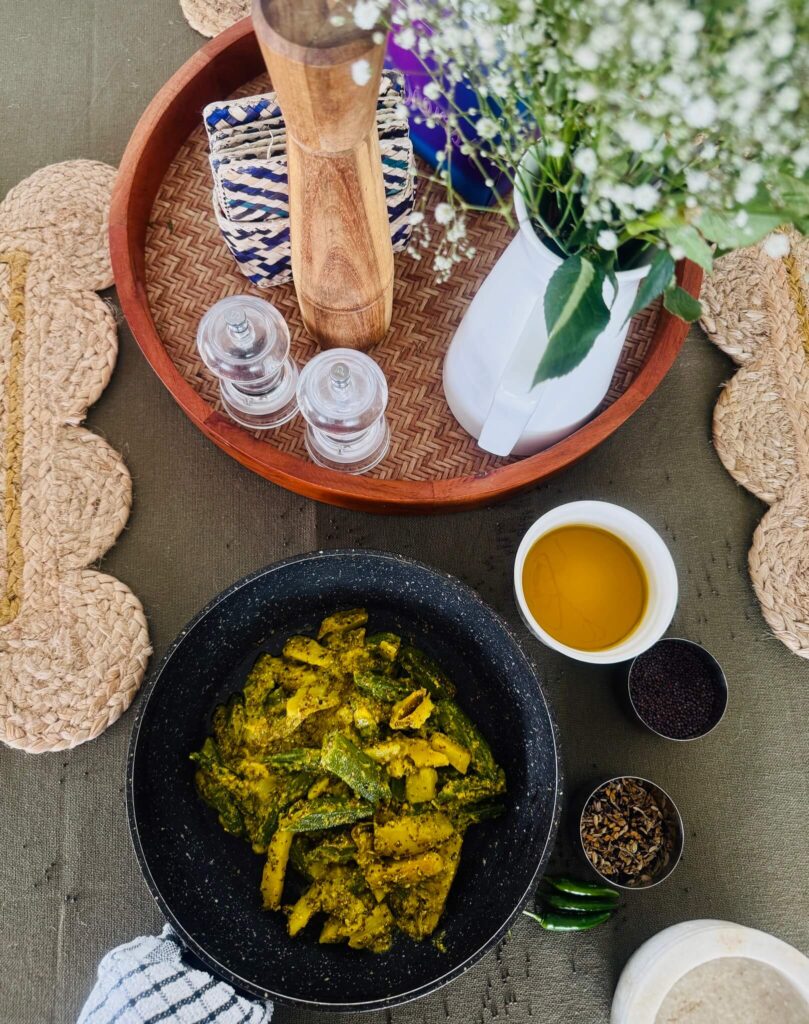
- 200 g dharosh (lady’s finger; 4-cm long)
- 100 g potatoes (2-cm-thick wedges)
- 15 g tomato (diced)
- 20 g poppy seeds
- 20 g mustard seeds
- 4 pcs green chillies
- 100 g water
- 40 g mustard oil
- ¼ tsp kaalo jeere (nigella seeds)
- 1 pinch turmeric
- 8 g salt
- 10 g sugar
- 6 g coriander leaves (finely chopped)
Method
- Soak the mustard and poppy seeds in water for at least two hours. Strain and transfer to a grinder jar. Add two green chillies, 8 gm salt, and 100 gm water, and grind everything to a smooth paste.
- Heat 40 gm of mustard oil in a pan until it is smoking lightly and pale yellow.
- Add the lady’s fingers and fry them until they are brown. Remove from the oil and set aside.
- Temper the same oil with dried red chillies and kaalo jeere.
- Add the potatoes and fry on medium heat until they turn golden (about four minutes). Add the tomato and fry for another minute before adding the mustard and poppy seed paste.
- Add turmeric and sugar, and sauté on medium heat until the raw smell of mustard and poppy goes away.
- Once the potatoes are cooked, add the fried lady’s finger back to the pan. Cook everything for another three minutes or so, but don’t let the lady’s finger get too mushy, or it will become slimy.
- Finish with 1 tsp raw mustard oil and chopped coriander leaves.
Kurkure Bhindi
Ingredients
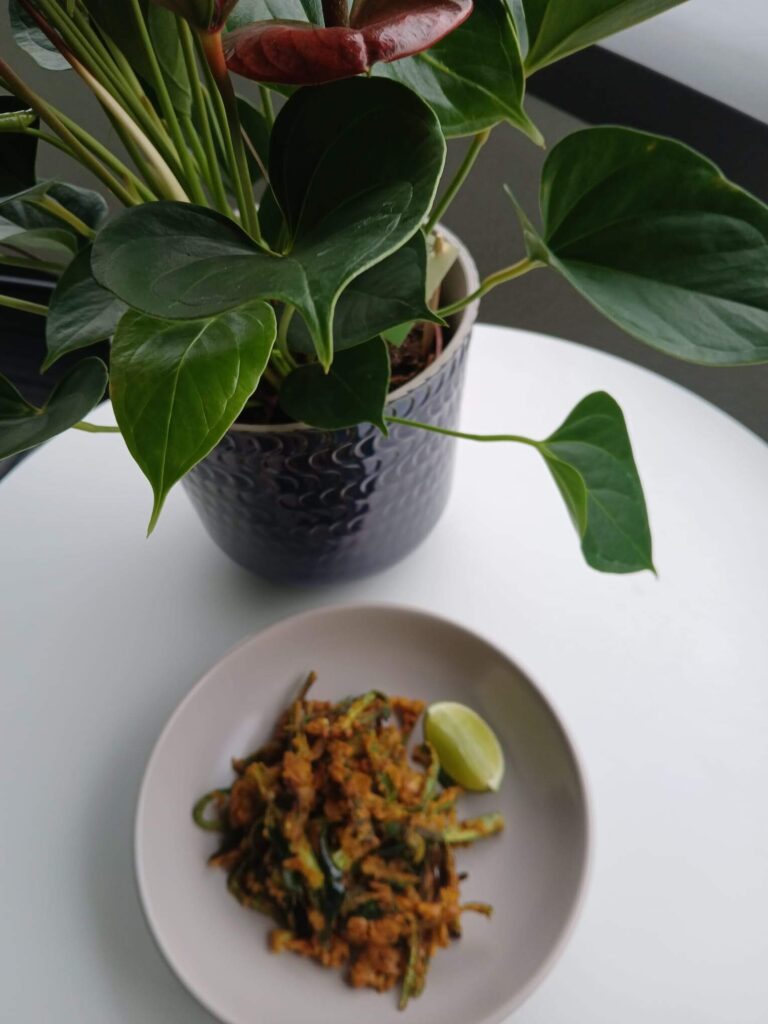
- 500 grams okra (bhindi or ladyfinger)
- ½ teaspoon turmeric powder (ground turmeric)
- 1 teaspoon red chilli powder or paprika
- 1 teaspoon coriander powder (ground coriander)
- 1 teaspoon cumin powder (ground cumin)
- 1 teaspoon garam masala
- 1 teaspoon dry mango powder (amchur powder)
- 1 teaspoon chat masala
- ½ cup gram flour (besan) chickpea flour
- Salt—add as required
- 10 tablespoons oil or add as required for frying the bhindi in batches.
Preparation
- Wash the okra (bhindi) thoroughly 3–4 times and dry them completely with a kitchen towel. Cut off the top and tip.
- Slice each okra lengthwise into 4 strips.
- If using small okra, cut them into 2 pieces instead. Transfer all the slices to a large plate or bowl.
- Sprinkle the spice powders over the okra one at a time and add salt to taste.
- Gently toss with a spoon or spatula to coat evenly.
- Add besan (gram flour) and mix gently again so that all the slices are coated uniformly with the flour and spices.
- Let the mixture marinate for 20–30 minutes, or up to an hour if you prefer.
Making Kurkuri Bhindi
- Heat 2–3 tablespoons of oil in a kadai (wok) or frying pan over medium heat.
- Add one batch of marinated okra and fry. Depending on the size of your pan, fry in 3–4 batches. Add more oil if needed.
- Fry the okra, turning occasionally, until golden brown and crisp. If the oil gets too hot, reduce the flame slightly.
- Remove the fried okra and place them on paper towels to drain excess oil.
- Repeat the process for the remaining batches, adding 2–3 tablespoons of oil each time and letting it heat before adding more okra.
- Serve the Kurkuri Bhindi hot as is, or garnish with chopped coriander, ginger juliennes, or sliced green chilies if desired.
Optional: Drizzle lemon or lime juice over the crispy bhindi or sprinkle some black salt (kala namak) or chaat masala for extra flavour.
Enjoy your Kurkuri Bhindi just the way you like!
Photos by the author

A teacher, day dreamer, random experimental cook and some hit and miss photography, and at last love to call myself a full time mother.


 By
By
 By
By
Scrumptious!