


Ruchira interviews Satyakam Sen, an archaeologist and an exponent of Rabindra Sangeet – exclusively for Different Truths.
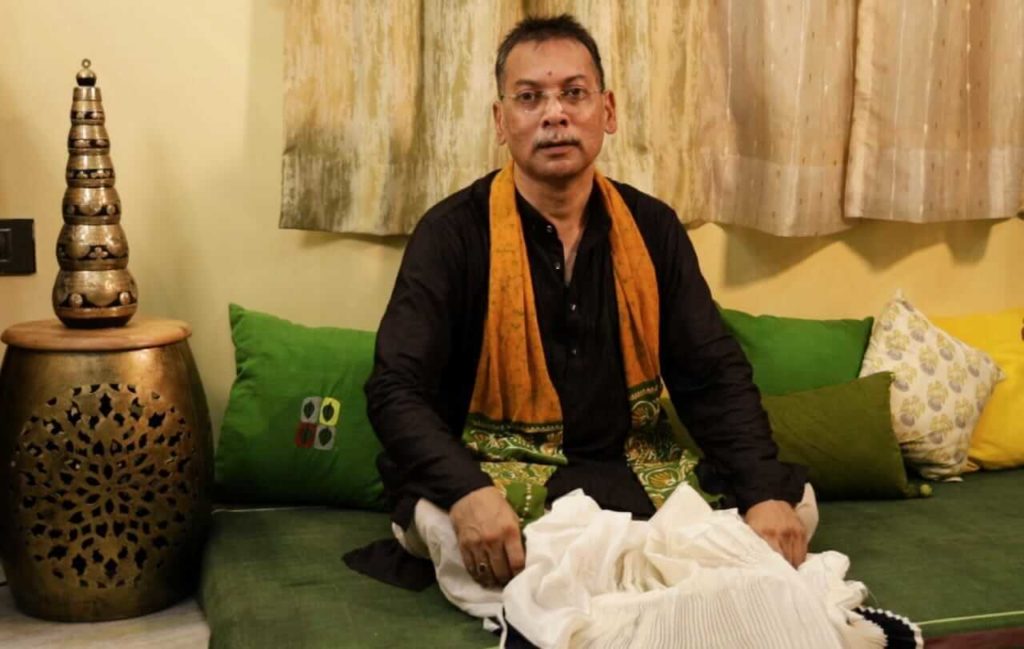
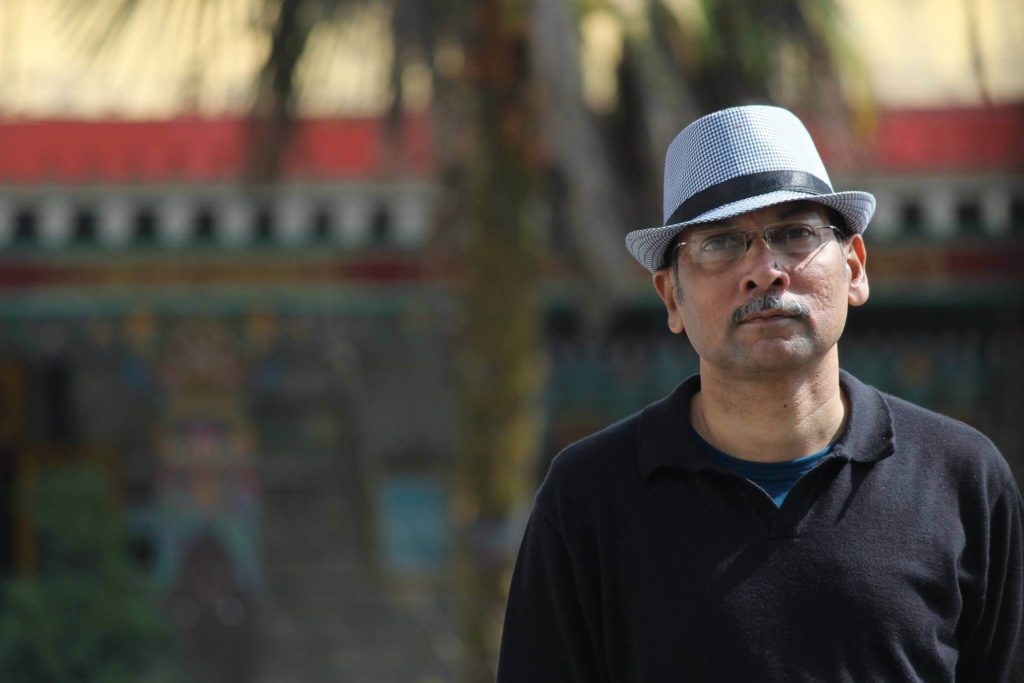
At a cursory glance, he comes across as quintessentially Bengali bhodrolok. The bespectacled gentleman with a receding hairline is mild-mannered and soft-spoken. He divulges in a musical voice that he is an archaeologist-in-charge at the iconic National Museum, Kolkata. Furthermore, he is a noted Rabindra Sangeet professional. Meet Satyakam Sen, whose father, Late Prasad Sen, was a renowned Tagore music exponent during his heydays. Getting in touch with Sen was as easy as ABC since one of his nephews happens to be my buddy, a family friend. It was a refreshing experience delving into the mind of a ‘singing’ archaeologist.
Ruchira: Archaeologist or singer, which one is the real you?
Satyakam: Would you believe me if I said a bit of both? (Laughs). As an archaeologist, I am trying to dig out the glorious past of Indian music and the rich heritage of our country.
Ruchira: Please tell us about your illustrious father, a stalwart of the Santiniketan music school.
Satyakam: My father, Prasad Sen, was an exponent of Rabindra Sangeet during his time. He toiled hard to establish Rabindra Sangeet as a distinct musical discipline. He was an outstanding artist and an excellent teacher. He penned several articles as well as a book on Tagore’s music. He acted as an expert and advisor in various committees and organisations.
Ruchira: Hindustani Classical music is the backbone of Indian music. Are you trained in it? Do you think it would help? How did you juggle academics with music?
Satyakam: Music was an integral part of my senior school and undergraduate courses curriculum. While pursuing my master’s degree from Calcutta University, I continued learning Hindustani classical music primarily from my father and other stalwarts like Dr Kumud Ranjan Banerjee and Sh Debi Ranjan Banerjee, Smt Purabi Dutta, Sh Sukesh Jana, among many more. Classical training has helped me to discover the true spirit and innate beauty of Tagore songs.
Ruchira: Please shed light on your music institute. How did it come into being? Trace its journey so far.
Satyakam: This year, Sohini completed 50 years of its existence. It is the brainchild of my father, late Prasad Sen. He was a Santiniketan alumnus and learnt singing under the tutelage of legendary teachers like Acharya Sailaja Ranjan Majumdar, Smt Indira Devi Chaudhurani, among others. And it was founded to maintain, uphold and cherish the salient traits of the Santiniketan school of music. It does not look for training and performances only but is watchful to preserve the originality of the form of Rabindra Sangeet, whether manually or digitally. Located within the premises of our family’s Kolkata home, it was currently being run single-handedly by me since my father’s demise a few years ago. During his lifetime, we were the faculty ourselves. We adhere to the guru shishya parampara steadfastly. Since its inception, the school has been conducting dance dramas, music seminars, workshops, et al.,for the public. Being run entirely with private funding so far (our friends have contributed hugely), the school has lately become eligible to receive financial assistance from the state. There is a possibility of it being institutionalised soon.
Ruchira: How do you manage to juggle archaeology, an exacting profession and music?
Satyakam: Well, I would say that during my office hours, I immerse myself entirely in my work, totally oblivious of my organisation. But after office hours, Sohini occupies my mind and nothing else besides. I devote the maximum time possible to the minute details and rehearsals and involve myself in the smallest of activities connected with the organisation. But you know, nowadays, the dividing line between the contents of the Museum and the institution is getting blurred as both are focused on preserving heritage and culture. Though there are two kinds of the estate, tangible and intangible, they are complementary to each other at the ground level.
Ruchira: What is music (read Tagore songs) to you? Also, your views on Tagore, the poet and the visionary?
Satyakam: For me, each Tagore song is music personified. The lyrics set totunes virtually transport the listeners to an ethereal world – away from crass realities – pervaded by myriad emotions, serenity, and the beauty of nature. Tagore is a great philosopher. With his inherent qualities, he gave concrete shape to his noble thoughts, ideas and beliefs via music, poetry, songs, and paintings. Ultimately his sublime philosophy evokes a welter of emotions, touching the core of our hearts.
Ruchira: Has your offspring donned your musical mantle?
Satyakam: Yes, my daughter Sampurna is pursuing her postgraduate studies in Rabindra Nritya (dance) Vishwa Bharati Santiniketan. As for the rest of her career, the decision is entirely hers.
Visuals and videos sourced by the interviewer

Ruchira Adhikari Ghosh brings a liberal, wide-ranging outlook shaped by extensive travel across India and abroad. Educated at Holy Child School, New Delhi, Sacred Heart Convent, Ludhiana, and Panjab University, Chandigarh, she holds a Master’s in English Literature and a postgraduate diploma in Journalism and Mass Communication. With three decades in media, she writes on travel, books, music, performing arts, women’s issues, and especially food, drawing inspiration from rich life experiences. She is our Features Editor.


 By
By
 By
By