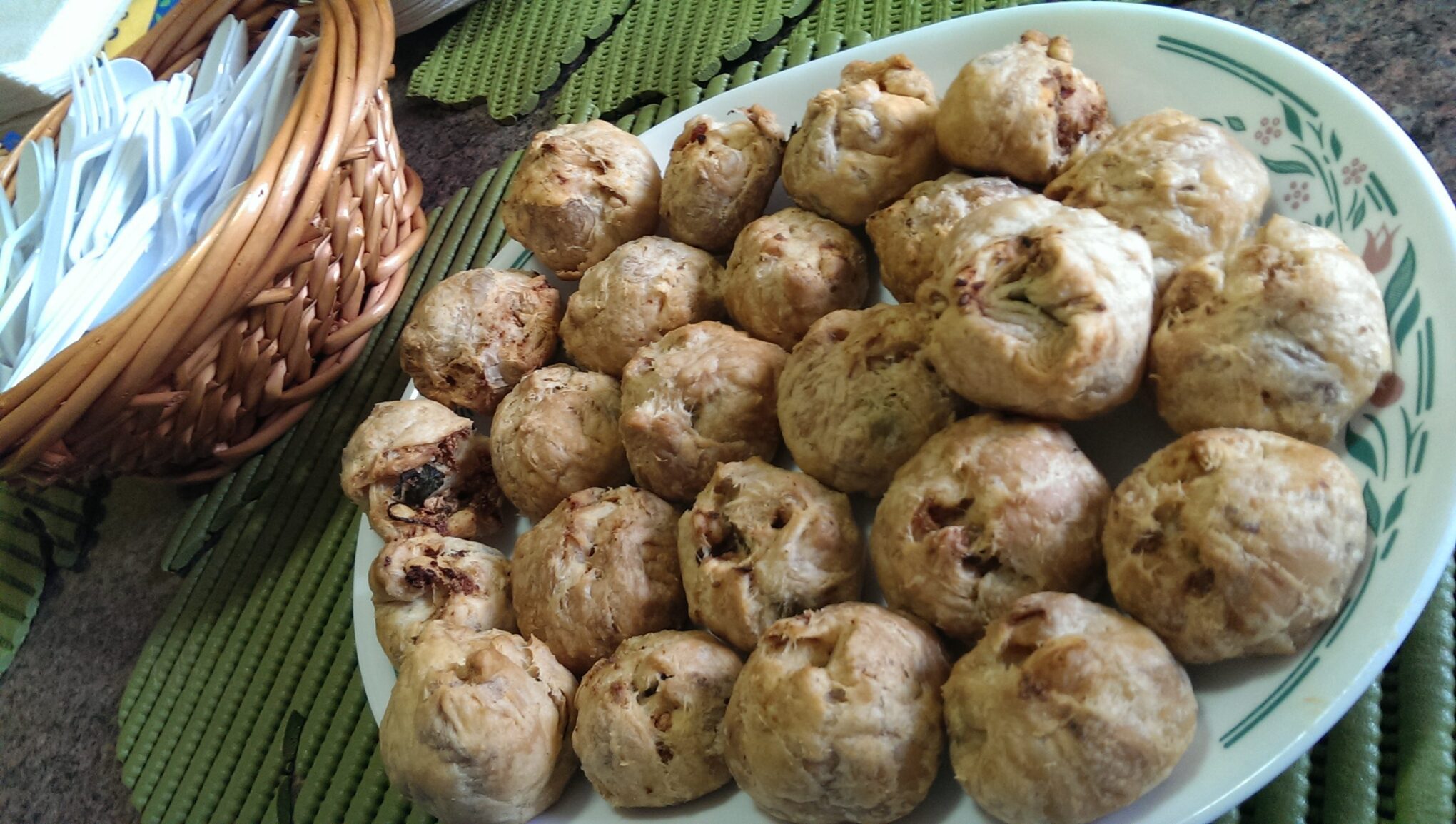
Ruchira traces the antiquity of ice cream to the ancient Greeks and Romans. A summer delicacy, its cousins Falooda, Kulfi and Sorbet beat the heat. An exclusive for Different Truths.
 The word sounds music to the ears, every man’s delight. From the princely to the poorest of the poor you would seldom find an individual who does not enjoy this ultra-delicious fare. In the warmer parts of the globe, ice-cream is nothing short of Manna from heaven to wipe away the surrounding atmospheric heat, albeit for a short time. On the other hand, we find that in the colder areas ice cream occupies a pride of place in their respective gastronomy as a dessert or sweetmeat.
The legendary (read notorious) Roman Emperor Nero reportedly despatched his domestics to fetch ice from the mountains, every year during summer. He would combine it with fruit toppings, thus creating a coolant to beat the summer heat.
Ice creams have had an interesting beginning. Ancient Greeks and Romans were known to consume snow mixed with honey and fruit. The legendary (read notorious) Roman Emperor Nero reportedly despatched his domestics to fetch ice from the mountains, every year during summer. He would combine it with fruit toppings, thus creating a coolant to beat the summer heat.
The Persians too had their signature summer delight How many of you know that the highly popular Falooda originated in Persia? Falooda is basically starch-based, translucent, glassy noodles (call it vermicelli if you like), which when combined with generous helpings of rose water, dried fruits and nuts, tinged with a streak of saffron (aka kesar or zafraan) is bound to leave you both chilled and thrilled!
Nowadays, most of us are aware of the fact that Falooda has evolved as an invariable accompaniment to dear old Kulfi. Incidentally, Kulfi may jolly well be branded as a desi avatar (linked to the subcontinent) of ice cream. However, it is also believed to be of Persian origin.
Incidentally, Kulfi may jolly well be branded as a desi avatar (linked to the subcontinent) of ice cream. However, it is also believed to be of Persian origin.
For preparing Kulfi, sweetened, flavoured milk is boiled over a slow fire for long
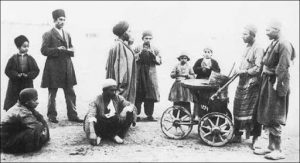
hours. However, the milk must be continuously stirred in order to prevent it from sticking to the bottom of the vessel and get burnt. The boiling continues until the volume of milk is reduced to a half and gets thickened in the process. This creamy mass is now poured into metal moulds and their mouths are tightly sealed/locked. (The Persian word for a lock is qulaf. See the connection?) The moulds are then submerged in salt mixed ice and later placed in large troughs or alternatively wide, earthen pots. This results in high-level freezing. By the way, owing to its density Kulfi has a higher melting point than ice cream.
Call it an interesting coincidence but the popular frozen dessert Sorbet is of Persian origin too! The Persians hailed their favorites summer beverage – using motley ingredients viz yoghurt, lemon, butter milk, mint, ginger, vetiver, sugar, types of salts and numerous spices – as Sherbet. During medieval times the Ottoman Turks introduced sherbet in Europe. There it came to be known as sorbetto and sorbet in Italian and French respectively.
During medieval times the Ottoman Turks introduced sherbet in Europe. There it came to be known as sorbetto and sorbet in Italian and French respectively.
A close cousin of ice cream, the gelato has been pretty much the ‘in’ thing for several decades now. Though the major ingredients for both happen to be milk and cream, yet there is a subtle difference between the two. The former contains more cream than milk, whereas gelato involves a greater quantity of milk and lesser cream. And two while ice cream may (or may not) include egg yolks, for gelato this is an absolute no-no.
As far as the flavours go…the list is as vast as the galaxy! Vanilla, strawberry, chocolate chip, mint and chocó chip, chocolate almond, butterscotch, chocolate marshmallow, chocolate banana, chocolate mudslide…phew! I give up. We Indians are an enterprising lot. Hence the rise of desi flavours – paan, melon, Kesar Pista, Kaju kishmish, badam, etc – to cater to local palates.
Photo from the Internet

Ruchira Adhikari Ghosh brings a liberal, wide-ranging outlook shaped by extensive travel across India and abroad. Educated at Holy Child School, New Delhi, Sacred Heart Convent, Ludhiana, and Panjab University, Chandigarh, she holds a Master’s in English Literature and a postgraduate diploma in Journalism and Mass Communication. With three decades in media, she writes on travel, books, music, performing arts, women’s issues, and especially food, drawing inspiration from rich life experiences. She is our Features Editor.

 By
By
 By
By
 By
By