

Anumita delves into the complexities of relationships in a Bengali home, on the occasion of bhaiphota. An exclusive for Different Truths.
Growing up in a house filled with girls, we often felt a sharp pang of sadness for not having a brother to pamper and be pampered during bhaiphota /bhaiduj. This particular festival is about the brothers getting a dot of sandalwood paste on their forehead from their sisters, cousins included, and lots of gifts. Mostly, the elder of the siblings or cousin would be the gift giver. Quite similar to rakhi, bhaiphota had its share of fun and lots of bonding.
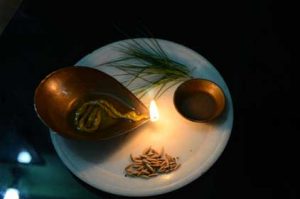
We had a unique ritual that day, the first Chandan er phota (dot of sandalwood paste) was to be applied on my dadu’s (grandfather’s) forehead. The first time I was confused about this mix up of relationships.
My maternal cousins would often make it to our house to celebrate and fulfill the brother figure for us. We had a unique ritual that day, the first Chandan er phota (dot of sandalwood paste) was to be applied on my dadu’s (grandfather’s) forehead. The first time I was confused about this mix up of relationships. Then ma explained to us that dadu was like a son to ma and my other aunts and so he is like a brother to us. What kind of logic was that? Full of confusion, I did what was said.
In all our endearments, in most languages, we use the word baby so frequently. That does not imply that that person is an infant. Similarly, in Bengali the word “babu” and “baba” is used in so many different senses. I call my boys baba and call my father “baba” too.
I call my boys baba and call my father “baba” too.
Last month, when my father was visiting me, there was often confusion about who
I was calling. My voice intonation and the subject of my speech would the deciding factor who I was talking to. Often, I would see both my children and my father looking at me as I was saying something with the word “baba” in the sentence. It looked funny to me but frustrating for them.
I know many of us Indian families call their daughter and their mother “ma”. It is a common practice. It is like recycling of relationships. The role reversal is evident from the address from the childhood. A way of projecting what will be in the future when the child will be the guardian of the parent to take care of them as their children.
Another confusing address is “babu”. The word “babu” was used with reverence for big officers, in the yesteryears. During the British rule babu was added to the name to show status and respect. Then it infiltered into homes. Little boys were “babus”, and mothers often added a “shona” with the babu (golden lad) to show their love while addressing their boy.
As years went by, babu became a common from of endearment used for both girls and boys even among love birds. The word babu travelled form respect, affection, friendship and then to love.

As years went by, babu became a common from of endearment used for both girls and boys even among love birds. The word babu travelled form respect, affection, friendship and then to love. A simple from of address shows fondness for someone and encompassing so many types of relationships.
There is very fine difference, here “babu shona” is a mother’s love for her child and “shona babu” is an endearment between the enmoured couples. So next time you use these words together, remember the sequence.
Most Indian languages have separate names for maternal and paternal family members. Bengali has specific address for elder and younger aunts and uncles and separate forms of addressing for maternal and parental grandparents. We are so specific that we even split elder sisters and brothers with younger ones. When every relationship has their specific addresses and names, it is so confusing to be told that dadu is my brother in some kind of relationship.
When every relationship has their specific addresses and names, it is so confusing to be told that dadu is my brother in some kind of relationship.
Guess, this is what family is all about. Complex relationship creates a stronger bond in the tapestry of the family fabric.
Photo from the Internet

Anumita Roy is an artist at heart and legal/medical interpreter by profession. She creates word images in her verses and loves to write short stories. Mother of children in the spectrum, she advocates special needs issues in whichever way possible. Born in India, brought up in several countries, makes her a true global citizen. She now lives in the Columbus, Ohio, with her family and follows her passion for writing and advocacy being the Managing Editor of Different Truths.
 By
By
 By
By

 By
By