

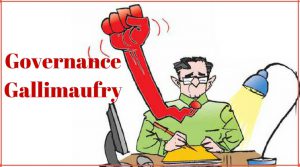
 Hemashri likens Domino’s money-back pizza policy to government departments. Sadly, no one is accountable for the giant delays, in some cases, of nearly 100 years. Two state governments, Madhya Pradesh and Bihar, have brought about changes in governance. It’s time for other state governments and the Centre to follow it. Read more in the weekly column, exclusively for Different Truths.
What happens when a Domino’s Pizza is not delivered within thirty minutes? We have returned your money, so the pizza is free. That is Domino’s 30-minute pizza policy. Of course, the terms and conditions apply. Domino’s Pizza is an American pizza restaurant chain founded in 1960. I admire this bold declaration that promises pizza in 30 minutes, with a refund if it’s not delivered. To survive with such a tagline, you need a high level of professionalism. I do not know any other company with a similar marketing strategy.
Domino’s slogan is innovative, perhaps a strategy to stand out in the crowd. However, every ordinary restaurant must meet a certain minimum standard to survive in the tough competition. But what happens in the government sector? Is there a timeline for getting your certificates or documents within 24 hours, or, say, on your first visit? Except for “Tatkal services” for railway bookings, perhaps no one else thinks this way.
This scenario is my favourite analogy – visiting an ATM to withdraw cash. Even before one completes counting the money, the SMS declares the amount withdrawn. When we visit a government office, we do not know whom to approach, whether that person is available, how long it will take, or how many visits it will require. Most offices do not display the Citizen’s Charter. How come two such diametrically opposite worlds coexist?
In the private sector, everything is instantaneous, but in the government sector, even now, the peon delivers letters by hand. Why does one sector absorb technology and the other abhor it? My rebellious mind demands an answer, but a government employee (who still prefers the word ‘servant’) has no right to question it. So the rebel in me fumes in anger and picks up the pen to write real stories after exhausting everything else.
There was a time when I, an inexperienced bureaucrat, passionately pursued every stranger’s matter for  quick disposal. It led to so much hostility that on the day the deputy commissioner called her to his chamber to explain, “See, these agents are authorised persons of people to work on their behalf who, for some reason, do not want to come to our office. So you have no right to harass or cause them inconvenience by making them sign in the Receipt Register.” I was utterly confused. To enforce the first-come, first-served principle, we assigned a number to every application received and to every certificate issued. We maintained an issue register to record issues or receipts. The very next day, I was relieved from the branch where I had introduced the system.
My college senior, Kalyani Gogoi, had been coming to the State Secretariat for the last eight years to obtain approval for her deputation period and one month’s earned leave. Her services had not been confirmed for this position, and she was drawing ten thousand less than her due salary. I followed up on her file and learnt that, for something so routine, other departments had referred it to themselves for their opinions. The system is such that the sufferer is expected to run after the file.
Smti Minakshi Kakoty is a brilliant postgraduate of the Indian Institute of Technology. She was a professor at Assam Engineering College, from where she resigned to become an IT entrepreneur. In 2012, she completed a digitisation project that she had won through the usual bidding process. For six years, she has been visiting the deputy commissioner’s office to pay her outstanding dues amounting to 12 lakh rupees. The concerned officer told her the reason for the delay: “The file could not be located, as the earlier office assistant died.” She had been running from pillar to post when I met her one day. I contacted the officer, a batchmate of mine, requesting that he help the distressed lady, but there has been no relief to date. This highly educated lady, one day, stormed into my chamber and said, “If a qualified, capable woman like me has to take such treatment, then I can imagine what a layman can expect from your government.” I had to endure it because she was fully justified. I suggested she approach the appropriate authority.
In 2015, I met a 78-year-old retired teacher, Prabhat Thakuria, who told me he had been visiting the office for his land-related work since 2012. I expedited the matter. I met him three months ago, and he told me the process was still ongoing. The 80-year-old man, who had lost his wife after a brain tumour operation, was still following up on his file. He reminded me of my 80-year-old officer’s chamber, and then of the chamber of the officer concerned. His work is not yet disposed of. This list is endless.
Earlier, I was immature, so I tried to change things. Now, I am changing my reaction by recording their cases as case studies. Next month, in August, my pending prayer will complete twenty years of initiation, which is still in process. I plan to celebrate it in a befitting manner.
However, the king of all kings – the grandest of all pending cases – is a file related to a will. This property, based in Kolkata, belonged to a rich Assamese timber merchant. The Will was probated in 1921 before the Kolkata High Court, under which he donated a large piece of real estate for the welfare of poor primary school students in Assam. After nearly 90 years, I had the privilege of receiving a few papers from Kolkata, informing me that illegal occupants were trying to encroach on part of the property. We raised this issue with the appropriate team a decade ago. Now, the case will be a hundred years old soon, but we have yet to acquire the property.
Time is a premium. If the pizza is not delivered within thirty minutes of placing an order, Domino’s returns the money. The poor delivery boy pays for it from his salary. Why does a similar policy not apply to the erring officer, who earns a higher salary? Strangely, no one is accountable in the government departments. Such practices must change.
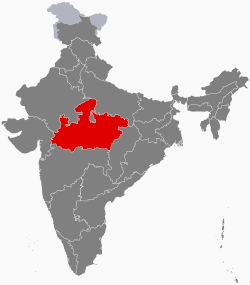 In India, Madhya Pradesh was the first state to enact legislation to ensure the timely delivery of public services. It was followed by Bihar, a state that is considered a history-sheeter in matters of development. Both of these states were part of the BIMARU (an acronym for “sick”) states. Today, these states have reportedly transformed governance, making full use of technology. Ultimately, in matters of public service, public satisfaction is crucial. Who will cast their vote to decide who will govern the state?
Domino’s thirty-minute pizza policy must serve as a rude reminder to other pizza companies to set their benchmark for continuing to sell pizza. Along with strong goodwill and a commitment to serve, technology may (read: must) be allowed to penetrate to ensure maximum citizen satisfaction by enabling quick delivery. A citizen’s rating shall go up, and so will credibility and trust. Let there be healthy competition in crucial areas.
Why? Only Domino’s delivers every pizza warm and fresh!
©Hemashri Hazarika
Photos from the Internet
#MoneyBack #PizzaAndGovernment #DeliveryOnTime #GovernmentDelivery #GovernmentGallimaurfy #DifferenTruths

Hemashri Hazarika is an Officer of the Assam Civil Service since 1997. Her research on Assam Civil Service brought reforms in 2015. A first-class Postgraduate in Economics from Gauhati University, she was awarded JRF/NET by UGC in 1997. Her experience as a bureaucrat has sensitised her to human sufferings. A solutionist by passion, she takes an active interest in issues related to Governance, Development, Women, Children, etc. Reading, Writing, Speaking and Painting are her hobbies.
 By
By
 By
By
 By
By
 By
By