

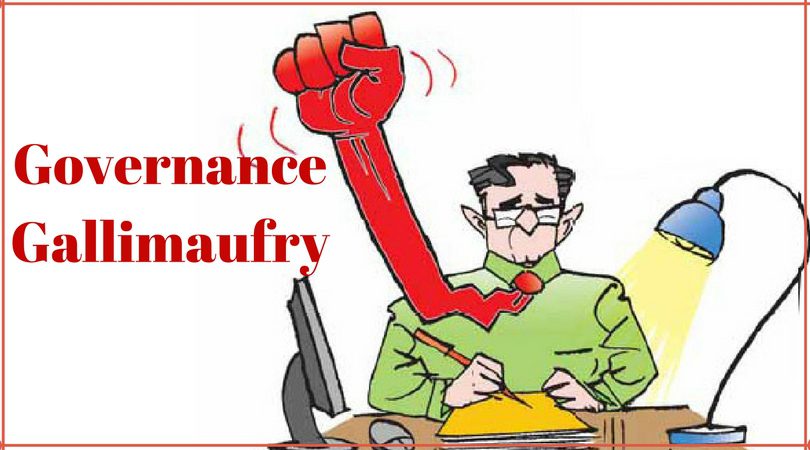
Hemashri recounts the harrowing incident of a government decision gone wrong when her father, a mid-level police officer, faced tough times. It had a serious impact on the family. Her father had to fight several court cases to get his rightful due, but it left him with a neurological problem. The cruel apathy of the government system is highlighted in the weekly column, exclusively for Different Truths.
The elderly gentleman was recently nominated to the IAS. As per the IAS nomination rules, a state civil service officer is eligible for such nomination after completing eight years of service. Thanks to mismanagement, one of the most glorious provincial services now nominates officers at the fag end of their careers. Nomination to a certain service, considered an elite service, cannot be the goal of a civil servant, but it does make a difference in the kinds of assignments one gets to handle.
When I first joined the service 21 years ago, this gentleman and I were officers of the same rank. We were holding a post very strangely named as ‘Extra Assistant Commissioner’. These extras were the crucial backbones of the district administration. They are mostly called ‘deputy collectors’ in other states. At those late-evening meetings on the last working day of the week, this gentleman would always have some questions. His questions were not well articulated. It was my immaturity that led me to think he was confused because we wanted to board the bus to get home.
After many years, I met him again, this time as my better half’s boss. He appeared to be a fine gentleman with a remarkably cool temperament for the post of district magistrate. He was one of the few in his generation who had mastered the technology to understand the importance of creating a database and using ICT tools for effective supervision and monitoring—a respectable officer with a distinguished track record.
One day, this gentleman came to my chamber instead of calling a junior officer to his. He narrated his issues regarding the newly created website and the problems of updating. That day, he told me something, which was a pearl of wisdom. He said, “These bundles of papers that we call a file placed before us are just files for us, but remember they are life for people whose story they carry.”
What a way to remind the demotivated babus that they are doing something very crucial and that they are here to serve the people. As an officer, I always feel strongly about the quick disposal of files. I feel a strange restlessness to complete my part of the job, and I often end up pursuing things that cause considerable resentment or irritation. My well-wishers have advised me to practise detachment. I am sincerely trying, but I am not completely cured of the malice.
From where this restlessness has emanated, I ponder. Maybe what we face early in our lives leaves a deep impact on our psyche – a deep imprint in our subconscious mind. My first encounter with injustice occurred when I was preparing for my Class 10 board examination. My father was a mid-level police officer. During the peak of the Assam agitation from 1980 to 1985, he was posted in Nalbari. An incident had taken place where a person in police custody had died. This became sensational news, and many versions of police atrocities, in an exaggerated way, were reported in the local newspapers. At that time, my father was busy handling a critical law and order situation near a place called Tamulpur, where ethnic clashes had taken place. He was not even in a scene where the death had taken place, yet his name was also dragged. After the Assam Accord, the agitating students, now newly elected public representatives, appointed a commission of enquiry. Without much examination of various medical reports of the deceased, the conclusion was that the four officers were responsible for the custodial death. Immediately, four police officers, including my father, were dismissed from service without initiating any procedure and without allowing them to present their defence. This was an unprecedented incident.
It was 15th July 1987; my father arrived home, bag and baggage, as a dismissed officer. As the mini truck carrying luggage entered through the gate, the neighbourhood hooligans welcomed him with stone pelting. For the first time, I saw my father in tears, asking my mother, “Do you think we will be able to survive with our children?” Traumatised by such a sudden turn of events, I stopped attending the tuition classes. I felt reluctant to face my friends and preferred to study on my own. Finance was also an issue, and I wanted to relieve my parents of the additional burden. During the first few days, I would sleep whenever I felt sad. Gradually, we accepted the situation. A strange episode took place just after two days – one of the suspected stone-pelting gang was attacked by a bull, and his stomach was torn off, which required several stitches. This
The incident made me realise that perhaps a divine force exists. My tuition teachers made several visits to 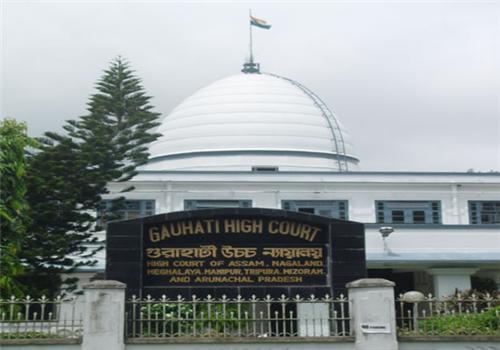 convince me to attend classes, but it failed to change my decision. Those were very tough times for our family. Three of the dismissed officers found alternative livelihoods. The most senior of them went to his native village and started mass-scale potato cultivation. One of them purchased a large number of rickshaws to support his family. But my father was the one who did all the drafting and arrangements for filing a case in the Guwahati High Court. We noticed he would be writing the whole day. He would go to the advocate’s chamber and visit the court regularly. I cleared the board examination, securing the highest marks in my school. I visited the courts with my father several times. One day, when the date for the final order was fixed, and my mother had offered prayers in the Ganesh Mandir near the court, we were excited, for it was the day of judgement. The Honourable Judge announced, “I am having a sore throat, so I hereby adjourn the court.” Anyway, after two years, my father won the case, with the government’s dismissal order set aside as biased and in violation of existing rules.
The government, which had issued the dismissal order, was strongly biased against these officers. A decision was made to reinstate the four officers and provide them with salaries, but no services were to be used. This was mental harassment. Again, my father filed a case and won it too. In the meantime, all his batchmates had received their promotions. So my father submitted his representation for his due promotion. A government reply was served on him, stating that he was not selected for promotion. This time, he consulted his well-wishers and learned that he had already been promoted, but his promotion had been kept under seal. On receipt of confirmed information, my father submitted a representation. The concerned secretary requested my father’s appearance. My father was harshly treated, threatened with dire consequences and was demanded to reveal his source of information. My father stood firm and stated he is not bound to reveal his source of information. After this meeting, he instead filed a case, claiming that, due to seniority and the Honourable High Court’s restoration, justice prevailed once again. After around five years of severe mental humiliation, my father, armed with a favourable court order, got his promotion with due seniority.
During these five years, he was also involved in various social commitments, including completing the construction of our local Namghar (prayer hall). Briefly, after getting his long-pending promotion, he actually got the next promotion as well. After joining, he noticed his sudden memory lapses. He would 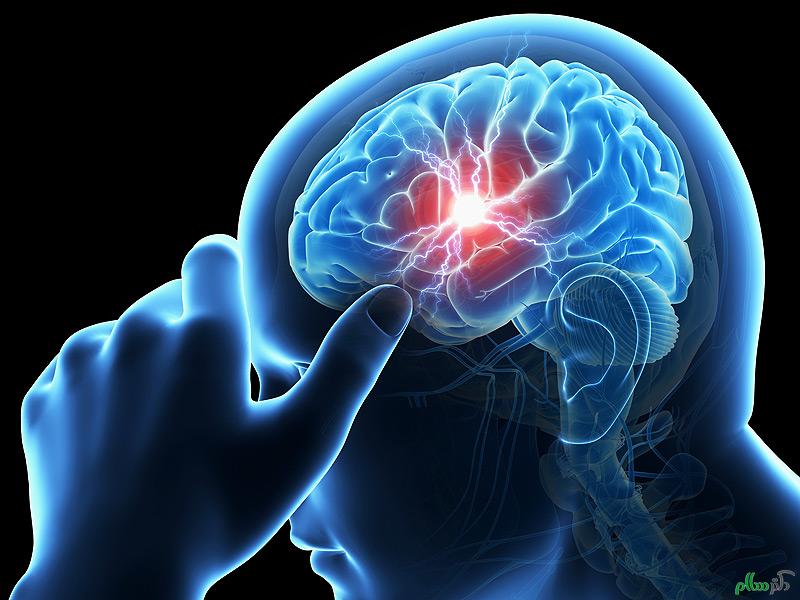 very frequently forget things, to the point that he would call someone and even forget why he was calling. Doctors suggested a neuro consultation. The renowned neurologist stated that due to prolonged mental stress, some degeneration is not reversible, but it can be gradually treated with medicines.
A series of vindictive government decisions perhaps profoundly affected my young mind, as they occurred when I was very impressionable. It was sheer coincidence that my father, who did not have a law degree, was a law instructor at the Police Training College many years ago. His daughter had to handle an assignment in which her sole job was to attend the court case. I could never forget those nightmarish days, perhaps because every file looked like the life stories of someone very dear, whom I may never have met. The stress and strains of a distressed family facing harsh punitive action remain vivid in my mindscape. This must be the deep-rooted reason behind my proactive attitude, which in turn leads to a strange restlessness.
Every file deals with a life that may, in turn, interlink with several others. A file for us may be life for someone else, indeed. Strange that they are made of the very same letters. Let’s be aware, and maybe we should handle both our files and our lives with care!
©Hemashri Hazarika
Photos from the Internet
#LifeOfPeople #FilesAndLife #FightingForRight #Pain #BeingWronglyAccused #GovernanceGallimaufry #DifferentTruths

Hemashri Hazarika is an Officer of the Assam Civil Service since 1997. Her research on Assam Civil Service brought reforms in 2015. A first-class Postgraduate in Economics from Gauhati University, she was awarded JRF/NET by UGC in 1997. Her experience as a bureaucrat has sensitised her to human sufferings. A solutionist by passion, she takes an active interest in issues related to Governance, Development, Women, Children, etc. Reading, Writing, Speaking and Painting are her hobbies.
 By
By
 By
By
 By
By
 By
By
The realization that a “file is a life”is in itself is a great humanly thinking,as it is the only trait that is missing amongst most of the modern day officers, without maligning a bunch of honest officers.Your fathers story depicts his never say die attitude and rock solid determination and grit which should be an excellent example to the society.But ,his fight against bad governance had taken a toll on his health shows the amount of mental agony he had to face during the period. Congratulations to you for depicting a sheer issue of red tapism , beautifully.