

An entire cottage industry has emerged to help individuals buy, sell, store, transfer, and track the price of bitcoin. It is often the subject of major media coverage. And everyone with even a passing interest in bitcoin seems to have one question in mind – will it survive? Our Associate Editor, Navodita, analyses this issue, in the weekly column, exclusively for Different Truths.
As Bitcoin rallied from three-month lows below $ 6000 due to choppy trading, it sent worries about a major clampdown and steps by American banks to ban buying bitcoin with credit cards. After a massive run-up last year, cryptocurrency prices have skidded lower and regulators have warned against investing in them. Clampdowns in South Korea and India and an advertising ban on Facebook Inc. have also led to low sentiment on cryptocurrency.
This provokes one to think, what exactly is the future of digital payments? Tracing its history to a white paper published by Satoshi Nakamoto in 2008, bitcoin was quietly introduced in 2009 as not much more than an obscure piece of code. Its value climbed roughly to $1.00 by February 2011 and then to nearly $30 four months later. After February 2012, its demand began to increase, first gradually then suddenly.
 In mid-2015, one bitcoin exchanged for nearly $290. It is accepted by a wide variety of businesses around the world, from major online retailers to food trucks. An entire cottage industry has emerged to help individuals buy, sell, store, transfer, and track the price of bitcoin. It is often the subject of major media coverage. And everyone with even a passing interest in bitcoin seems to have one question in mind – will it survive?
Nassim Taleb for one believes, “Bitcoin is the beginning of something great: a currency without a government, something necessary and imperative.”
William J. Luther, an economics professor, says that the share of electronic transactions will continue to increase. With the widespread adoption of smartphones and the relatively recent rollout of small, low-fee card-reader devices of Square, PayPal, and others, even the smallest businesses can accept electronic payments. As existing vending machines, parking meters, card readers, and the like are replaced with newer, tap-to-pay-enabled devices, it will become even easier to make digital payments. The blockchain technology will be widely adopted to process digital payments. In fact, the technological advance of bitcoin is its ability to process transactions over a distributed network without a central node functioning as a bank or clearinghouse. At the moment, processing transactions using the blockchain seems to be less costly than the traditional approach.
However, there is an issue of trust around technology. The nature of money lends itself admirably to digitisation where the bank balance of an individual represented in a binary form entitle that individual to transfer part of it to purchase goods and services across the globe. So, one-half of all transactions very easily lend itself to digitization. This opened up a whole era of internet proliferation, e-commerce, digital transactions, and micropayments. A big problem, however, on the internet has been to establish identity and trust securely. A lot of layers of cryptography and protocols encrypt digital traffic while doing commerce with unknown customers. In a world where information is power, user-generated information is hoarded and exploited by ‘trusted entities’ like banks, internet service providers, online retailers, social media enterprises, and new age information companies. Technology has steered society in a lot of ways away from transparency and common visibility and towards the realm of trust.
Krishna V. Iyer and Dr. V.V. Ravi Kumar, researchers at Symbiosis, add that the following thought experiment lies at the heart of blockchain technology:
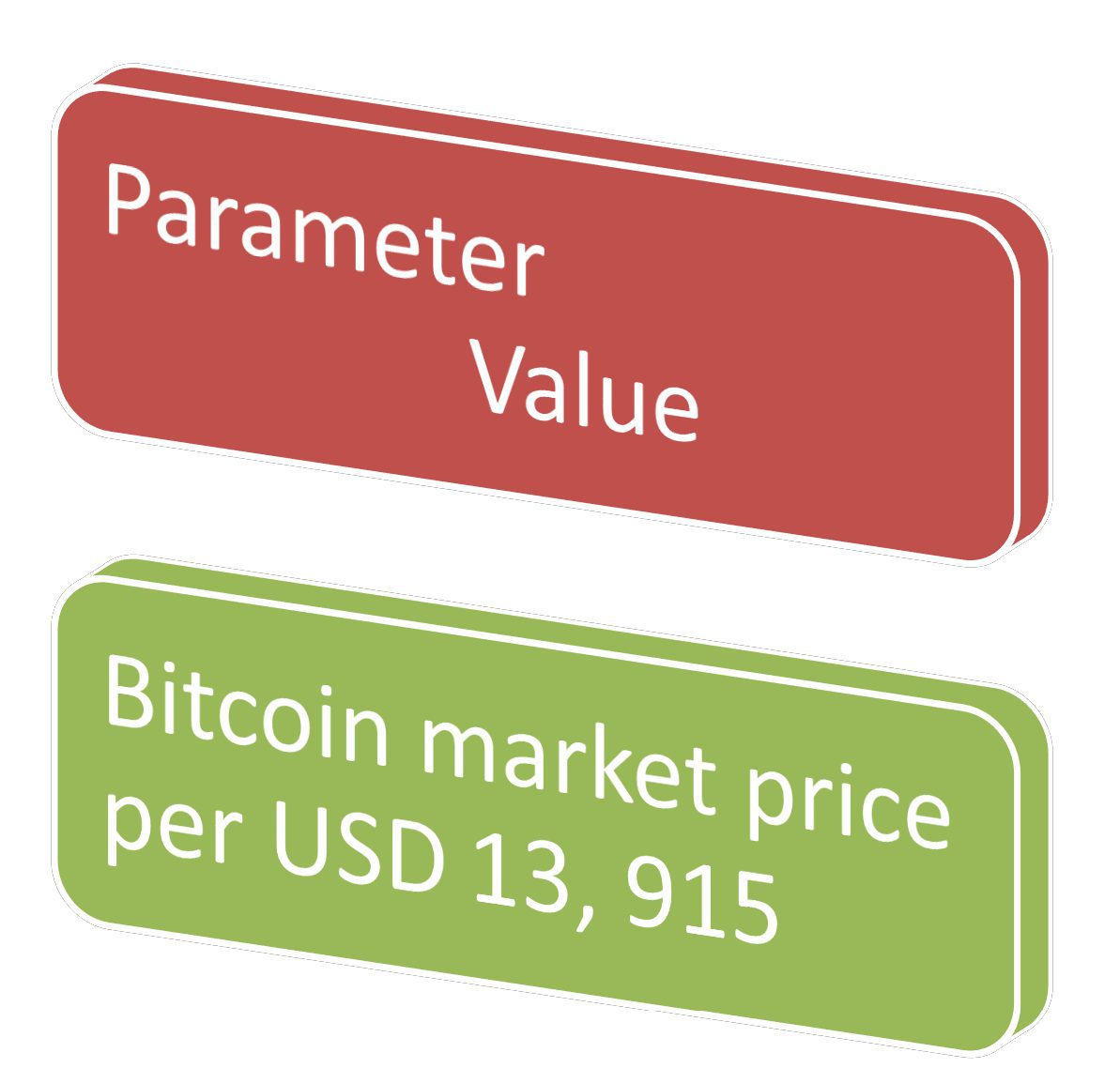
In this it is shown that all blocks could be chained together, each block referencing a previous block to ensure that if a transaction in a block is disputed, not only will the consensus for that block have to be reworked, but that for all subsequent blocks would have to be redone. This makes the chain strong and extremely difficult to revisit or dispute as more blocks are layered on top of the block containing a specific transaction.
Nakamoto thus began with the idea of a peer-to-peer transaction in a world without trusted middlemen. There are, however, some limitations on the bitcoin currently:
- The size of the blockchain is about 95 GB
- The bitcoin blockchain network is slower than that of PayPal with just 7 transactions per second
- It currently takes about ten seconds to create a new block
- Some economists argue it could be deflationary in the long-term
- There are regulatory implications of this revolutionary technology
Bitcoin represents a technological advance in the processing of payments. It is always difficult to predict the future, but technological advancements tend to be put to good use- at least until something better comes along. If the blockchain technology significantly reduces the costs of processing transactions, it will be adopted.
Among other digital currencies, currently, Ethereum is the second-largest by market value, while Ripple is the third-largest. In India, the Reserve Bank of India is studying blockchain technology for use in financial transactions along with a group of officials from RBI, IDRBT and industry representatives. Some experiments have been made in India, too – Unocoin and CoinSecure. Industry bodies like ASSOCHAM, NASSCOM are organising seminars to promote understanding about and discussions around Blockchain. Thus, as people are becoming more aware of its positive uses, people are researching whether it can be the currency of the future.
©Navodita Pande
Photos from the Internet and sourced from the author
#Bitcoins #Ecommerce #ECoinSecure #Unocoin #NASSCOM #Cryptocurrency #FutureOfBitcoins #EconmomicFuture #MoneyMatters #Currency #TypeOfCurrency #Aamonomics #DifferentTruths

Navodita Pande teaches Mass Media and Communication and English to ICSE/ISC school in Assam. She also trains students in Yoga, gratitude and healing. She loves to paint, write and read as her pastimes. She lives in Assam with her daughter.
 By
By
 By
By