
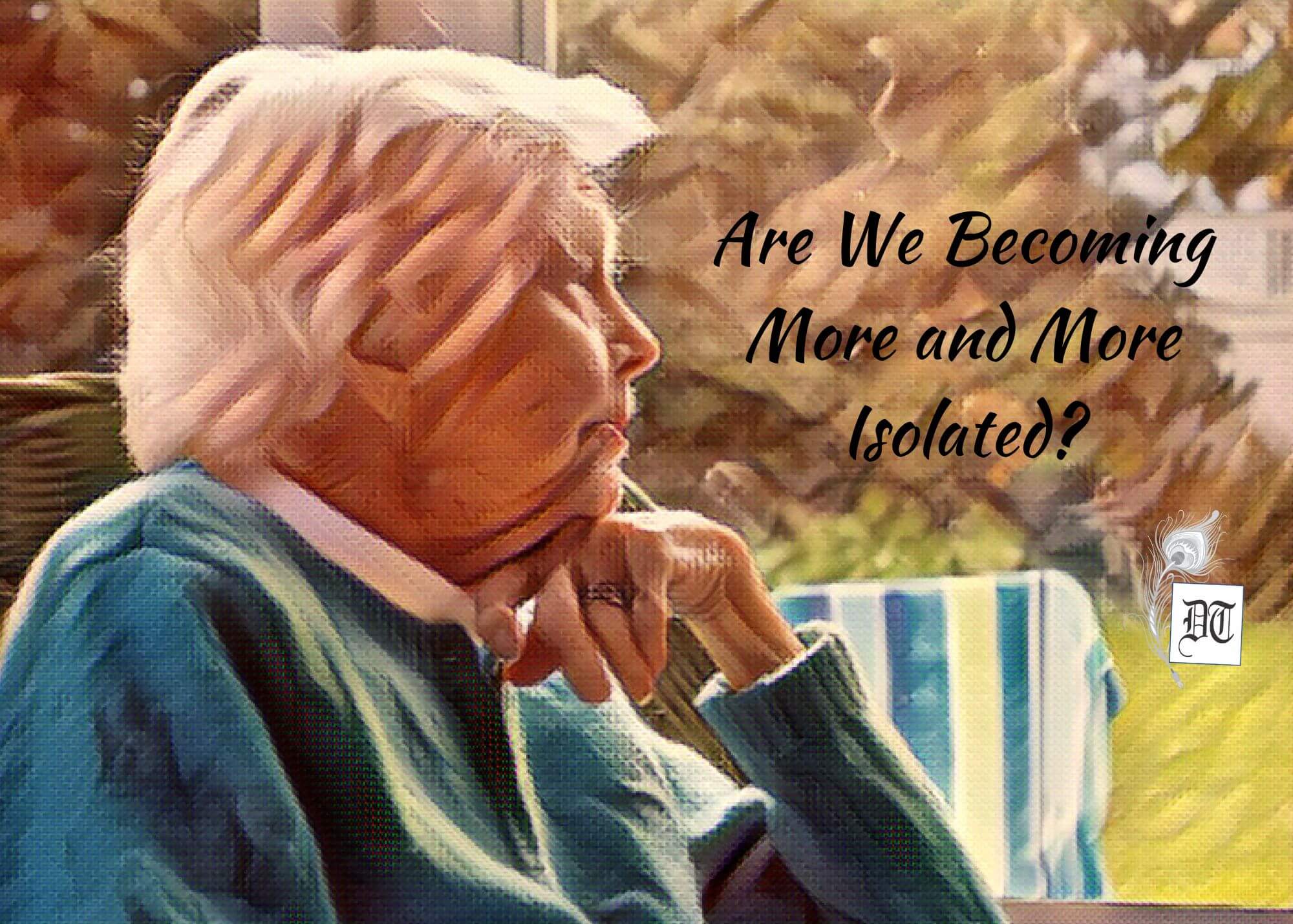

Studies suggest social isolation is associated with a higher rate of death in older people and loneliness is the “hidden killer” of the elderly. Nikita reveals the ugly underbelly of our successful material lives, in the weekly column, exclusively for Different Truths.
Modern life is making us lonelier. Researchers indicate that in coming years, this could be the biggest loneliness epidemic ever faced in the human history.
Why is it that the more we seem to connect through social network, the more is the distance growing between hearts? We have data that suggests people’s social networks have got smaller and families are not providing the same level of social context they may have done 50 years ago.
“It’s not because they are bad or uncaring families, but it’s to do with geographical distance, marriage breakdown, multiple caring responsibilities and longer working hours,” says Dr Andrew McCulloch, chief executive of the Mental Health Foundation People today are more connected to one another than ever before in human history, thanks to Internet-based social networking sites and text messaging. But they’re also more lonely and distant from one another in their unplugged lives, says Massachusetts Institute of Technology social psychologist Sherry Turkle, PhD.
Fifty years ago, people tended to live closer to their elderly parents, but travel and work opportunities have led more people to move further afield.
…360,000 older people felt lonely because their children were too far away and “too busy to see them.”
Last year, charity WRVS warned more than 360,000 older people felt lonely because their children were too far away and “too busy to see them”. Studies suggest social isolation is associated with a higher rate of death in older people and loneliness is the “hidden killer” of the elderly.
Moreover, it is not only elderly who feel the pangs of loneliness; children and adults often face the uneasiness and emptiness despite achieving great success in life.
McCulloch says loneliness transcends “all ages and all classes”. It could just as easily affect a young person going from school to college struggling to make friends, isolated single parents or someone not in education or employment.
Social networking has reduced face-to- face interaction largely. Texts have taken over phone calls. When teens tell me that they had rather text than talk, they are expressing another aspect of the new psychological affordances of the new technology — the possibility of our hiding from each other. They say a phone call reveals too much, that actual conversations do not give them enough control over what they want to say.
According to Turkle, part of the problem with the internet is that it encourages self-invention. “At the screen,” she writes in Alone Together (2011), “you have a chance to write yourself into the person you want to be and to imagine others as you wish them to be, constructing them for your purposes. It’s a seductive but dangerous habit of mind.”
Changes in modern society are to be blamed
So why are we getting lonelier? Changes in modern society are to be blamed. Most of us live in nuclear families, often living large distances away from our extended family and friends, and our growing dependence on social technology rather than face-to- face interaction is making us feel more isolated.
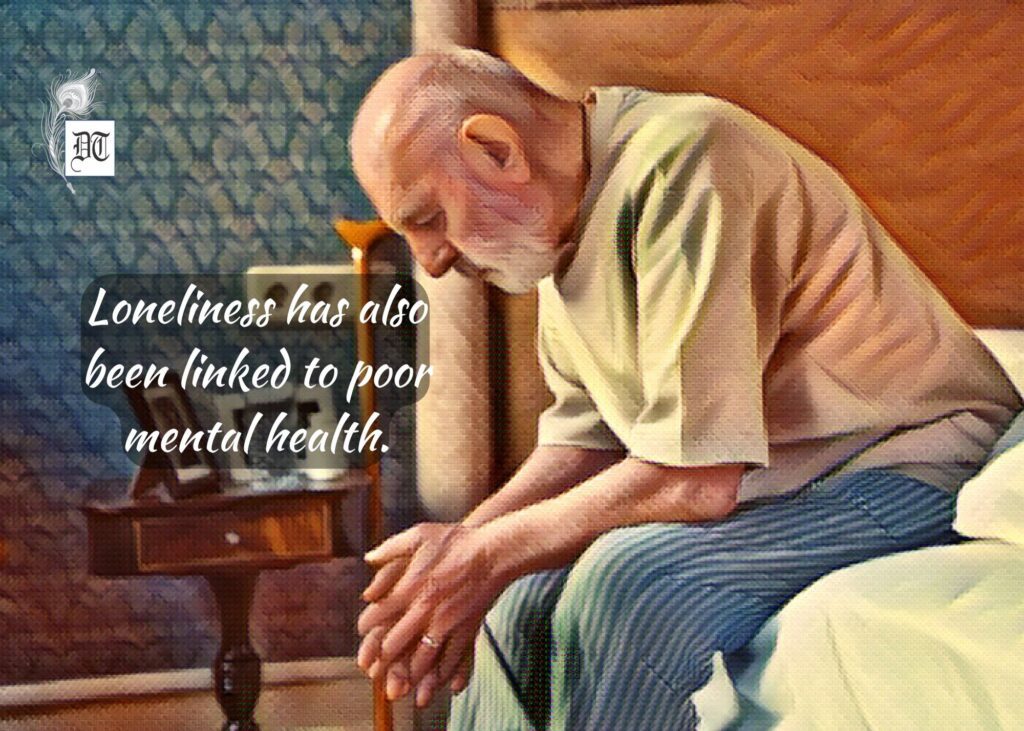
It means we feel less connected to others and our relationships are becoming more superficial and less rewarding. Loneliness has also been linked to poor mental health. In a survey by Mental Health Foundation, more than a third of people surveyed had felt depressed because of feeling lonely.
… loneliness is about the quality rather than that quantity of relationships that we have.
There is a myth that loneliness is typically associated with being alone, but it also affects people who are socially very active and always surrounded by friends. This is because loneliness is about the quality rather than that quantity of relationships that we have.
What can we do to get outside the vicious circle of loneliness – Talk to people in person at cafes and restaurants, disconnect from technology once a week and give more time to people who truly matter.
Picture design Anumita Roy

Nikita Goel is a published author with 25 books! Her blog, “The Enchantress” has made it to Top Blogs of India consistently for a decade now. She writes for various online portals and magazines published worldwide. She won the “Best Editor of the Year” by Aagaman Literary Society. She has worked as a teacher, counselor, editor, columnist, writer and Social Media Manager for various organisations in India & U.S.A.



 By
By
 By
By

 By
By