
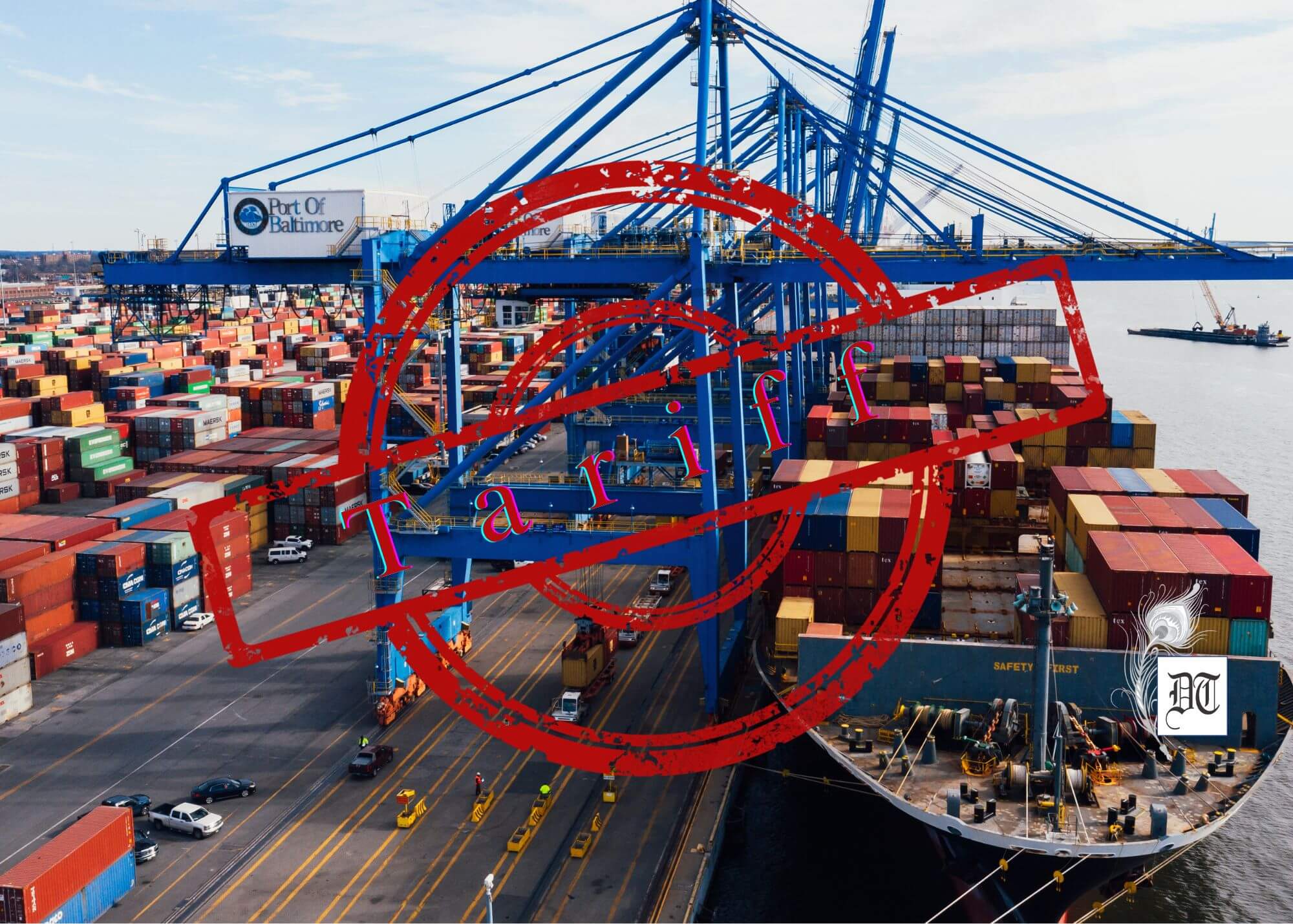
The US imposed a 50% tariff on Indian goods, escalating tensions over Russia’s oil and India’s farmer protections, an analysis by Rita, exclusively for Different Truths.
The United States had recently imposed a 50% tariff on certain Indian goods, a move that escalated trade tensions between the two countries.
This action is a combination of two separate tariff hikes.
The first 25% tariff was imposed as a “reciprocal” measure, with the US government citing what it views as India’s “intransigence” and high tariffs on American products, particularly in the agricultural sector. The US has been pushing for greater market access in India for its farm and dairy products, but India has resisted, citing the need to protect its own farmers.
The second 25% tariff was imposed as a penalty for India’s continued purchases of discounted Russian crude oil. The US administration argues that these oil purchases are indirectly funding Russia’s war effort in Ukraine. This move is seen to put pressure on India to align with Western policies regarding Russia.
This combined 50% tariff is expected to have a significant impact on India’s exports to the US, particularly in labour-intensive sectors such as textiles, gems and jewellery, and seafood. While some key sectors like pharmaceuticals are currently exempt, the high tariffs are expected to make many Indian goods uncompetitive in the US market, potentially leading to job losses and a negative impact on India’s economic growth.
Is Prime Minister Modi proving himself to be a strong prime minister in the world, one who should not bow his head before the US government?
Based on recent reports, Prime Minister Narendra Modi’s government is taking a defiant stance against the US tariffs, particularly regarding India’s energy security and its trade relationship with Russia.
Here’s a breakdown of the situation and the different perspectives on it:
PM Modi’s Stance and Actions
Protecting National Interest: The Indian government has publicly stated that it will not compromise on its national interests, especially the energy security of its 1.4 billion people. The purchase of discounted Russian oil is defended as a pragmatic decision that benefits the Indian economy.
Defiance of Farmers’ Interests: A major point of contention in the trade negotiations has been the US demand for greater market access for its agricultural and dairy products. PM Modi has been quoted as saying he is ready to “pay a hefty price” to resist these demands and protect the livelihoods of India’s farmers.
“Make in India” and “Vocal for Local”: In response to the tariffs, the government is pushing a policy of economic nationalism, encouraging domestic production and consumption to reduce reliance on exports. This is seen as a strategy to build self-reliance and weather the economic pressure from the tariffs.
Exploring Other Markets: India is actively working to diversify its export destinations, looking to countries in the BRICS bloc, ASEAN, and Latin America to offset potential losses in the US market. India has also signed new trade agreements with countries like Australia, the UAE, and the UK.
Refusing to “Bow Down”: Indian officials have stated that the government refuses to be “brow-beaten” by US pressure tactics, with the Foreign Minister S. Jaishankar pointing out the “perplexing” nature of the US threats, given that Washington had previously encouraged India to help stabilise global energy markets by buying Russian oil.
Criticism and Concerns:
Economic Impact: Opposition parties in India, such as the Congress, have criticised the government’s foreign policy, labelling it “superficial” and warning that the tariffs could result in substantial job losses and a significant economic impact for India, particularly in labour-intensive sectors.
Trade Deal Stalled: The high tariffs have put a major roadblock in the ongoing negotiations for a bilateral trade agreement (BTA) between the two countries, which both sides had hoped to finalise.
Vulnerability of Exporters: While the government is taking a firm stance, some reports indicate that a large portion of India’s exports to the US could be “under serious threat,” and smaller firms in sectors like textiles and gems may be hit particularly hard.
In summary, while the tariffs represent a significant challenge, the Modi government is publicly portraying its response as one of defiance, prioritising India’s economic and energy security, and refusing to make concessions on key “red lines,” such as protecting its farmers.
Is the Prime Minister Good for India?
Assessing whether Prime Minister Narendra Modi is a “good” Prime Minister for India involves examining his performance across various areas and considering multiple perspectives. There are strong arguments and evidence on both sides, and public opinion remains divided.
Arguments for His Success
Economic Growth and Reforms: The government has highlighted India’s rapid economic growth, with the country becoming the world’s fastest-growing major economy and set to become the third-largest economy soon. They point to macroeconomic stability, a narrowing fiscal deficit, and a strong banking sector. Significant reforms like the Goods and Services Tax (GST) and various financial inclusion schemes like the Pradhan Mantri Jan Dhan Yojana are cited as major achievements. The “Make in India” initiative and a push for self-reliance have also been central to his economic vision.
Welfare Schemes: The Modi government is credited with implementing large-scale social welfare programs. The Pradhan Mantri Garib Kalyan Anna Yojana provides free food grains to over 81 crore people. The Swachh Bharat Mission has significantly improved sanitation coverage, and the Pradhan Mantri Awas Yojana has built millions of homes for the poor. The Ujjwala Yojana, which provides free cooking gas connections to women from poor households, has also been widely praised.
Infrastructure Development: There has been a major focus on building infrastructure at an unprecedented pace. The speed of highway construction has increased, and there has been a significant expansion of the metro rail network and the number of operational airports.
Foreign Policy and National Security: The government’s foreign policy has been described as one of strength and defiance, as evident in its recent stance on US tariffs and its continued purchase of Russian oil, prioritising India’s energy security. They also cite decisive actions on national security matters, such as the abrogation of Article 370 in Jammu and Kashmir and the conversion of the Ordnance Factory Board into seven profitable PSUs.
Criticisms and Challenges
Economic Disparities: Although overall economic growth is strong, critics highlight concerns such as rising unemployment and inflation. The effectiveness of schemes like “Make in India” in creating jobs is debated, with some reports suggesting it has not met its initial targets for manufacturing job creation.
Social and Political Concerns: Opposition parties and critics have raised concerns about democratic values and the health of constitutional institutions. Issues such as alleged “vote theft” and the use of central agencies are often raised. There are also concerns about social harmony and the handling of internal conflicts.
Farmers’ Issues: Despite efforts to support farmers, the government has faced major protests over agricultural reforms, which were eventually repealed. The recent stance against US agricultural imports, while seen as a move to protect farmers, also highlights the ongoing challenges in this sector.
Impact of Policies: Some past policies, such as demonetisation and the initial implementation of GST, have been criticised for their negative impact on the economy, particularly on small and medium-sized enterprises.
Public Opinion
Public opinion surveys often show a mixed picture. A recent “Mood of the Nation” survey showed a slight dip in PM Modi’s performance rating, but a majority still consider his performance “outstanding” or “good” and believe he is the most suitable person to lead the country. This suggests that while there may be some concerns, his overall popularity and public support remain strong.
In conclusion, judging a Prime Minister’s performance is complex and depends heavily on the metrics one prioritises. His supporters highlight his strong leadership, economic reforms, and welfare initiatives, while critics raise concerns about unemployment, social issues, and the health of India’s democratic institutions.
Sources
India Times
Youtimes
PIB.govt.in
Picture design by Anumita Roy

Born in Shillong, Rita Biswas Pandey’s diverse career spans education and corporate life. A North Eastern Hill University graduate, she holds multiple certifications in social welfare and computer studies. Retiring from UPS to pursue her passion, now a Delhi resident, is a published author (Tinkonya, Yuddha and Kabita somogro ). She also enjoys singing, poetry recitation,sketches, cooking, photography, Blogging and vlogging, sharing her life with her husband, Vinod, and their beloved pet, Titu.


 By
By
 By
By
 By
By
Thank you for blowing off a lot of dust layers with your clarity and even-handedness.