Sohini explores the Bengali taxonomy of India, a witty, reductionist system dividing the subcontinent into four cultural categories, in two parts, exclusively for Different Truths.
By Prof. (Self-Appointed) Bhadrakali Mukhopadhyay, PhD (Adda Studies), F.R.I.D.A.Y.*
*(Fellow of Rabindrasangeet, Idli, Dosa, Adda & Yatra)
Abstract
This paper investigates the Bengali system of classifying the Indian subcontinent. Unlike the official bureaucratic model (28 states, 22 languages, etc.), the Bengali taxonomy is both elegant and brutally reductionist. It divides India into three core groups, with one honorary category floating above.
The Fourfold System
1. Bengalis — the cultural nucleus, producers of Tagore, Satyajit Ray, football hysteria, and hypertension.
2. Non-Bengalis — a single sprawling tribe, comprising Punjabis, Gujaratis, Marwaris, Biharis, Odias, and anyone who has the misfortune of not being Bengali.
3. Madrasis — all inhabitants of South India, neatly united by coconut oil, rasam, and Bharatanatyam.
4. The Saheb — a ghostly presence, worshipped still, the eternal bhadralok in better trousers.
Field Observations
On Non-Bengalis
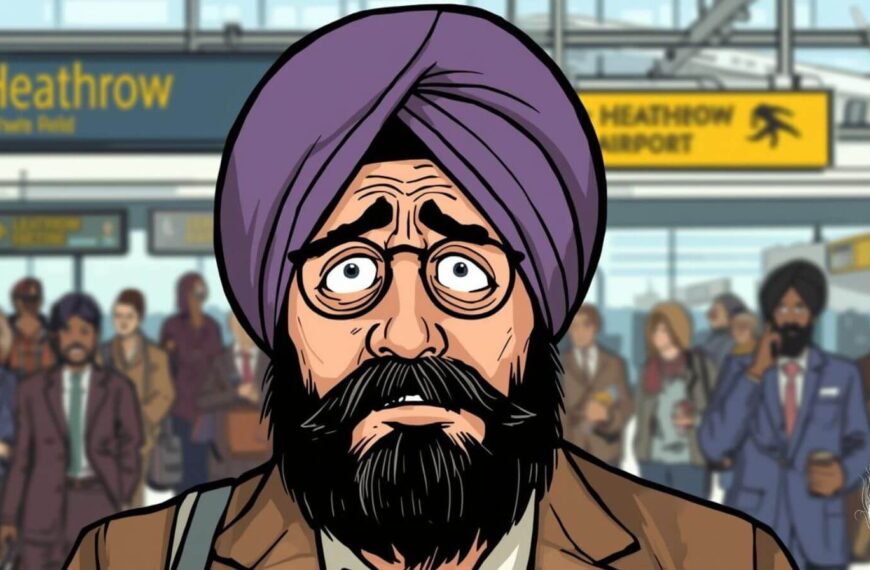
Consider the case study of Calcutta Uncle, Delhi Taxi, 1998 (Mukherjee, Proceedings of the Adda Society, 2001):
“Driverji, hum log jaayega Karol Bagh. Tum jaldi karo, hum late ho raha hai.”
The driver, though Hindi-speaking, struggled with the specimen’s hybridised syntax. Uncle, meanwhile, privately diagnosed the driver as “illiterate Non-Bengali.”
Note 1: This phenomenon, termed Bengali Broken Hindi Syndrome (BBHS), is well documented (Chatterjee, Hindi-er Durjog, Jadavpur Press, 1987).
On Cab Drivers in Kolkata
Fieldwork in Park Circus (Banerjee, Taxi, Adda and Empire, 2014) reveals that even Bengali cabbies are addressed in fractured Hindi:
“Driverji, hum log jaana hai Gariahat. Meter theek rakho, samjha?”
The cabbie replies in flawless Bengali:
“Bolo na Banglay! Amio Bangali.”
Yet the subject persists in Hindi, on the assumption that all cabbies are ipso facto non-Bengali. This assumption has been termed the Cabbie-Hindi Corollary (Mukhopadhyay, unpublished notes, 1999).
On Madrasis
The term “Madrasi” operates as a pan-Dravidian umbrella. Despite linguistic diversity, the Bengali auntie remains steadfast:
“Eta ke?”
“Oh, he’s from Bangalore.”
“Aha, Madrasi! Must know Bharatanatyam.”
This reductionism, while inaccurate, is considered “culturally efficient” (Sen, Coconut Chutney and Other Unifiers, Calcutta Univ. Pamphlet, 1972).
On the Saheb
The Saheb occupies a sacred role. Oral testimonies (Dasgupta, Memories of the Raj over Fish Curry, 1985) confirm that Bengalis continue to revere the British officer as “one of our own.”
When a gora tourist in Kolkata asks directions, Bengali responses instantly switch to Shakespearean English:
“Yesss, Sirr, straight you go, then left, verrry beautiful Victoria Memorial. Must enjoooy.”
Meanwhile, the Bengali taxi driver at the same spot is still subjected to Hindi instructions.
Conclusion
Thus, the Bengali atlas may be summarised as follows:
• Bengalis — superior beings.
• Non-Bengalis — roti-consuming masses, addressed only in broken Hindi.
• Madrasis — coconut-flavoured rice eaters who allegedly all dance.
• Sahebs — honorary Bengalis, mourned with misty eyes.
This model, though lacking in nuance, remains the only system endorsed by the highest authority of all: the Bengali adda.
References
• Banerjee, P. (2014). Taxi, Adda and Empire: Colonial Residues in Yellow Ambassador Interiors. Park Circus Field Notes.
• Chatterjee, R. (1987). Hindi-er Durjog: A Grammar of Suffering. Jadavpur University Press.
• Dasgupta, S. (1985). Memories of the Raj over Fish Curry. Kolkata: Prawn & Sons.
• Mukherjee, A. (2001). Proceedings of the Adda Society. Vol. 3, Issue 2.
• Sen, K. (1972). Coconut Chutney and Other Unifiers of Dravidian Identity. Calcutta Univ. Pamphlet.
• Mukhopadhyay, B. (1999). Unpublished Notes on Cabbie-Hindi Corollary. Private Collection, Gariahat Tea Stall.
(To be continued)
Picture design by Anumita Roy
Sohini Roychowdhury is a renowned Bharatanatyam dancer, choreographer, artistic director, speaker, social activist, and professor of Natyashastra. She founded Sohinimoksha World Dance & Communications in Madrid/Berlin/Kolkata/New York. A visiting professor of dance at 17 universities worldwide, she won several awards, including the “Mahatma Gandhi Pravasi Samman” by The House of Lords, the Priyadarshini Award for Outstanding Achievement in Arts, and the Governor’s Commendation for Distinguished World Artiste. She has also authored several books, including ‘Dancing with the Gods’.

 By
By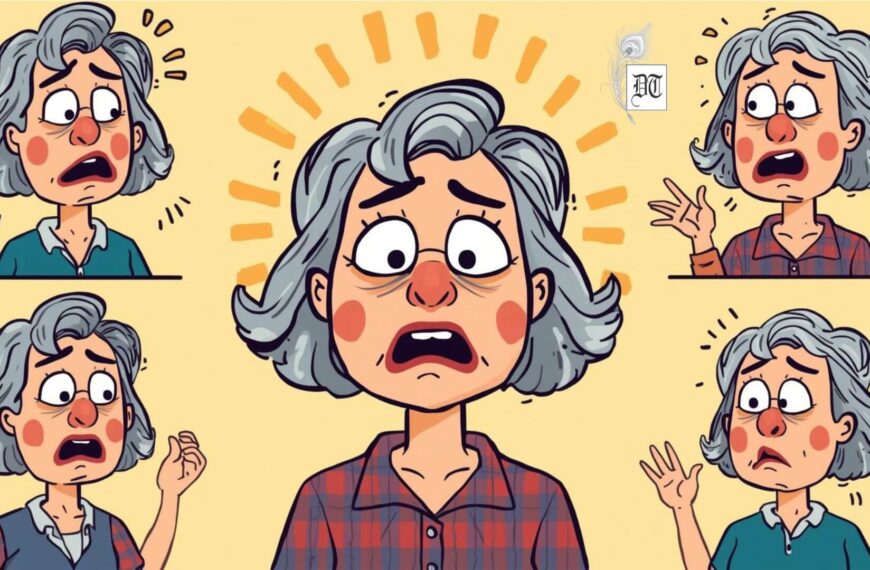
 By
By