
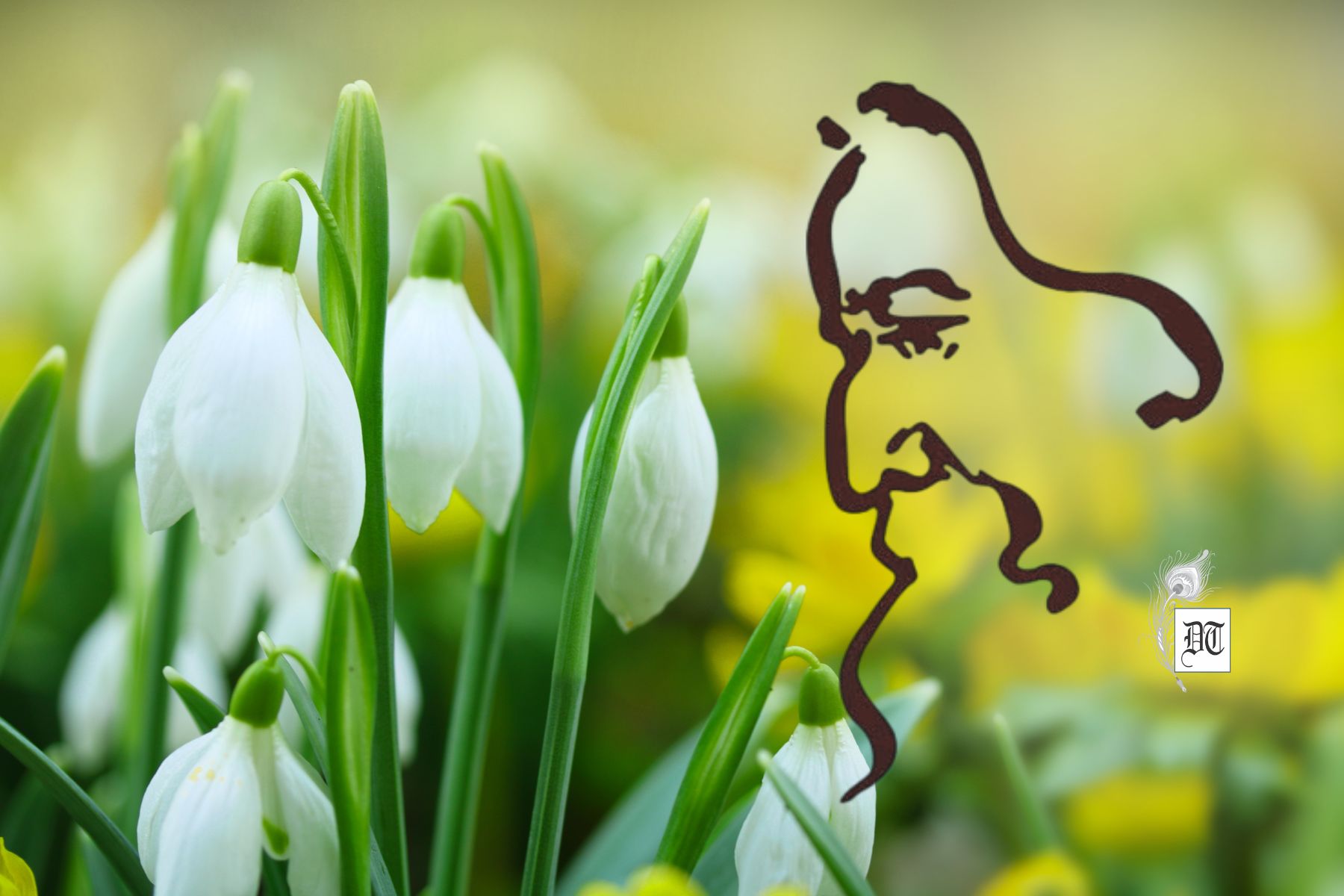

Ruchira discusses Tagore’s songs on Holi, the Spring Festival, rich with seasonal symbolism that reflects both joy and melancholy, an exclusive for Different Truths.
The versatile genius that Rabindranath Tagore was, he hardly left any aspect of human life untouched in his poems and more particularly his lyrics and melodies. Since he happened to spend a significant phase of his life in the lap of Mother Nature in the pristine, bucolic countryside of what he called his Shonar Bangla he had ample opportunities to observe nature in all its bounty and glory. This enabled him to imbibe the spirit of nature within his inner self.
It is believed that his favourite season was Monsoon. However, he had a certain fondness for the Spring season, which is extremely short-lived in this (mainly) tropical land of ours. For him, Basanta (Spring) symbolised the resurgence of life, a fresh bout of energy and vigour bursting forth, spreading far and wide, enveloping everything in its path. Spring also signified awakening from the slumber of a dull, bleak Winter. Each year with the advent of spring, human hearts are filled with hopes, aspirations, and a desire for creativity.
During this season, trees, shrubs, and bushes explode into a riot of colours with a huge variety of blossoms, the prominent ones being the flamboyant Palash, Sirish, and Semul. Their beauty mesmerised him so much that they became common motifs in his literary works.
We discover that Tagore has an interesting anthology of songs depicting the entire gamut of Spring. The most famous (read popular) song of this genre is Oray griho bashi khol dwar khol, (Step out of your homes, O householders, it is Holi, the festival of colours).
Old Hindi movie buffs would be familiar with this tune, which is identical to Rahi Matwale (Waris). Then we have Aji Basanta jagrata dware (Spring is at your doors… welcome it), Phuler agoon laglo nil digonte (Spring’s blossoms have set the horizon aflame), and Aaji dakhin duwar khola (let us step out into this balmy spring air and enjoy with gay abandon).
Other familiar numbers are Eki Sugandha hillol bohilo (a delightful fragrance pervades the breeze) and Basante aaj dharar chitto holo utala (Spring makes the Earth restive). Another Holi-centric song Aaj shobar ronge rong meshate hobe (let the Holi colours wipe out the barriers between Man and Man)
One of my personal favourites is the cheery Akash amay bhorlo aloy (the light from the sky fills my heart). Remember the song Tere mere milan ki yeh raina (This night of our union) from the Hrishikesh Mukherjee movie Abhiman? Its tune was originally composed by Tagore for his song Jodee taare nai chini go (On this fine day of Spring, will my beloved be able to spot me?). As is amply evident from his oeuvres, Tagore infuses an element of romance into his concept of Spring, weaving and blending both in such a manner that it’s impossible to tell them apart.
Nevertheless, Spring has its sadder aspect as well. The Bard highlights this in Rodono bhora A Basanta (Spring turns mournful for the Nayika as she pines for her beloved). Likewise in Amaar Mallika Bonay, the female protagonist implores her lover not to depart yet, since the fragrant Spring has just touched her garden. It would be appropriate to conclude with a sophisticated, raga Basant-based number, Aaji Bohichhe Basanta Pawan (the balmy, gentle Spring breeze bears the fragrance of your presence, O Lord!)
Picture design by Anumita Roy




 By
By
 By
By
 By
By
 By
By