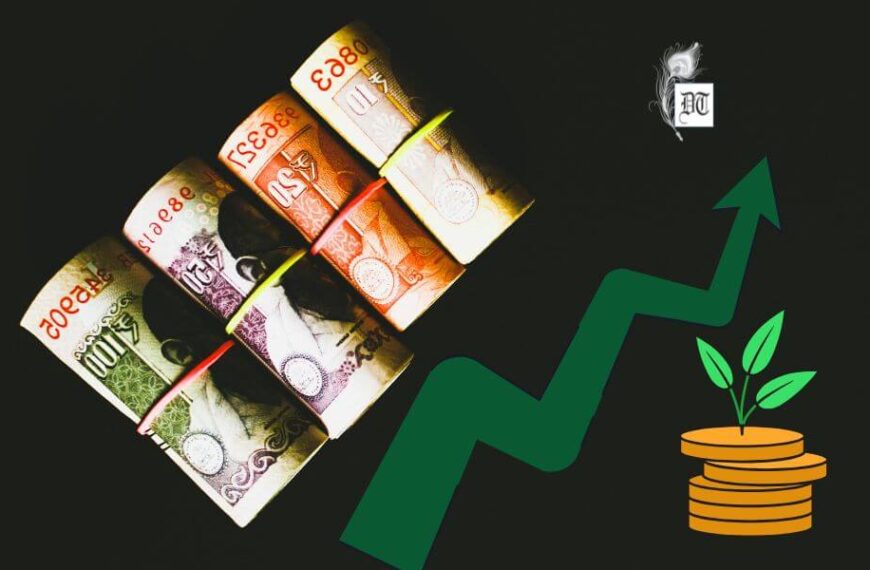

Hemashri, a civil servant in Assam, explores women’s empowerment beyond slogans, analysing India’s progress and Assam’s challenges across key dimensions in DifferentTruths.com.
AI Summary
- Women’s empowerment in India spans economic, social, political, educational, and health pillars, with uneven progress per WEI, SDG 5, and NFHS data.
- Assam lags severely: 1.7% female land ownership, high GBV, 67.3% literacy, and MMR of 195/100,000 live births.
- Solutions include land reforms, GBV awareness, skill hubs, 33% quotas, and NGO collaborations for SDG alignment.
The word ’empowerment’ is often used as a mere slogan. It is a profound concept, with multidimensional implications.
Women’s empowerment is evaluated across economic, social, political, educational, and health dimensions using indices such as India’s Women’s Empowerment Index (WEI), the United Nations Sustainable Development Goal 5 on gender equality, and the National Family Health Surveys (NFHS). These frameworks prioritise agency, resource access, and achievements for holistic progress, revealing India’s uneven advancement and Assam’s pronounced lags.
Economic Empowerment
Access to finance, credit, land/property, jobs, equal pay, and entrepreneurship defines this pillar.
In India, women’s labour force participation stands at 37% (Periodic Labour Force Survey 2023-24), far below men’s 78%, and only 14% of agricultural land is owned by women (National Family Health Survey-5). In Assam, women’s land ownership plummets to ~1.7% (Assam Agricultural Census 2015-16), among India’s lowest in its agrarian economy, underscoring rural vulnerabilities.
Globally, the International Labour Organisation reports women’s participation at 47% versus men’s 72% (2024), while the World Bank’s Women, Business and the Law Index scores India 74.4/100 for economic rights.
Social Empowerment
Freedom from discrimination, decision-making power, mobility, and low gender-based violence are core. National Family Health Survey-5 shows 30% of Indian women justify wife-beating (down from 37% in National Family Health Survey-4), with a median marriage age at 19 years and a fertility rate at 2.0 (2021).
Assam exhibits higher gender-based violence vulnerability, lower household decision-making autonomy, and mobility restrictions due to cultural norms (National Family Health Survey-5). UN Women notes that global gender-based violence affects 736 million women in their lifetime, with India’s child marriage rate at 23% versus the global 21% (United Nations International Children’s Emergency Fund 2023).
Educational Empowerment
Literacy, enrollment, and skills like Mahila Shakti Kendra training are benchmarks. India’s female literacy is 70.3% (National Family Health Survey-5), with female-to-male enrollment parity at 1.0 in higher education (All India Survey on Higher Education 2023-24).
Assam trails at 67.3% female literacy (National Family Health Survey-5), with widening rural-urban gaps limiting skill access. Globally, United Nations Educational, Scientific and Cultural Organisation data indicate 83% female adult literacy versus 90% male (2023), with 132 million girls out of school.
Political Empowerment
Representation via 33% quotas (Nari Shakti Vandan Adhiniyam), panchayat leadership, and voting gauges agency. Women hold 14.7% of Lok Sabha seats (2024); panchayat representation reaches 46% due to 50% reservation (Ministry of Panchayati Raj). Assam aligns with national panchayat trends but lags in state assembly representation (~10%). Globally, UN Women reports 26.5% women in parliaments (2024), with India’s female voter turnout at 65.7% (2024 elections) matching men’s. India has 28 states and 8 Union Territories, but only two women chief ministers. In 195 countries worldwide, only 28 have women as heads of state.
Health Empowerment
Maternity benefits (26 weeks’ leave), reproductive care (Janani Suraksha Yojana), and nutrition are the keys. India’s maternal mortality ratio is 97/100,000 live births (2023) with 89% institutional deliveries (National Family Health Survey-5). Assam’s maternal mortality ratio is elevated at 195/100,000 (Sample Registration System, 2020), with 53% anaemia among women amid remote access challenges (National Family Health Survey-5). The World Health Organisation’s global maternal mortality ratio is 223/100,000 (2023), with India’s anaemia rate at 57% among women versus a global 30% (World Health Organisation 2024).
Conclusion
Despite gains, India’s empowerment scores remain uneven, with Assam hindered by socio-economic barriers like low land ownership and gender-based violence. Progress requires integrated steps: expand digital financial literacy and land reforms through Chief Minister-Assam Agri-Infrastructure 2.0 for economic agency; launch gender-based violence/early marriage awareness drives; scale rural skill hubs such as Mahila Shakti Kendra; enforce nationwide 33% quotas; and target anaemia and maternal health through accessible clinics.
Prioritising women micro-entrepreneurs—through credit, markets, and training—can transform Assam, aligning with the Sustainable Development Goals. Government NGO SHG collaborations, monitored through the National Family Health Survey, will ensure equitable strides.
Picture design by Anumita Roy

Hemashri Hazarika is an Officer of the Assam Civil Service since 1997. Her research on Assam Civil Service brought reforms in 2015. A first-class Postgraduate in Economics from Gauhati University, she was awarded JRF/NET by UGC in 1997. Her experience as a bureaucrat has sensitised her to human sufferings. A solutionist by passion, she takes an active interest in issues related to Governance, Development, Women, Children, etc. Reading, Writing, Speaking and Painting are her hobbies.

 By
By
 By
By
 By
By