

Since October 7, 2023, the Middle East has plunged into crisis. What began as a local conflict now escalates, threatening global stability and economies, opines Baljeet, exclusively for Different Truths.
Since 7 October 2023, when Hamas-led militia attacked Israel, killing 1200 Israelis and taking more than 250 as hostages, and, with severe retaliation by the Israeli government, the Middle East has plunged into a deep crisis. What seems to be an earlier local conflict between Israel and Hamas over the Gaza Strip is now expanding with the ticking of the clock involving bigger and smaller global powers. Israel is, militarily, economically and technologically, an advanced country that has the solid backing of the most powerful nation in the world, i.e., the United States of America and most of the influential countries of the Europe, such as the United Kingdom, Germany and France. While, on the other hand, Palestinians of the Gaza Strip are mostly supported by Iran, Syria and Turkey directly or indirectly, and to some extent by China and Russia too.
Of all the Middle East countries, Iran has openly backed the Palestinian cause of its sovereignty. It considers Israel as an illegitimate Jewish occupier of Palestinian Muslim land and hence does not recognise its sovereignty. That is the raison d’être why Israel considers Iran as its staunch enemy and is thus determined to annihilate it. Iran is militarily stronger as compared to other neighbouring Muslim countries and has an influential network in the region. Most importantly, Iran possesses nuclear capability, which Israel considers a potential threat to its security and existence.
Though Iran has, time and again, announced that its nuclear programme is meant for peaceful purposes. Even the Western powers and the United States of America fear Iran’s nuclear proliferation as a danger to their ally, Israel, and regional peace and stability. In June 2025, Israel launched Operation ‘Rising Lion’ against Iran, targeting its nuclear sites and military installations, using missile launchers, drones and airstrikes, resulting in the deaths of many Iranian commanders and nuclear scientists.
In collaboration with Israel, the United States of America also attacked three Iranian nuclear enrichment sites – Fordow, Natanz and Isfahan using B-2 stealth bombers dropping ‘bunker buster’ bombs. America claims that it has destroyed all Iranian nuclear weapons. In retaliation for Israel’s attack, Iran too launched ballistic missiles and drones against it, leading to many deaths. Iran, militarily and economically, supports Hezbollah, a powerful militia of Lebanon which has fought many battles against Israel. These attacks on the part of Hezbollah often provoke Israel to invade Lebanon. Israel also often resorts to finishing Iranian militias based in Syria and Iraq.
Additionally, Iran’s open backing of Hamas, which has started a bloodbath struggle against Israel, is hard for it to digest. The two countries have also recently been involved in cyberattacks. Both are global cyber powers. In 2010, Iran’s nuclear facilities were infiltrated by Israel’s cyber worm, Stuxnet. Similarly, in June 2025, an Israeli hacking group, Gonjeshke Darande claimed that it had infiltrated Iran’s state-owned bank Sepah and destroyed the bank’s data. On the same lines, Iran’s cyber-attacks have infiltrated Israel’s civilian infrastructure, financial institutions, water system and gas pipelines.
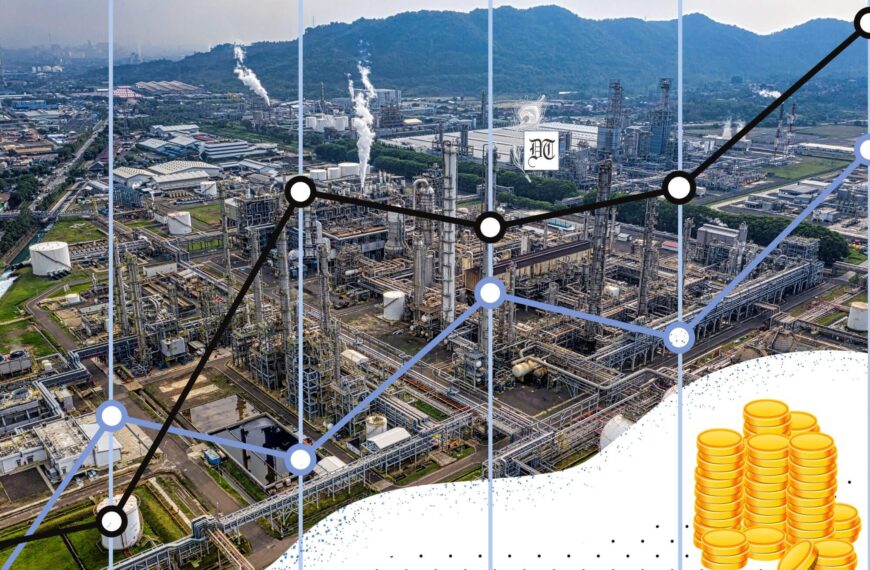
The escalation of hostilities between Israel and Iran has wider ramifications not only in the Middle East but also throughout the world. This conflict would lead to skyrocketing oil prices as supply routes had been disrupted. The Strait of Hormuz is a narrow waterway connecting the Persian Gulf to the Indian Ocean. About 20% of the world’s oil and gas transits through it. This strait is almost in control of Iran. Shipping oil and gas through this route has thus become risky, and, consequently, ships would have to take longer routes to reach their destinations, involving higher costs.
With the rise in oil prices, prices of other commodities are bound to increase. Thus, Asian countries could face a big economic challenge. The conflict has deepened the enmity between different nations, viz., Israel and Iran, the United States and Iran, Israel and Syria, and Israel and Lebanon have almost become permanent enemies. Iran has boldly threatened to increase its nuclear enrichment notwithstanding Israeli and American bombing and mounting pressure. Iran’s nuclear enrichment would certainly give sleepless nights to Israel and America.
Given the circumstances, the Middle East would remain in turmoil, leading to more conflicts, jealousy and friction among the warring nations. Such a scenario can give birth to wider conflagration involving not only the countries of the Middle East but also those of the world at large. Iranian-backed militias, Hamas and Hezbollah would not sit quietly despite tremendous pressure from their strong and mighty opponents. Iranian-backed Houthis of Yemen would also keep on bombing cargo ships of the rival nations of Palestine.
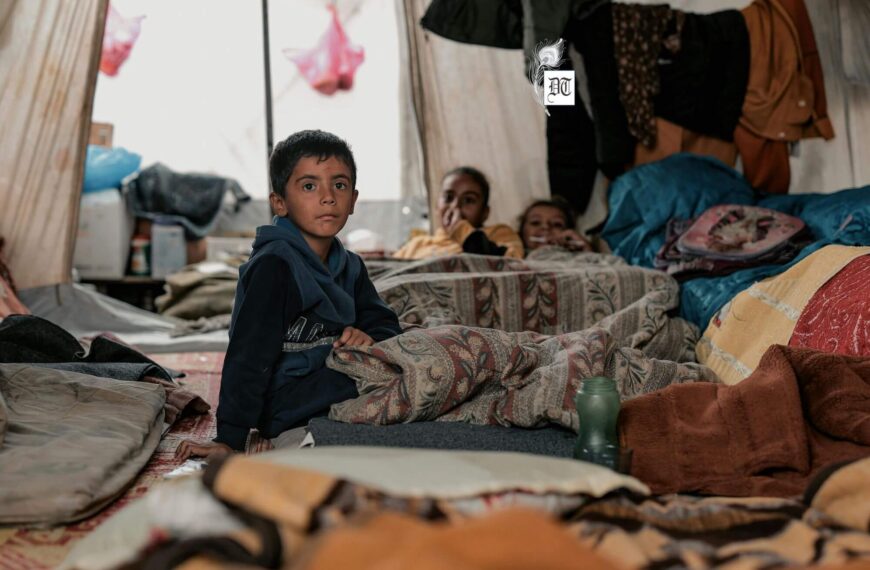
The peace prospects in the Gaza war have become bleak due to this conflict. The ongoing genocide of the Palestinians at the hands of Israeli forces would continue. People will keep on dying not only in Gaza but also in places where conflicts are going on in the Middle East. Buildings, houses, infrastructure and other such valuable properties would not stop razing to the ground. And, consequently, the whole environment of the region would get polluted to an incalculable extent. There are remote chances that this war would come to an end until some Providential event happens, and the whole of humanity would suffer this catastrophe.
Picture design by Anumita Roy

Baljeet Singh Virk is a retired Associate Professor of History, from the
Government Mohindra College, Patiala, Punjab


 By
By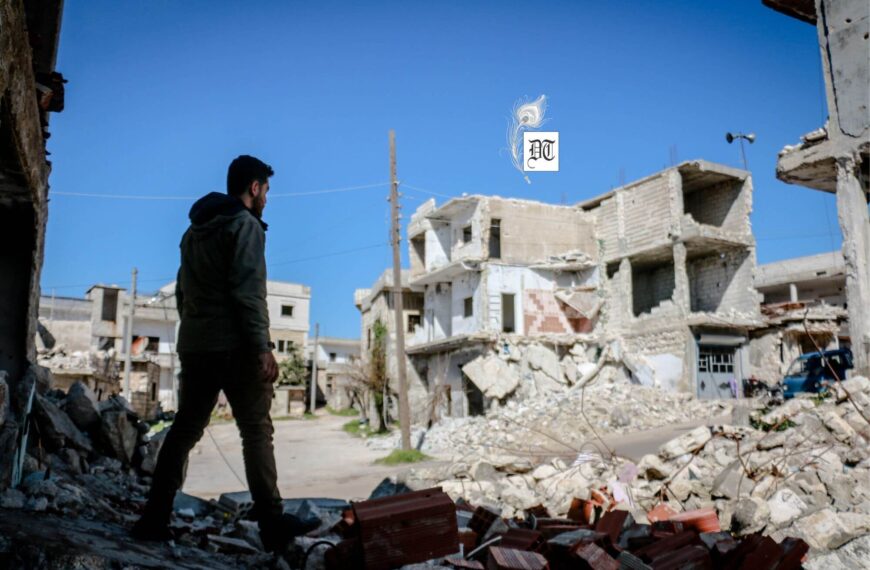
 By
By
 By
By
Thank you, Professor saab, for another comprehensive and clear analysis of a complex situation.