

A recent Delhi theatre festival featured “Tinkori Dasi: The Lady Macbeth,” a women-centric play recalling 19th-century Bengali theatre and actress, reports Ruchira, exclusively for Different Truths.

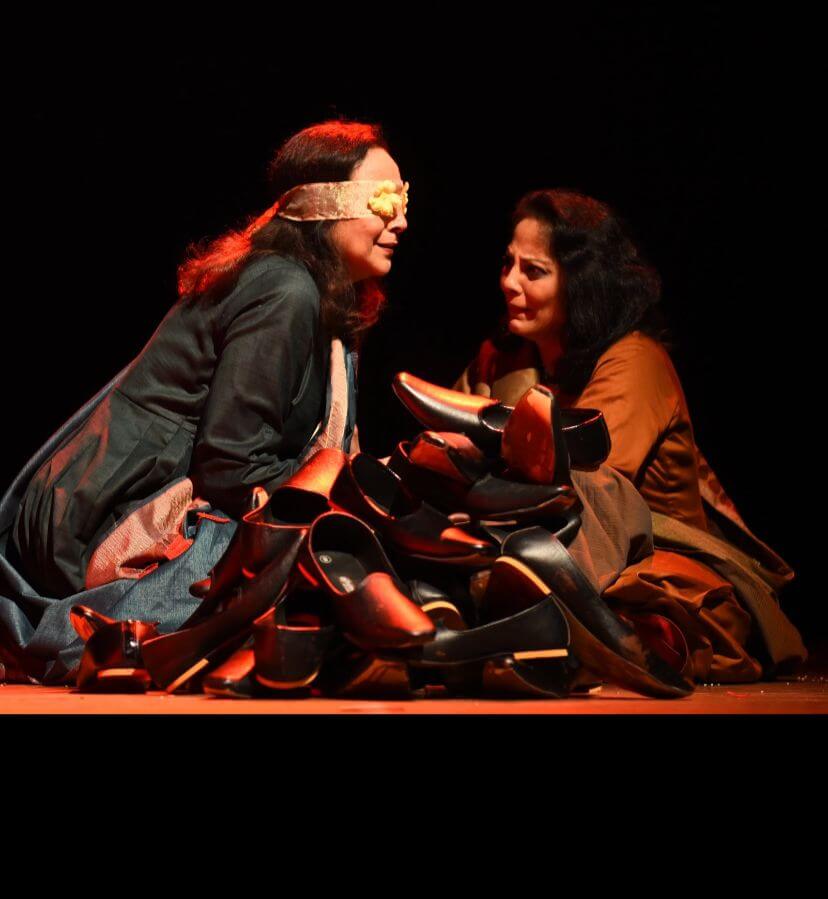
A few weeks ago, a theatre festival was organised in collaboration with the Ministry of Information & Culture (Government of West Bengal) at the Muktadhara Auditorium in New Delhi. Prominent theatre groups from Kolkata and the National Capital presented plays centred on relevant contemporary themes. A conspicuous entry was a women-centric play titled “Tinkori Dasi: The Lady Macbeth,” staged by a local theatre group, Nabapalli Natya Sanstha.
To understand the significance of this play, we must take a step back into the 19th century. In Bengali literature and theatre of that era, Girish Chandra Ghosh (1844-1912) towered above his contemporaries and enjoyed pride of place. His strength was in morality-based (read religious) plays that captivated audiences, often moving them to tears.
Who hasn’t heard of Noti Binodini, the legendary actress of that era, who was also Ghosh’s protégé? She dominated the stage in Calcutta and Bengali theatre like a colossus. Unfortunately, after she took her last bow, Bengali theatre faced a challenging period. Though prominent actresses, like Kiran Bala, Tara Sundari, and Pramada Sundari, tried to fill the vacuum, the results were far from satisfactory.
Against this backdrop, Tinkori Dasi (1870-1917) entered the spotlight by a quirk of Destiny. Born to a sex worker in Kolkata’s red-light district, Tinkori was ambitious and aspired to carve out a different life for herself, far removed from her seamy, sordid background. Stoutly rebelling against her mother and familiar circle, she opted for the stage, even though it meant pecuniary losses. Her supreme confidence helped her move forward. Under the able guidance of Ghosh and Ardhendu Shekhar Mustafi, another theatre stalwart, she gained a foothold in dramatics with successful performances in Girish’s plays such as Bilwamangal (as the mute companion) and Mirabai (as herself).
In 1893, Girish Ghosh decided to translate Shakespeare’s iconic tragedy, Macbeth, into Bengali. Its target audience was envisaged to be the elite and affluent society of Kolkata. Pramada, who was assigned the role of Lady Macbeth, was a damp squib, displaying mood swings during rehearsals.
Peeved with the lady’s tantrums, Ghosh decided to try out the virtual greenhorn Tinkori for the lead role: her above-average height and her striking appearance proved to be a boon! The play (including multiple shows that followed later) was a resounding success, capturing the attention of regular theatregoers and garnering rave reviews in major newspapers. It was reported that she surpassed her British counterpart, Sarah Siddons, who achieved fame through her powerful portrayal of ‘Lady Macbeth’ in London’s theatre circles.
Throughout Tinkori’s scintillating journey on stage, Ghosh remained her muse and mentor, providing encouragement and support. As time went on, a deep bond of empathy and understanding formed between the two.
Unfortunately, the appeal of this magnum opus remained limited to an esoteric circle of intellectuals and elites, eventually leading to a decline in Tinkori’s fame and popularity. Disheartened and downcast, she quietly exited the theatre scene, opting instead to live as a mistress to an affluent gentleman who treated her with care and dignity. Nevertheless, she maintained a steady connection with Girish Ghosh until her dying day.
Once, in a moment of emotional vulnerability, she had lamented to her mentor, “I was never arrogant, never fought with anyone… I loved the theatre, loved it more than life. But what did I truly gain? What place, what respect, did I ever find?”
In response, Girish had prophesied, “People may not have given you the recognition you deserve, but no one can match your acting acumen. History will forever remember you as Lady Macbeth.”
Coming to the brass tacks, about the presentation – honestly, for a while I seemed to have travelled back in time…when the decadent, corpulent “Babus” dominated Kolkata’s social milieu. Each of the characters played their roles naturally, effortlessly (including Prodip Ganguly as Girish and Soma Sinha as Tinkori), not forgetting the mellifluous renditions (Tinkori’s voice) by Kaushiki Deb. Superb sound effects, impeccable lighting, and aesthetic stage decoration enhanced the play’s appeal. Kudos to the personnel who worked efficiently, behind the scenes!
Picture design by Anumita Roy

Born in Guwahati and raised across Delhi and Punjab, Ruchira Adhikari Ghosh is an alumna of Sacred Heart Convent, Ludhiana. She holds a master’s degree in English literature from Punjab University, Chandigarh, and a postgraduate diploma in Journalism. With nearly 25 years of experience in print, web, and television media, she has carved a niche as a feature writer. Her writing focuses on women’s issues, food, travel, and literature, reflecting both versatility and depth.


 By
By
 By
By By
By