
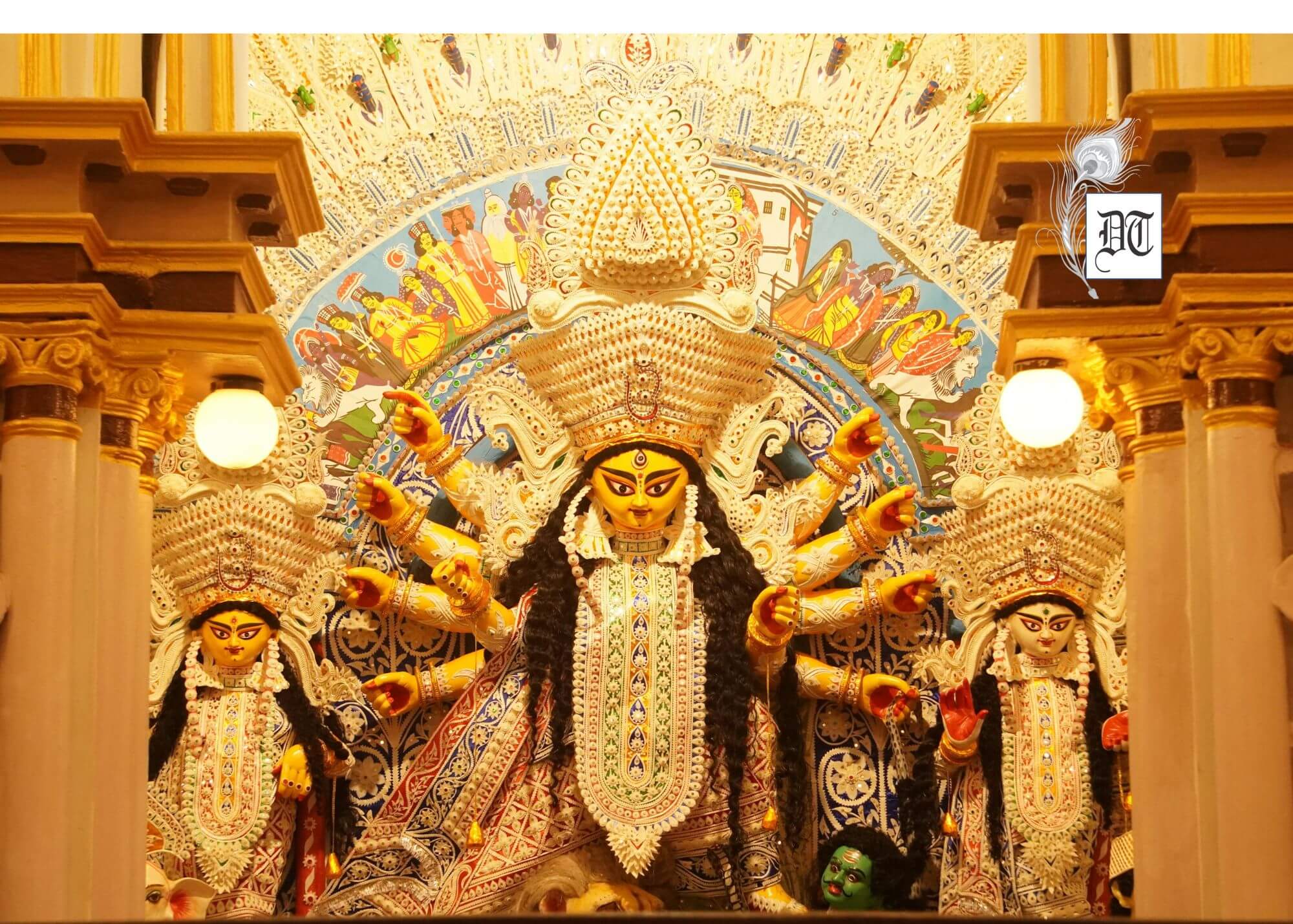
Ram recounts the heartwarming tale of Goddess Uma, who returns home for Durga Puja, a festival celebrating family and devotion, exclusively for Different Truths.
Durga Puja in Bengal has been recognised by UNESCO as an intangible cultural heritage of humanity. But not known to many, rather than just invoking warrior goddess Durga, she is celebrated in a transformed image, as Uma, a loving daughter, who visits her parents, Giriraj and Menaka, just as a normal daughter would.
Goddess Uma’s homecoming, for four days of the year on earth, is a mega festival performed with great fervour, jubilation and ecstasy. Her invocation involves elaborate rituals, and creation of artistically designed Durga idols with her children, namely Lakshmi, Saraswati, Ganesha, and Kartikeya-and consort Shiva. The festival, which includes both the martial aspect of Durga defeating the demon Mahishasura and her sentimental home visit, highlights the goddess’s benevolent side as the doting mother-figure, Uma. The period is also marked by wearing new clothes, feasting on varied fish dishes and delicious sweets, befitting the occasion of a long-awaited reunion, affection, and love showered on the daughter. The rhythmic beating of the dhak (a large drum), an essential part of the ritual, creates a synesthetic experience that connects the devotees to the goddess.
Maternal sentiments and yearnings
For generations, Devi Uma’s homecoming not only evoked deep sentiments amongst people but also catalysed the imagination of famous poets, whose poetry still reverberates as part of the welcoming songs, popularly known as Agomoni. The famous Bengali poem “Aay Ma Uma” by Kazi Nazrul Islam, for instance, is a poignant expression of a mother to keep her daughter, Uma, in the form of a boy with her, rather than sending her to her husband’s home (the mountains).
Yet again, Ramprasad Sen, a famous poet and saint of 18th-century Bengal, pens down a mother’s desperate wish through his creation “Ebar amar Uma ele“. “This time around, when my Uma (Durga) comes, I will not send her back”. The lyrics express a mother’s fervent desire to keep her daughter at home and refuse to let her leave, even if it means quarrelling with her son-in-law (Mrityunjay Shiva) and facing societal disapproval.
The soulful verses heralding Uma’s arrival were originally sung by wandering minstrels, both Hindu and Muslim. However, it was the poet Ramprasad and other luminaries like Horu Thakur and Ramnidhi Gupta who first created structured compositions of the verses. The poets, in their own inimitable style, infused the songs with profound emotional depth, blending divine reverence with extraordinary human sensitivity. The melodies are so endearing that during the puja festivities, Bengal’s villages stir with their resonant strains, celebrating the beloved Uma’s arrival. In fact, the songs reflect the everyday life of rural women—joys, sorrows, and maternal yearning. In a way, in their emotional devotion, Bengalis humanise the goddess, forming deep, sentimental and familial bonds with her arrival.
Uma’s bond with Shiva
Uma’s bond with Shiva stands at the core of many folktales. Since her childhood days, Uma was a devotee of Lord Shiva. Driven by affection, she undertook rigorous austerities and engaged herself in meditation, extended vows of silence, and worship, without even changing her posture. Interestingly, “Uma” is said to be derived from her mother’s call to her not to go to the forests – O (daughter) ma (don’t). The mother says “O dear, if you are so distressed and wish to perform penance, you can do it at home. Why do you wish to go out when we have gods here at home?” (Shiva Purana: Rudrasamhita III.22). Witnessing her severe penance and the unwavering focus, sincerity and deep devotion, Shiva welcomed her as companion. Their marriage, in a true sense, stands as a celebrated union of passion and purpose, setting up a model of harmonious interaction between opposites, and aspiration toward higher understanding and cause.
Uma, in various creative portrayals, is usually depicted with four or more arms, each hand grasping a potent emblem. The trident signifies her capacity to cut through malice. A blooming lotus denotes inner calm and spiritual awakening. A threaded mala (garland) denotes her dedication to prayer and focus. Some supplementary items, such as a small drum or sword, in other versions, reflect her readiness to act and her role as guardian of cosmic balance.
Uma is Sarvamangala
Goddess Uma embodies female strength at its finest. Her story underlines perseverance in the face of trials, the power of heartfelt devotion, and the courage to uphold personal convictions. Carrying the epithet of mother goddess in many scriptures, Goddess Uma stands for nurturing love and the sustaining force that fuels creation. In household tales, she is portrayed as a guardian who looks after her children, protects them from harm, and provides for every need. As Uma is the source of all good things to all those who have faith and follow the path of virtue, she is ‘Sarvamangala’- the source of all blessings and good fortune.
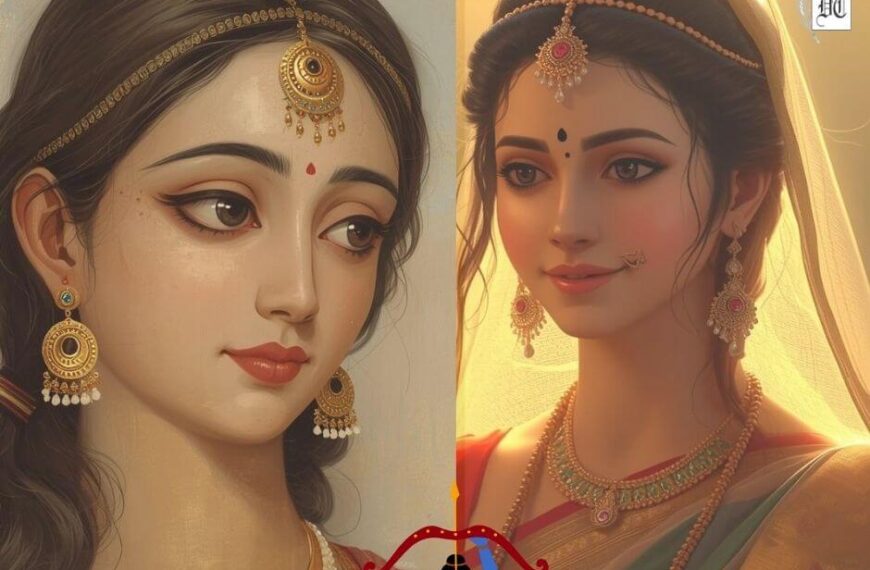
Picture design by Anumita Roy

Ram Krishna Sinha is a former General Manager at Bank of India, and lives in Mumbai. After three and half decades of distinguished career in the Bank, he is presently invested in talent mapping, management education and writing for newspapers and magazines on contemporary issues. An author of the motivational book “X-Factor @Workplace” published by Tata McGraw Hill, he is an Opinion Columnist for the CEOWORLD magazine.

 By
By
 By
By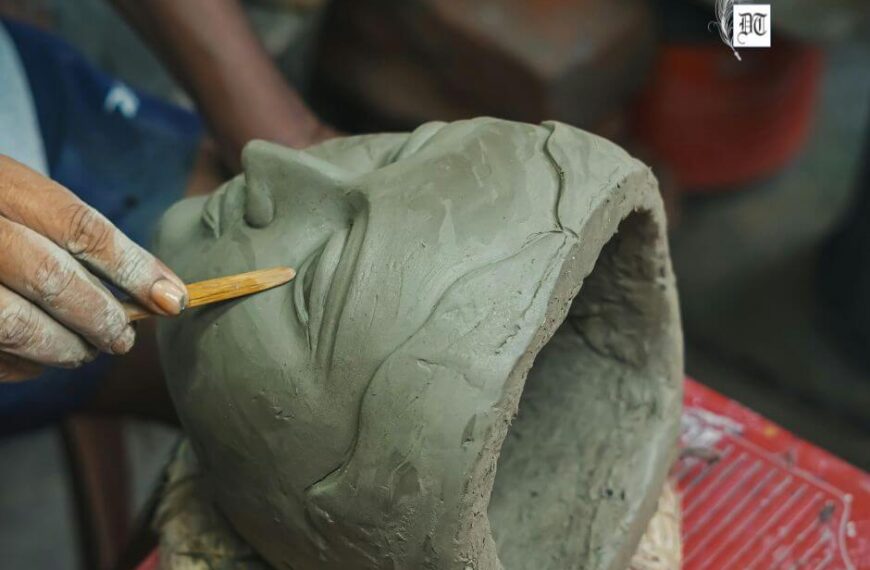
 By
By