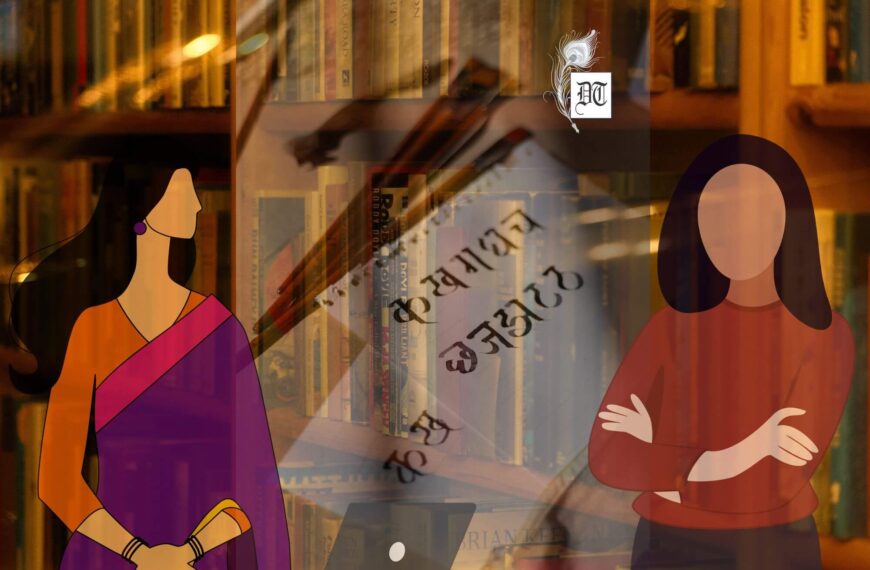
Mowmita in DifferentTruths.com explores the revolutionary rise of female priests reshaping India’s spiritual landscape.

AI Summary
- Breaking Traditions: Women in Bengal are challenging centuries-old patriarchal norms by training as purohits and leading sacred rituals.
- Logical Equality: The movement argues that spiritual leadership should be based on scriptural knowledge and devotion rather than gender.
- Social Impact: From weddings to funeral rites, female-led ceremonies are fostering inclusivity and emotional healing across Indian society.
The emergence of female priests in Bengal and throughout India signals a profound transformation in spiritual traditions and society at large. For generations, only men served as purohits, leading rituals, chanting slokas, and guiding families through important moments. Priesthood, or pourihityo, was considered a sacred duty passed down through men, and women were kept out of these roles. Now, women are taking on this responsibility with confidence, knowledge, and devotion. They are breaking old taboos and showing that the priesthood is about wisdom, compassion, and spiritual leadership, not gender.
The rise of female priests is both emotional and logical. On an emotional level, it helps heal a long-standing wound. In the past, women were told they were impure at certain times, not allowed to touch scriptures, or not fit to lead rituals. These rules kept women silent and left their voices out of sacred chants. Today, when a woman leads a wedding ceremony and recites mantras with confidence, she represents generations of struggle for equality. Families who choose female priests often say they feel comfort and dignity seeing women lead important life rituals like birth, marriage, and death. These moments are powerful. They are more than ceremonies—they are ways of reclaiming space and rewriting history. Logically, the argument for female priesthood is also strong.
There are compelling logical reasons supporting the female priesthood. The core of being a priest lies in understanding scripture, mastering rituals, and providing spiritual leadership—skills women possess as much as men do. The tradition barring women was based on cultural, not spiritual, reasons. Female priests show that knowledge and devotion, not gender, should decide religious leadership. Their growing participation underscores the main argument: the priesthood’s legitimacy comes from ability, not tradition or gender. This shift also aligns with broader movements toward gender equality, demonstrating that tradition grows stronger when made more inclusive.
The growth of female priests has been seen across Bengal and India. In Kolkata, some couples have chosen women to officiate their weddings to support equality. Female priests have led Durga Puja, a major Bengali ritual, and even performed funeral rites, which was once unthinkable. Training centres now teach women scriptures and rituals, giving them the same education as men. The media has covered these changes, showing that the female priesthood is becoming more common. There are no legal barriers to women being priests, and as society becomes more accepting, their numbers continue to rise. These changes have far-reaching implications.
This movement has far-reaching effects. When women become priests, they change spiritual leadership and encourage younger generations to challenge taboos. The movement connects to global efforts for women’s rights, demonstrating that change is possible across all spheres.
This change has faced some resistance. Some conservative groups say women should not perform certain rituals, using tradition as their reason. But tradition changes over time. Things that were once not allowed, like widows remarrying or women getting formal education, are now normal. Female priesthood is another step forward. By accepting it, society supports both equality and true spirituality. Although resistance persists, it is slowly fading as more families recognise the value of rituals led by women. The personal accounts of those involved powerfully illustrate the impact of this movement.
The personal stories of female priests are powerful. Brides who choose female priests for their weddings often say they feel empowered, knowing their marriage is blessed by someone who understands their experience. Families who invite female priests for funerals often mention the comfort of a woman’s voice during times of grief. These stories go beyond rituals—they are about identity, dignity, and belonging. They demonstrate that the priesthood is not just for men but a shared space for devotion, knowledge, and equality.
In summary, the rise of female priests in Bengal and India is a story driven by a single, clear argument: priesthood should be defined by knowledge, devotion, and leadership—not by gender. Women are healing years of exclusion by showing they can lead rituals and honour tradition with authority. Their inclusion proves that tradition can be both preserved and reshaped, creating a priesthood that truly values equality and shared spiritual purpose.
Sacred Sisterhood: Bengali Women Priests Break Centuries of Tradition
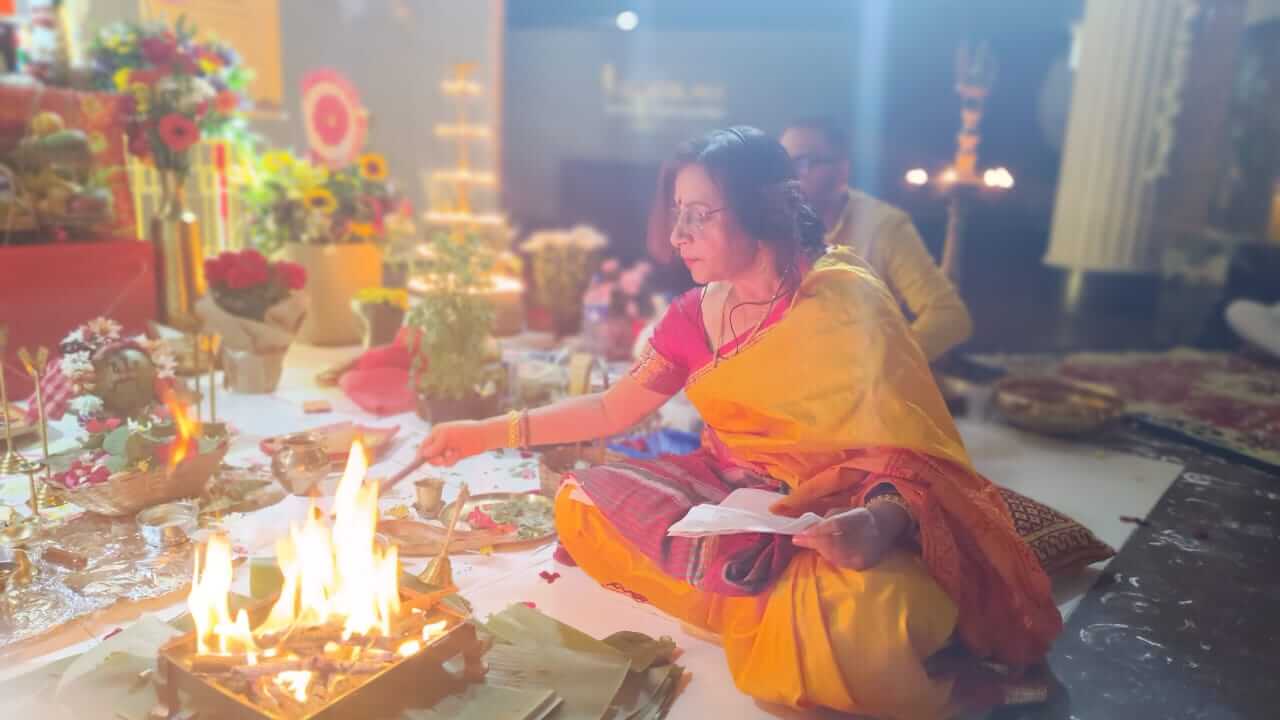
Fifteen years ago, Ratnabali Adhikari (cousin of our Managing Editor Anumita Roy) first chanted the Sanskrit mantras and performed the sacred rituals of Durga Puja in São Paulo, Brazil. She wasn’t just conducting a religious ceremony—she was shattering centuries of tradition. That moment marked a quiet revolution that would ripple across continents, from the bustling pandals of Kolkata, New Delhi and Bangalore to the diaspora communities scattered across the globe.
The story of women priests in Durga Puja reads like a modern-day epic. What began as a solitary act of courage in Brazil has now blossomed into a movement that spans from New Delhi’s upscale neighbourhoods to the traditional heartland of Bengal. These women, armed with Sanskrit scholarship and unwavering devotion, have challenged the age-old notion that only men can serve as intermediaries between devotees and the Divine Mother.
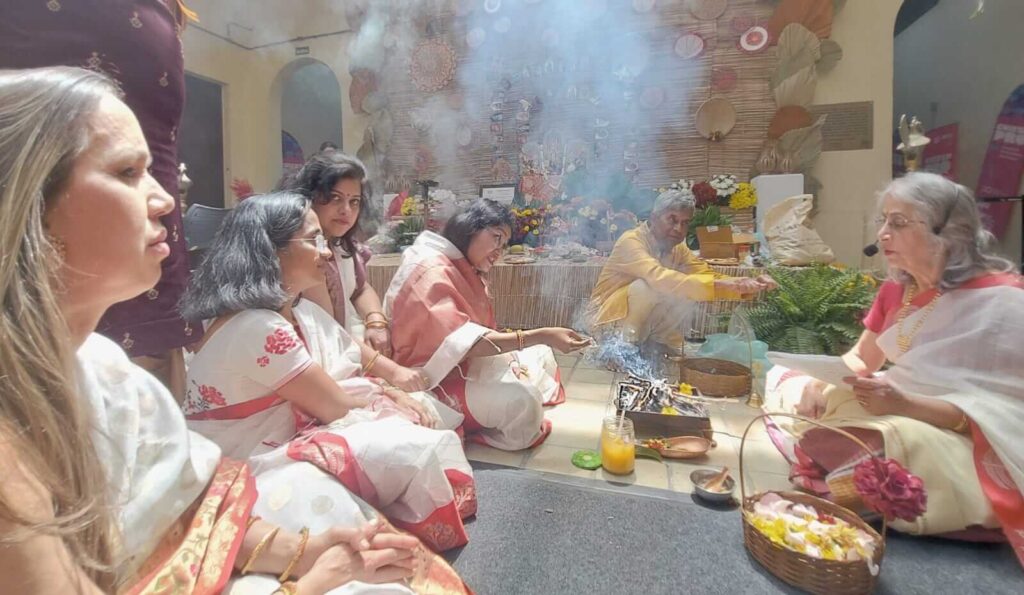
In Kolkata, where tradition runs deeper than the Hooghly’s waters, the sight of women priests conducting puja has gradually shifted from curiosity to acceptance. The city that once raised eyebrows now nods in approval as female pandits skilfully navigate the complex rituals, their voices rising in perfect harmony with ancient chants that have echoed for millennia.
New Delhi, ever the cosmopolitan trendsetter, has embraced this change with characteristic urban sophistication. Here, women priests don’t just perform rituals—they’ve become symbols of progressive spirituality, drawing crowds who come not just to witness the puja but to be part of history in the making.
What strikes most profoundly is how this movement transcends geography. From the Bengali communities in London to the Kali temples in California, women are reclaiming their rightful place in spiritual leadership. They’re no longer asking for permission; they’re simply taking their place at the altar.
This isn’t just about gender equality in religious spaces—it’s about the very essence of Durga herself. The fierce, all-powerful goddess who vanquishes evil and protects her devotees is perhaps best honoured by women who embody that same strength and determination. After all, who better to invoke Shakti than those who carry it within themselves?
The glass ceiling hasn’t just been cracked—it’s been completely transformed into a skylight, illuminating new possibilities for generations to come.
Arindam Roy,
Editor-in-Chief
Picture from Rantanbali Adhikari, Sao Paulo, Brazil

Mowmita Sur is an educationist, author, poet, and content writer. She has received many accolades for her writings at both the national and international levels. She was awarded as one of the best 50 poets of India. Many of her published book gets effusive praise and good reviews. Her books are captivating, incredibly well-researched and evoke strong emotions. She writes witty fiction, non-fiction, horror and mysteries. Her characters are clever and fearless like her.


 By
By
 By
By