
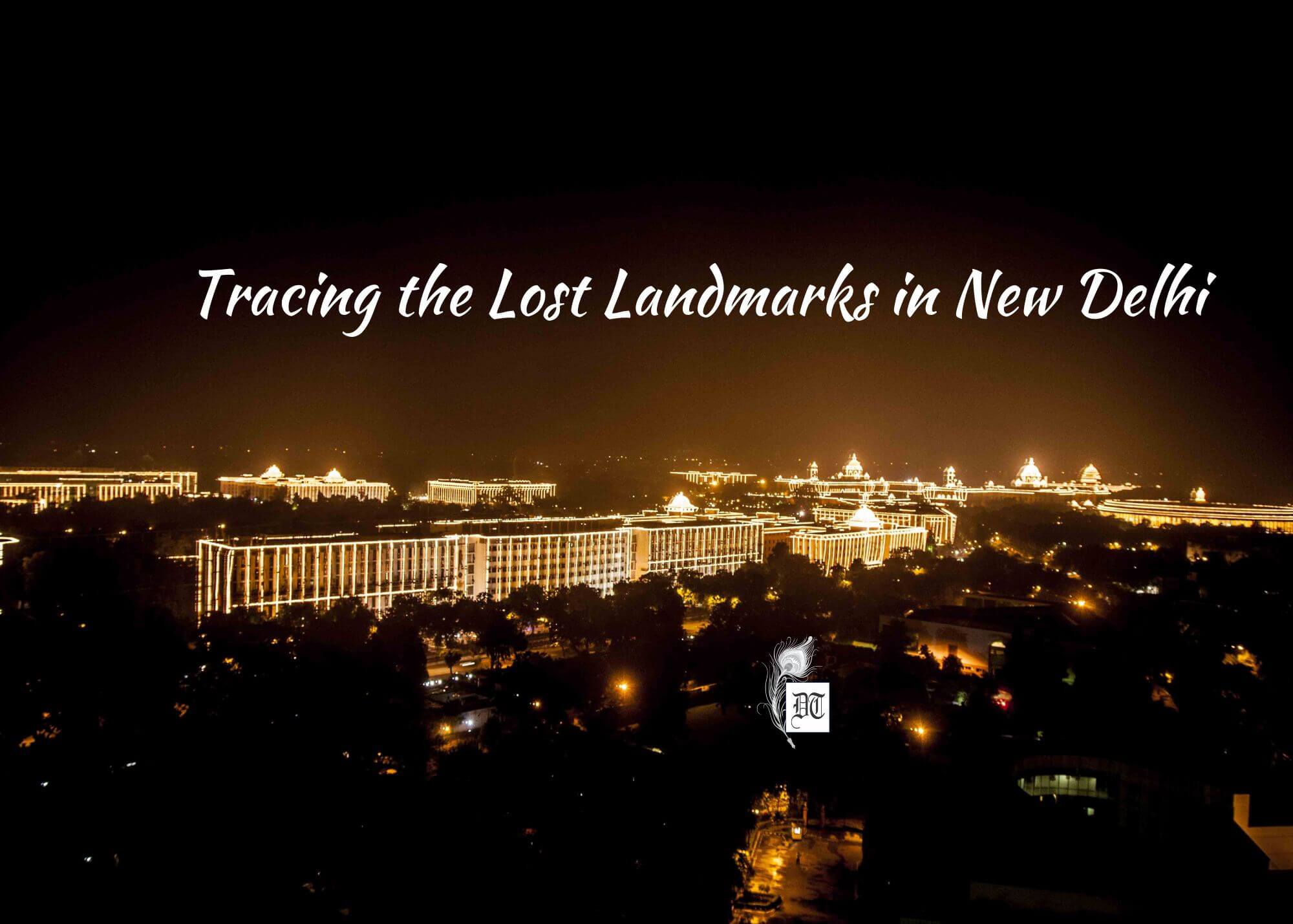

Over the years, New Delhi has evolved from a sleepy, spick-and-span city to a bustling metropolis with modern amenities and a changing rhythm, observes Ruchira, exclusively for Different Truths.
On a chilly winter morning in January, exactly 53 years ago, I stepped down onto a platform at the New Delhi junction (from the Howrah Rajdhani Express) along with my parents. It was altogether a different world from the back of the beyond Guwahati town (Assam), where I was born and which I have lately left behind for good.
For the first week or so, we had our lodgings in Bangiya Sansad (a hostelry for outstation Bongs) in Karol Bagh (mid-west Delhi). It was a bustling area and a hub of commercial activity. Later, we moved in with one of Mom’s cousins (he worked in a ministry), who lived in a government flat in Sarojini Nagar (south) until we managed to find rented accommodation in (mid-west) New Rajinder Nagar.
Those days, Delhi (New Delhi to be precise) was a spick-and-span but sleepy metropolis. An appropriate comparison would be with the U.S.’s Washington D.C., which is sleepier than its commercial capital, New York (aka the “city that never sleeps”).
The number of private vehicles on the busiest roads was very low.
The number of private vehicles on the busiest roads was very low. The DTU buses (the fleet then included a few double-deckers as well) lazily trundled along lanes, alleys, and by-lanes from one part of the city to another. The city’s nerve centre, Connaught Place, was a lovely place to be that hosted fountains, stretches of green, open-air restaurants, cinema halls, hi-fi shops, and what have you! The area is fast losing its sheen and is fast turning into a concrete jungle. Landmarks like Regal Theatre and Gaylord’s Restaurant have gone out of business. Many well-known shops and department stores have also closed. Instead of C.P., the most happening business districts now are South Extension Parts 1 and 2, Bhikaiji Cama Place, Vasant Vihar, Nehru Place, etc., none of which were in existence back then.
Talking of entertainment and recreation, Dolls’ Museum, the brainchild of Pt. Nehru and renowned cartoonist Shankar, popular with kids during those days, is now in shambles; its damp, smelly, badly lit interiors, not forgetting the decaying, off-colour dolls, are enough to keep visitors away. Qutub Minar in Mehrauli also used to be a major crowd-puller then. I still remember the breathtaking view of Delhi from its first-floor balcony, provided you managed to clamber up the dark spiral staircase, that is. Following a spate of suicides, a decade or two ago, the balcony is now out of bounds for visitors.
The Children’s Park near India Gate, the Rail Museum, and the picturesque Buddha Jayanti Park are passé; they have fallen out of favour with the old and young alike. Several popular cinema halls, e.g., Alankar Vivek, Archana Savitri, et al., have yielded places for malls and shopping centres. Chanakya Theatre, the Mecca of the elites, which had shut down some years ago, has risen, Phoenix-like, from its ashes and is slowly regaining its lost glory.
Located in its vicinity is the Diplomatic Enclave Chanakya Puri, once a well-known tourist attraction. Incidentally, over the years, a similar, though not so-chic, diplomatic enclave has come into existence in Vasant Vihar.
Delhi’s residential areas presented a very different picture during those years.
Delhi’s residential areas presented a very different picture during those years. High-rise and multistorey housing complexes were unheard of; you had stand-alone bungalows and rows of double-storey houses with a smattering of three- or four-story ones. For a greater part of the year, folks slept on terraces, gardens, and even pavements, under the canopy of the dark, starlit skies. Coolers and air conditioners were not familiar or commonplace.
Few homes had TV sets and telephones, which were accessed by the entire neighbourhood. Radios and transistors ruled the day. Morning walks, evening strolls, and gossip/chat sessions kept you entertained. Families mainly bought groceries at their neighbourhood Kirana stores. Most lanes and streets had piaos (free water kiosks) where passersby could quench their thirst; milk still came in bottles from Delhi milk scheme kiosks. Black-yellow taxis, which were a familiar sight until now, have vanished, though the autorickshaw has maintained its grip on public transport.
With the proliferation of flyovers and numerous stadiums post-1982 Asian Games, followed by the DMRC (Metro) ramification, Delhi has been shorn of its pristine old-world charm.
Picture design by Anumita Roy

Born in Guwahati and raised across Delhi and Punjab, Ruchira Adhikari Ghosh is an alumna of Sacred Heart Convent, Ludhiana. She holds a master’s degree in English literature from Punjab University, Chandigarh, and a postgraduate diploma in Journalism. With nearly 25 years of experience in print, web, and television media, she has carved a niche as a feature writer. Her writing focuses on women’s issues, food, travel, and literature, reflecting both versatility and depth.


 By
By
 By
By

 By
By