
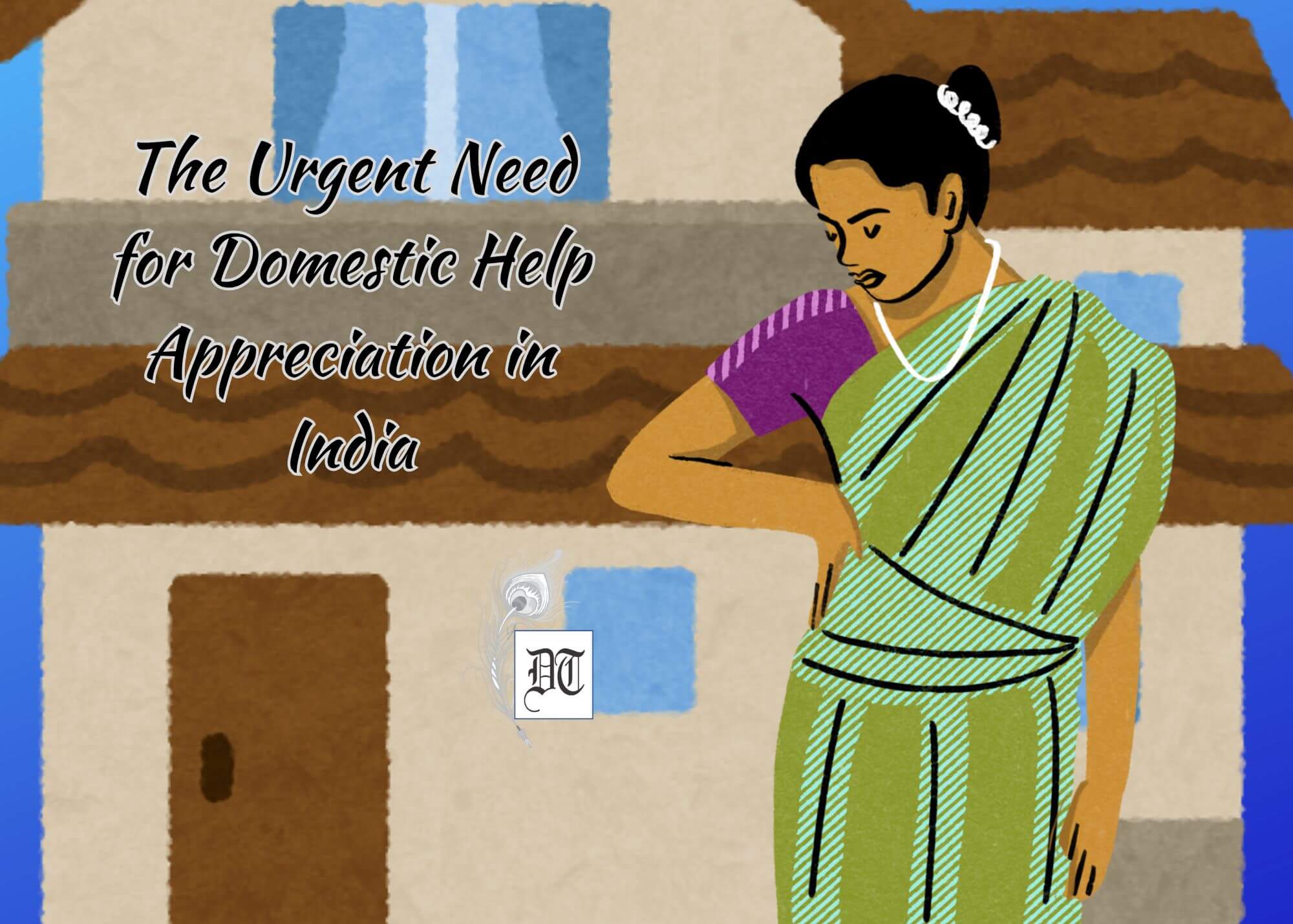

Geeta criticises the disparity between cleanliness appreciation and sanitation worker respect, advocating for improved treatment of domestic helpers, exclusively for Different Truths.

We speak about work culture and the dignity of labour. We speak about cleanliness. We also speak about garbage and dirt that accumulate everywhere. But do we ever think of our responsibility as people in maintenance after creating awareness about everything? We are practically unaware of it and very insensitive to many who work as domestic help or sanitation workers.
At public places like railway stations, airports, and bus stations, I’ve observed that the person cleaning the toilets finishes their work just as someone dirties the place after use. Flushing a toilet is such a simple thing! Putting garbage into bins is not a difficult task, but many throw it outside the bin. The person who cleared the garbage would have just finished clearing it. I heard a person remark, “Their work is to clean. Let them do their job.”
We treat people doing certain important jobs very rudely.
We treat people doing certain important jobs very rudely. Imagine what would happen if those people went on strike indefinitely. We are blind to the fact that they are working day and night to clean our surroundings, while we show disrespect by not helping them to maintain it. So unfair!
Very often, one finds people working on the roads at the height of summer, bearing the heat. Often, they get heat stroke. Do we care for them? They don’t even get enough money to look after themselves or their families. They do not get housing or educational loans easily. Do they get enough water to drink at least?
Our domestic help… assists with tasks we lack time for. for, makes our work easier, or provides necessary care at home.
Our domestic help, often called maids or servants, assists with tasks we lack time for. for, makes our work easier, or provides necessary care at home. They do everything from mopping the floor to cutting vegetables to laundry to cooking to looking after children or the elderly. In other words, we cannot think of managing homes without them. Sadly, many of us treat them very poorly. It is so easy for people to shout at them or make them feel small!
Can we respect some people’s work? Can we help them with all the difficult work they do?
My friend says things are changing. I am not sure. It is still, if at all, happening very slowly.
Picture design by Anumita Roy

Geeta Varma is a poet, an author and a journalist based in Chennai. She has worked as a teacher and a freelance journalist for some time. She has to her credit two books of poems and is a regular contributor to a few online magazines. Her next book will be published soon. She lives in Chennai with her husband Shreekumar Varma and has two sons, Vinayak married to Yamini, and Karthik.



 By
By
 By
By
 By
By
 By
By
A well-written reminder.