

Gender bias reflects itself in many forms. From the language of the morality and ethics of the so-called society made stereotypes of good girl and bad girl behaviour. Shockingly, in the Indian subcontinent, it reflects most prominently not only in the form of slurs and abuses but also in the form of blessings. When the brass-tacks are down, there is not much difference between the two. Vinita looks into the strange paradox that Indian women face, exclusively in Different Truths.
They say everything has a beginning and an end. Is it true?
Do the miseries and sufferings faced by the women in any part of the world find an end?
From Rwanda to West Virginia, from Australia to Africa, from Spain to China shortly from east to west to north to south, over spaces and over centuries, and from country to country, the story of women do not change.
From time immemorial women have suffered abuse, bias, and discrimination and continue to do so in some form or the other, from most traditional societies to the most modern ones; from most financially and socioeconomically empowered ones to the financially weaker ones and from the educated elite to the illiterate and ignorant. I sometimes wonder if there is any other animal besides the human-animal that is capable of perpetrating this abuse to their feminine counterparts.
Gender bias reflects itself in many forms. From the language of the morality and ethics of the so-called society made stereotypes of good girl and bad girl behaviour. Shockingly, in the Indian subcontinent, it reflects most prominently not only in the form of slurs and abuses but also in the form of blessings. The most ghastly of these are the abuses, which are the colloquial terms for the private parts of the female anatomy. The hurlers or perpetrator screams the name of the part connecting it to the mother, sister or daughter of the person to whom the insult (read abuse) is addressed to.

Also, we find that when a woman touches an elderly person’s feet to greet and seek their blessings as per Indian customs, the blessings showered are not for her direct wellbeing but the wellbeing brought through the menfolk connected to her, typically, a husband or a son. As if she has no existence beyond them. Let me explain through an example. A popular blessing that is typically showered in Hindu homes is, Suhaagwati raho, meaning, may your husband stay alive or akhand saubhagyawati raho, meaning may you never be widowed or may your husband be eternalised. Another example is, dudho nahao puto falo, meaning, may you be prosperous (metaphorically, bathe in milk) and bear sons. There are many such examples.

We, the Indian women, have received these blessings for centuries happily and proudly never even questioning or understanding the implicated meanings, the intricately inherent bias, it carries in favour of the males. We are still happy to receive them with the addition that the converse of this can be showered on males when they touch the feet of their elders. I wish they could be blessed – may your wives and daughters be healthy and happy and live long. This, I would say, is a typical paradox of curse and blessings on Indian women.
Men, please remember, all women are someone’s daughter, sister or wife. If we weaken one gender or approximately half the world population, we cannot be free of its adverse effects on every aspect of human life. We do not want or believe in one-upmanship. This is strictly not a feminist agenda. I love all men in my life.

Leaving on an optimistic note, I would say that I experience the winds of change in the form of a very timidly blowing wind that at least we are beginning to notice. At least, now we are questioning what we accepted as standard behavior over centuries. I am not saying that women have to prove their superiority or supremacy. I am only waiting for these lightly blowing winds to become a gush of the wind and the harbinger of a new world, where both genders equitably complement each other. That surely would be the beginning!
©Vinita Bakshi
Photos from the internet.
#GenderIssue #BlessingOrCurse #WomenAgainstDiscrimination #IndianGenderIssue #DifferentTruths

Vinita Bakshi is an award-winning sociologist and social entrepreneur. An alumnus of the Delhi School of Economics, she founded an NGO, AAMBRA Foundations, with a vision towards women empowerment and skill development. Currently the Director of National Institute of Jwellery (NIJ), Delhi, she has a passion for literature and writes bilingual, fiction and non-fiction, in English and Hindi. She has also published papers on gender and feminism. She has published a novel, 31 Miles.
 By
By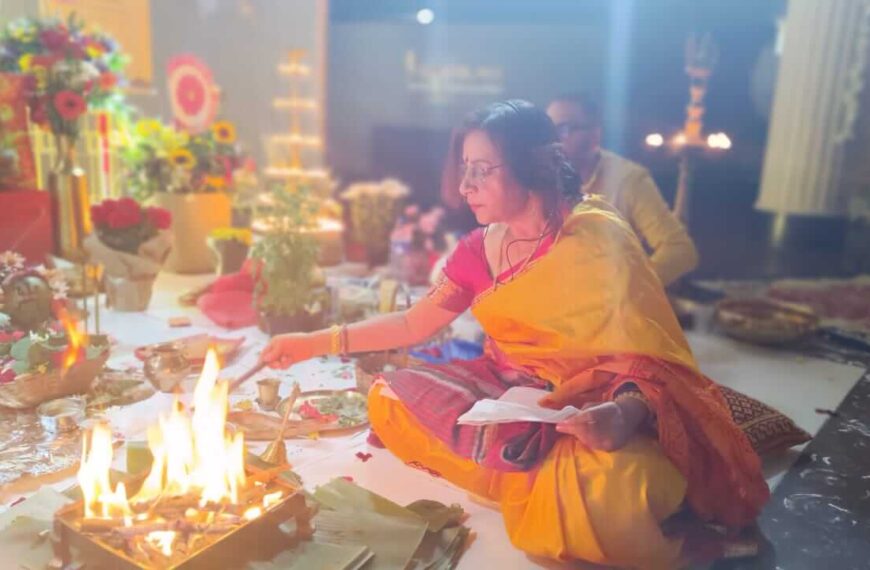
 By
By
 By
By