
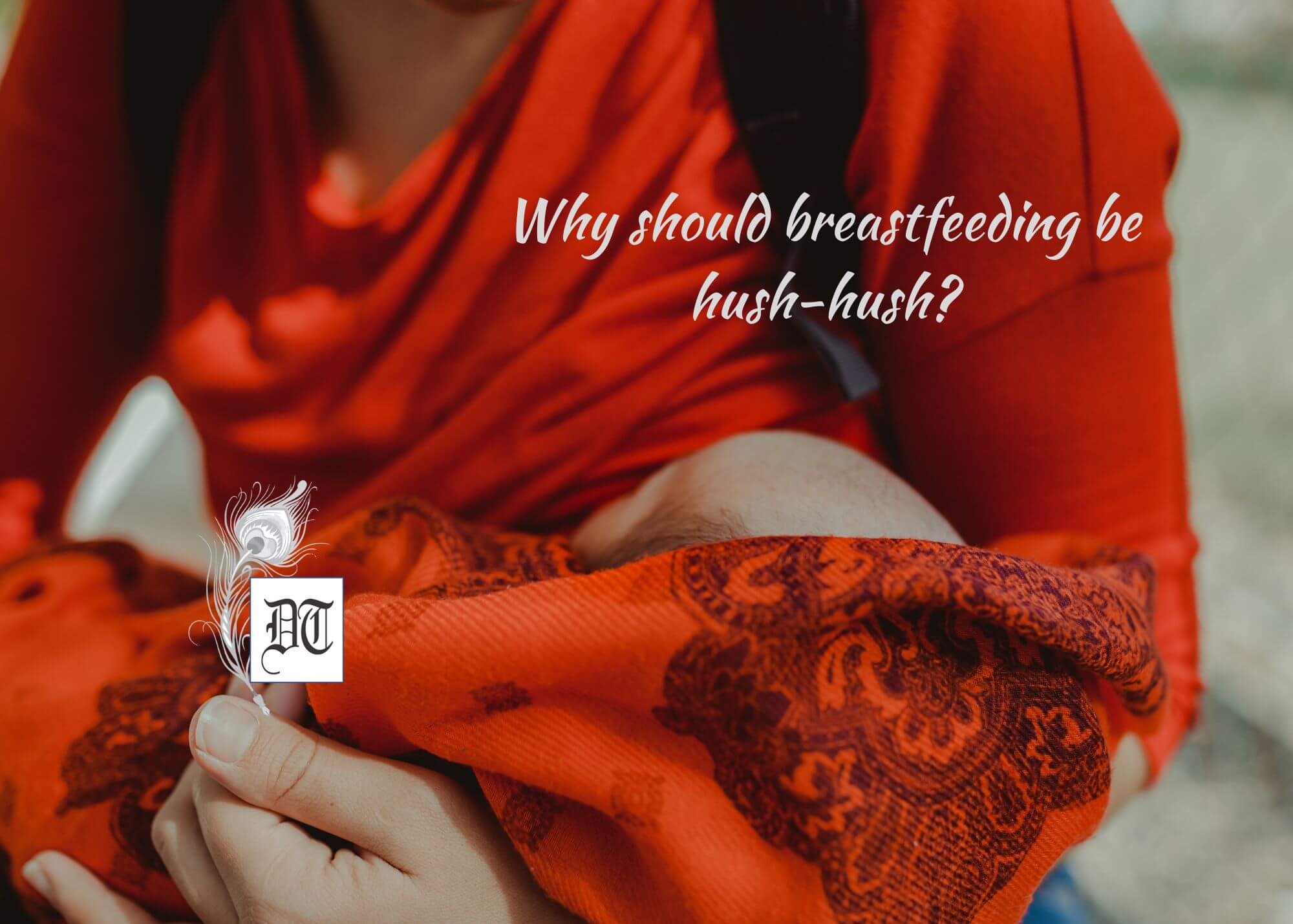

Ruchira shares her 30-year breastfeeding experience, sparking criticism and reflecting on societal attitudes towards motherhood and the double standards women face, exclusively for Different Truths.
Thirty years ago, one day during post-partum quarantine, I was suckling my infant in the living room of the maika (dad’s home) when Rima, a friend of mine who had come visiting with her two kids, mocked me, “Yaar, don’t you have any shame at all? Fancy breastfeeding in public view, cover it at least,” she rattled off. The public on the occasion comprised my mom, myself, and the three of them. I couldn’t figure out (still can’t) the need to raise a hue and cry like that. Was there anything vulgar in my act of feeding an innocent baby?
I remember breastfeeding my little one even when my father was at home or when my brother, a strapping young man who was at that point of time posted in another town, came home for his annual holidays. Trust me, none of them turned a hair or batted an eyelid. Mind you, both of them were by nature blunt and outspoken. If there had been even an iota of obscenity, they would have pulled me up then and there.
An old woman in the neighbourhood who was friendly with our family and had also noticed me breastfeeding openly pulled me aside one day and delivered a piece of advice: Beta, if men happen to observe you expose a part of your body in this manner, they might find it titillating. You never know with men they might get erections and make sexual advances.” I was dumbstruck. Let me narrate another incident related to the issue. During my stint on a private television channel, someone wrote a news item on breastfeeding. I selected a few images that I thought were relevant and handed them to the editing ‘girl’. The moment she saw them, she screamed in full public view of the newsroom, “Ma’am, have you no brains? How can we allow images of exposed boobs to go on air? Wouldn’t it be a violation of decency?” she grumbled. I nearly died of shame.
Much later extensive research on the internet, which I had conducted, revealed that by and large, Indian moms hailing from the upper middle and affluent classes frowned upon breastfeeding in public places; on the other hand, nursing women from the lower sections were comfortable with pursuing this intensely humane activity without bothering about cover or privacy. The underlying reason was evident: Warding off any unwarranted overtures from the opposite sex.
Let me put it succinctly: Agreed men (particularly Indian) might get turned on easily upon catching even the smallest glimpse of the female body, for the simple reason that the segregation of sexes begins at a very early age in our society. But I am pretty optimistic that even a debauch or lecherous male of the worst kind would look away since the object in focus is a tiny human life seeking nourishment rather than the particular woman in seduction mode.
As we are aware, down the centuries, ‘motherhood’ has been epitomized in diverse ‘Art’ forms—from the European Renaissance to the ethnic or desi—through the portrayal of breastfeeding. Therefore, what is obscene or profane about it that a lactating mother should dive for cover to feed a hungry child? My sole purpose behind writing this is to stress that our society is changing, and all such hypocrisies must be eliminated.
Picture design, Anumita Roy

Born in Guwahati and raised across Delhi and Punjab, Ruchira Adhikari Ghosh is an alumna of Sacred Heart Convent, Ludhiana. She holds a master’s degree in English literature from Punjab University, Chandigarh, and a postgraduate diploma in Journalism. With nearly 25 years of experience in print, web, and television media, she has carved a niche as a feature writer. Her writing focuses on women’s issues, food, travel, and literature, reflecting both versatility and depth.


 By
By
 By
By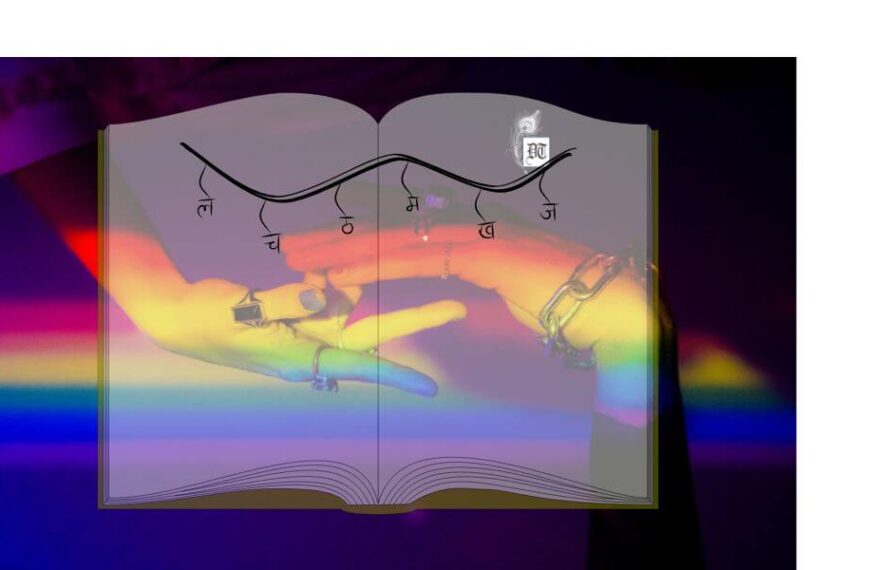
 By
By
Bold and well-written.
Eugène Delacroix’s painting Liberty Leading the People commemorates the July Revolution of 1830. Liberty is a bare-breasted woman.