
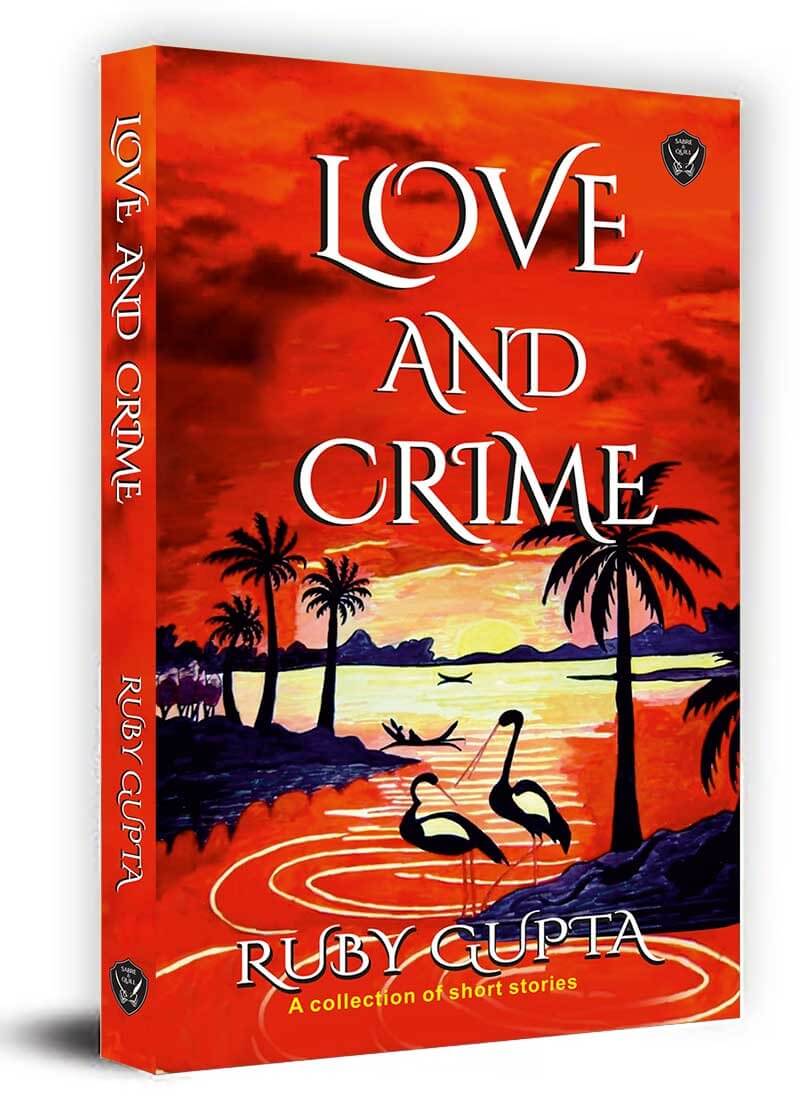

In this compelling review for DifferentTruths.com, Arindam explores Ruby Gupta’s Love & Crime, where psychological depth meets the chilling reality of human obsession.

AI Summary
- Dual Nature of Devotion: Gupta explores how domestic affection curdles into lethal intent, featuring 12 stories where the “Indian middle class” mask hides corrosive secrets.
- Masterful Misdirection: Utilising sharp dialogue and authentic cultural nuances, the collection blends traditional detective tropes with modern psychological thrillers.
- Empowered but Flawed Protagonists: The narratives highlight fierce, vulnerable women navigating betrayal, marital neglect, and the thin line between passion and criminal vengeance.
Ruby Gupta demonstrates remarkable strengths as a storyteller in her book, Love & Crime, her 2025 collection of 12 short stories, blending sharp psychological insight with taut suspense. Her prose flows naturally, capturing Indian middle-class nuances—from chaotic Delhi traffic to hakims peddling aconite—while delving into love’s corrosive underbelly. Gupta’s character depth elevates ordinary lives into tragic portraits; she unmasks hidden motives with precision, making readers complicit in the revelations.
Themes of Distorted Love
Gupta’s plotting shines in misdirection, layering clues that reward scrutiny, as in her title story, where a wheelchair screw unmasks maternal murder. Her dialogue rings authentic, blending Hindi idioms and clipped efficiency, like Detective Ramalingam’s sandwich-munching banter: “Aconite? Wow! It’s been quite some time since I’ve come across a case of murder by Aconite poisoning.” Themes of distorted love recur masterfully, from Oedipal paralysis to vengeful acid, without preachiness—Gupta shows, never tells.
Story Synopses
Here’s a quick synopsis of the stories in the book.
- Love and Crime: Pranav unwittingly smuggles a stolen $1.8M Lelio Orsi painting; wife Garima’s aconite poisoning leads Detective Ramalingam to expose a wheelchair-bound mother’s lethal devotion to her daughter.
- The Genesis of Luck: A married woman in an arranged match craves passion, finding ecstasy with neighbour Milind during jogs, declaring herself “the luckiest woman in the world” despite her vows.
- Mother: Akshay marries Kasturi, his mother’s doppelganger, but Oedipal revulsion prevents intimacy; tormented, he joins ascetics, abandoning wife and mother.
- What’s Love Got to Do with it: Sunanda, suffocating her husband Anand with devotion, reinvents via career independence in Milan, reversing power dynamics as he pines. “Why don’t you look at me for a change?” she demands.
- Best Friends: A jealous narrator spikes rival Mrinalini’s kohl with acid after she steals her love, Sanchit, revelling in impending “peace”.
- The Reunion: Nisha reunites with youthful flame Gary at a party; tempted amid marital neglect, she recoils upon learning of his mercenary marriage.
- A Small-Town Tale: The narrator chronicles Kusum’s rise from temptress to extravagant wife of tycoon Bhatnagar; drowned in her koi pond, she’s killed by her overlooked young secretary.
- A Cocoon of Love: Mala endures brutish husband Shankar’s assaults until artist friend Ketaki awakens her talent, forging a soulmate bond that heals her void.
- If Wishes Come True: (Inferred from themes) A woman’s fantasies spiral into dangerous obsession, blurring desire and destruction.
- The Golden Trap: Greed ensnares lovers in a web of deceit, where opulence masks fatal betrayal.
- The Revenge: A betrayed spouse orchestrates meticulous payback, echoing “Best Friends'” venom but with colder calculation.
- Where Love Has Gone: Faded romance leads to desperate acts, questioning if absence revives or kills affection.
Gupta’s economy packs emotional punches—each tale is under 20 pages yet lingers, and her women are fierce yet vulnerable. Mrs Majumdar’s poignant “I love you, Maa. I can’t lose you!” underscores sacrificial extremes. This versatility cements her as a crime-fiction adept, rivalling her novels like “A Degree in Death”.
In Love & Crime, Gupta masterfully intertwines the ecstasy and agony of love with crime’s cold precision, crafting a collection that lingers like a half-remembered nightmare. Her greatest strength lies in transforming mundane relationships into powder kegs—where a mother’s devotion curdles into murder, or a wife’s longing ignites infidelity—revealing how affection’s flip side is often destruction. Stories like Love and Crime dazzle with detective flair, while introspective gems such as “What’s Love Got to Do with it” probe marital entropy with raw honesty.
Gupta’s women dominate, fierce and flawed, navigating betrayal from small-town ponds to Milan boardrooms. She wields dialogue like a scalpel, exposing psyches in terse bursts. Pacing propels each tale to inevitable doom, blending Indian cultural specificity (hakims, arranged matches) with universal dread.
The cover photo was sourced by the reviewer

Arindam Roy has over four decades of experience in various newsrooms of renowned media houses. He is the Founder, Publishing Director, Editor-in-Chief of Different Truths, and Kavya Kumbh Publishing Consultant (KKPC). He has co-authored ten chapters in six Coffee Table Books (CTBs) of national and international repute and is the sole author of four forthcoming CTBs (Times Group). He has also published four international poetry anthologies as the Publisher and Editor-in-Chief, participated in several poetry and literary festivals, and won awards and accolades. Arindam co-authored the novel Rivers Run Back with an American writer. He stays in Bangalore and Prayagraj.



 By
By
 By
By
 By
By
 By
By