
In 1982, a Swiss MNC introduced instant noodles in India, revolutionising the snack industry and becoming an iconic brand endorsed by Bollywood stars, writes Ruchira, exclusively for Different Truths.
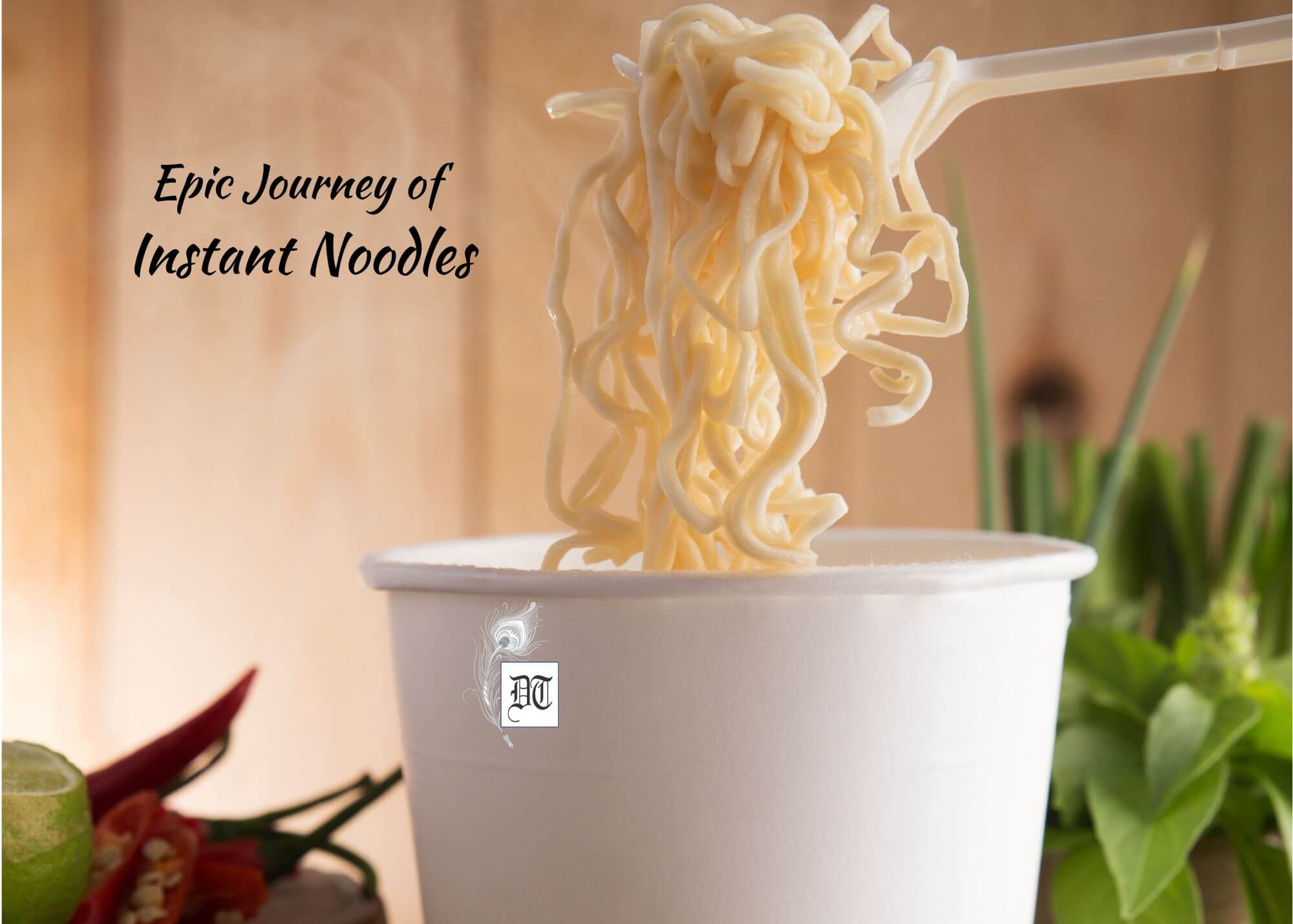
It was so long ago but is still etched in my memory. The year was 1982. I was in the last year of high school. A Swiss MNC had launched popular instant noodles on the subcontinent’s gastronomical horizon. The debutante moved forward with tottering steps…an infant was learning to walk! The folks were taken aback. Awestruck. Heretofore, their familiar in-between-meals edibles (call it snacks) comprised, cookies chikki, peanuts, chaat, laddoos, matri, namkeen, moor and what have you! Naturally, no one among them could ever conceive of an almost ready-to-eat snack; something that required only a pan of boiling water to prepare. Plus, a pinch of salt (optional) and voila! A piping hot meal was ready!
Now, Indians are notorious for their ‘resistance to change’ syndrome coupled with a cautious, prudent approach to life and things. So, in this case, too, there was no exception. However, this time around they were not disappointed. Coming to the brass tacks, the cooked product was sufficient to make an individual feel satiated for a while unless of course you were ravenously hungry and could “eat a horse” according to the adage.
I further recall that the star attraction of this fledgling snack was the masala…
I further recall that the star attraction of this fledgling snack was the masala (mixture of spices), which one had to pour over the boiling mass, stir vigorously and then take off the fire. The taste of the combo was so mind-blowing that most kids went bonkers over it and tried to lick off the contents of the silver-coloured sachets, much to the disgust of their mums. Amusing vignette of normal life!
Now, here is a candid confession. Occasionally, I too indulge in such ‘masala moments’ …merely for old times’ sake.
Slowly but steadily the 2-minute instant noodles grew so popular that legendary figures like Big B, Madhuri Dixit, and Preity Zinta gladly associated with its advertisement and publicity campaigns. From the early 1980s until 2015, the product had successfully bagged approximately 60% of the country’s noodle market. This ubiquitous commodity in its signature yellow & red packet was easily available in every nook and corner of the country, its USP being affordability and portability.
… clouds of adversity began looming large. The controversy began when some samples of this brand from … Uttar Pradesh were tested in the lab…
However, clouds of adversity began looming large. The controversy began when some samples of this brand from various parts of Uttar Pradesh were tested in the lab and found to contain a high amount of monosodium glutamate (MSG) and lead. Consequently, the Food Safety and Drug Administration wrote to the Food Safety and Standards Authority of India (FSSAI), asking it to take stringent measures against the company. The state regulator requested the FSSAI to collect countrywide samples so that the quality of the product could be ensured.
The brand was allowed six weeks to prove it is safe for human consumption. It cleared the hurdle, and the packets began reappearing on store shelves. Nevertheless, regaining consumers’ confidence was an uphill task. Why? Because Indian mothers are perpetually hyper over the non-conventional, non “Ghar ka khana” that their kids consume. Without delving too much into the intricacies, through volte-face, change of marketing tactics and finally, a solid band of loyal customers, by the end of that year it managed to refurbish its tarnished image.
Several other brands of instant noodles were doing the rounds of the markets, but they paled in comparison to this well-known brand. Even the hardcore ‘desi’ Yoga Guru’s noodles, which joined the bandwagon much later flunked miserably.
Hugely popular among the teeming middle class who consider it paisa vasool.
As of now, this brand reigns supreme in all its aura and magnificence. You can pick and choose from nutrient-packed flavours e.g., Special Masala, Veggie Masala, Spinach Atta, No Onion No Garlic, Atta Masala, and Oats Masala. Hugely popular among the teeming middle class who consider it paisa vasool.
To end on a comical note: if you happen to be in Saatvik, a vegan-cum-vegetarian locality market, do ask for the brand’s “Chicken” noodles. The salesman will turn pale, trembling like an aspen leaf and possibly duck behind the counter, lest he sin or blaspheme…
Picture design by Anumita Roy

Born in Guwahati and raised across Delhi and Punjab, Ruchira Adhikari Ghosh is an alumna of Sacred Heart Convent, Ludhiana. She holds a master’s degree in English literature from Punjab University, Chandigarh, and a postgraduate diploma in Journalism. With nearly 25 years of experience in print, web, and television media, she has carved a niche as a feature writer. Her writing focuses on women’s issues, food, travel, and literature, reflecting both versatility and depth.


 By
By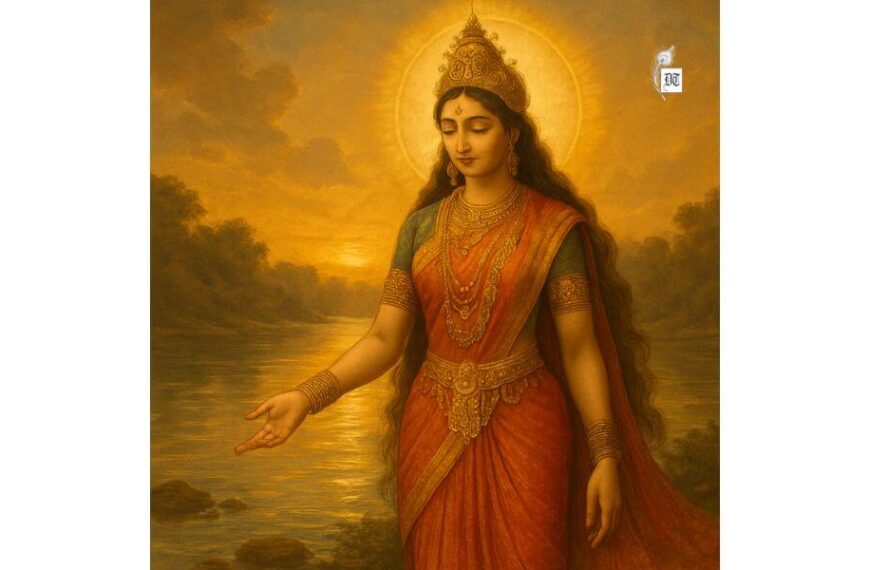
 By
By
 By
By