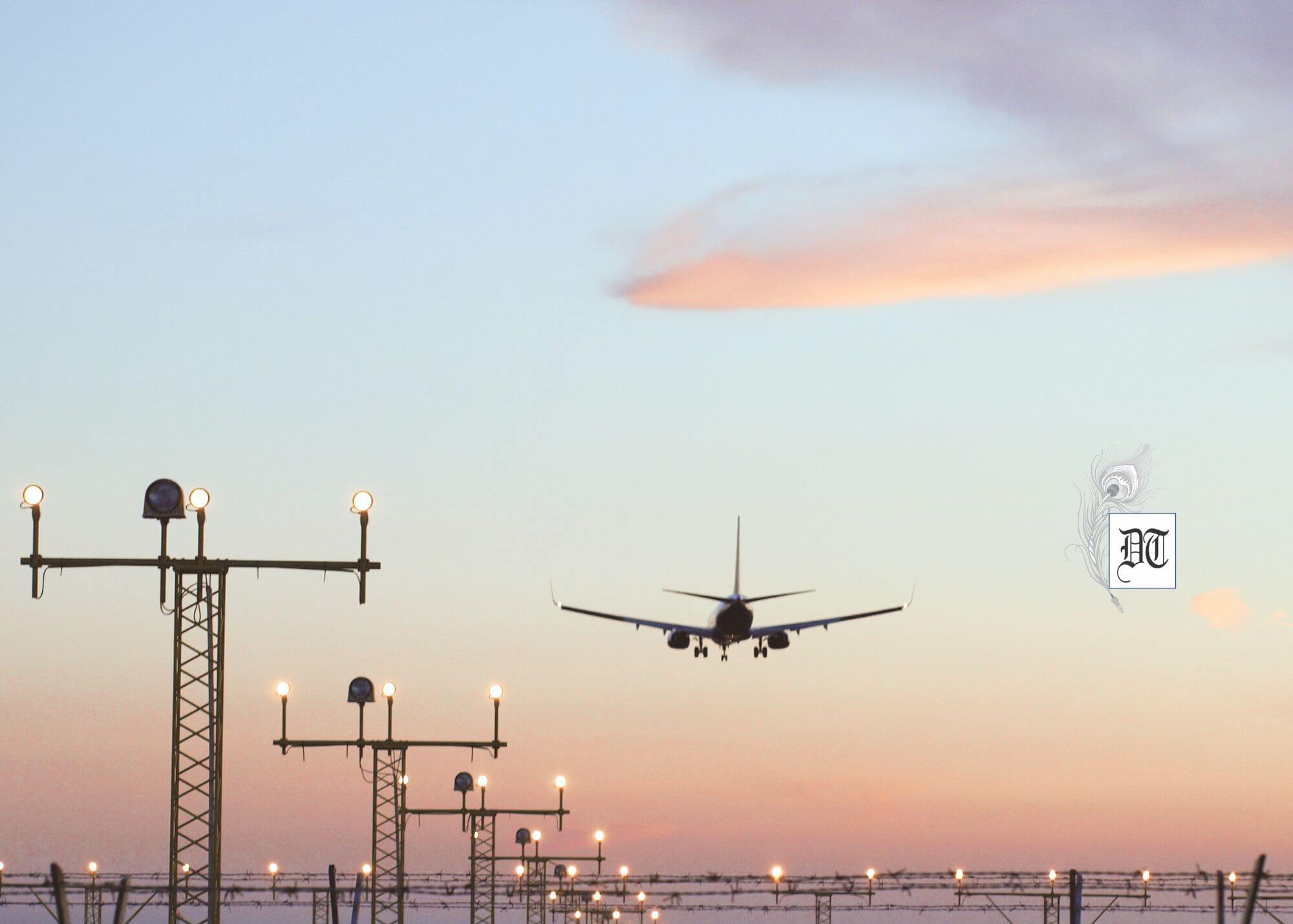

On June 12, 2025, Air India Flight AI171 crashed in Ahmedabad, killing 279. Amid devastation, stories of survival and sorrow emerged, reports Arindam for Different Truths.
In the heart of Ahmedabad, where the Sabarmati River hums softly and the city pulses with life, a Thursday afternoon turned to ash. On June 12, 2025, at 1:39 PM, Air India Flight AI171, a Boeing 787-8 Dreamliner bound for London, clawed at the sky for 33 seconds before plummeting into Meghani Nagar’s quiet streets. The crash, the deadliest in India since 1996, stole 279 lives—241 aboard the plane and 38 on the ground. Yet, in the wreckage, stories of survival, loss, and haunting near misses linger like echoes.
Vishwash Kumar Ramesh, a 40-year-old British Indian seated in 11A, became the sole survivor, a man who walked from a fireball that consumed 241 others, including his brother, Ajay. “The plane broke, and my seat came off,” he whispered to doctors at Ahmedabad Civil Hospital, his body burnt and torn but alive. His first words, through pain, were for Ajay, whose body remains among the unidentified. Vishwash’s survival, from a seat by an emergency exit, defies logic, a flicker of hope in a sea of grief.
Bhoomi Chauhan, a 28-year-old teacher, should have been on that flight. A traffic jam kept her grounded, her ticket for AI171 unused. “I was angry that afternoon,” she told a local reporter, her voice trembling. “Now, I wake up thanking Ganapati for that delay.” Her students, unaware of her near fate, cling to her now, their hugs a reminder of life’s fragile threads.
In the wreckage, a phone recovered from the hostel of BJ Medical College held a frozen moment: a selfie of Dr Anil Patel, his wife Meena, and their three children, aged seven to 14, smiling over breakfast hours before the crash. They had shared this photo with their family. The family, visiting Ahmedabad for a medical conference, perished when the plane’s tail smashed through the hostel’s dining hall. The photo, shared by a grieving relative on X, became a symbol of the lives snuffed out—ordinary, beautiful, gone.
Aryan Asari, a 17-year-old plane enthusiast, stood on his balcony, phone in hand, filming AI171’s take-off for his friends. His 59-second video captured the plane’s wobble, its tail-first descent, and the explosion that followed. “I thought it was cool at first,” he said, eyes hollow. “Then I realised those were people.” Aryan hasn’t slept since; his footage is now a vital clue for investigators, a weight he carries alone.
Roshni Songhare, a 26-year-old Air India flight attendant, was the “heartbeat” of her family in Bhopal. Her last Instagram post, a sunrise from an earlier flight, read, “Chasing dreams above the clouds.” Her mother, unable to reach her, rushed to Ahmedabad, only to learn Roshni was gone. A tea stall operator near the crash site, Saraswati, survived but lost her son, Akash, who ran back to save her from the flames. “He was my everything,” she wept, clutching his photo.
These stories, woven through the tragedy, frame a disaster that shook India and the world. At 1:39 PM, Flight AI171, carrying 230 passengers and 12 crew—169 Indians, 53 Britons, seven Portuguese, and one Canadian—lifted off from Sardar Vallabhbhai Patel International Airport. Captain Sumeet Sabharwal, nearing retirement, and First Officer Kunder, a young pilot, manned the 11-year-old Boeing 787-8 cockpit, which had logged over 700 flights in the past year, per Flightradar24.
Seconds after take-off, Sumeet Sabharwal’s voice crackled over the radio: “Thrust not achieved… falling… Mayday! Mayday! “Mayday!” The plane, unable to climb, crashed into BJ Medical College’s hostel complex, killing doctors and staff in the dining area. A massive fireball engulfed the site, captured in CCTV footage and Aryan’s video. The impact, 33 seconds after takeoff, left a scar on Meghani Nagar, the plane’s tail lodged in the hostel’s rooftop.
The sole survivor, Vishwash, escaped when his seat was ejected during the crash. Of the 279 dead, 38 were on the ground, including hostel residents and passersby. By June 16, 80 DNA samples were matched, and 33 bodies were released to families. Rescue teams recovered one body from the tail section on June 14, a grim reminder of the wreckage’s toll.
The Directorate General of Civil Aviation (DGCA) leads the investigation, joined by Boeing, the U.S. NTSB, and the FAA. One black box, the flight data recorder, was found on the hostel rooftop, but the cockpit voice recorder remains missing. Video analysis by Captain Steve Scheibner, a former US Navy pilot, suggests a dual-engine failure, possibly triggering the Ram Air Turbine (RAT), an emergency power system. Enhanced footage shows a small turbine beneath the plane, its high-pitched whine audible. This aligns with the pilot’s Mayday call about thrust loss.
The DGCA ordered safety checks for Air India’s 34 Boeing 787s, focusing on fuel systems, engine controls, and take-off parameters. Eight aircraft were inspected by June 16, with power assurance tests mandated within two weeks. Turkey denied claims that Turkish Technic maintained the crashed plane, clarifying their contract covered only Air India’s B777s, ruling out early maintenance theories.
The crash, the world’s deadliest air disaster in a decade, was the first fatal incident for the Boeing 787. Prime Minister Narendra Modi visited the site on June 13, vowing support. Home Minister Amit Shah met Vishwash, while PK Mishra, Modi’s Principal Secretary, inspected the wreckage on June 15. Air India offered ₹25 lakh in additional compensation, and insurers eased claim processes. Ahmedabad airport halted operations temporarily, and Boeing’s CEO skipped the Paris Air Show to focus on the crisis.
The investigation probes engine thrust, flap settings, and why the landing gear remained extended. The flight data recorder holds critical clues, but until the voice recorder is found, questions linger. Was it a mechanical failure? Human error? A design flaw in the Dreamliner, previously unscarred by fatal crashes?
As funerals began on June 16, India mourned. The Indian Medical Association issued condolences, and Air India darkened its social media. Vishwash, recovering in the hospital, faces a life without his brother. Bhoomi Chauhan teaches her students with newfound gratitude. Aryan Asari grapples with his unintended role in history. And the Patel family’s selfie, a fleeting moment of joy, reminds a nation of what was lost.
The sky above Ahmedabad is quieter now, but the stories endure—tales of survival, sacrifice, and sorrow. As investigators seek answers, the world watches, hoping to honour the 279 lives by ensuring the skies never fall again.
References:
- Times of India, June 13-16, 2025
- The Guardian, June 13, 2025
- Reuters, June 14-15, 2025
- BBC, June 14, 2025
- NDTV, June 14-15, 2025
- The New York Times, June 16, 2025
- Indian Express, June 14-16, 2025
- Posts on X by PTI_News, ANI, WIONews, June 12-13, 2025
Picture design by Anumita Roy

Arindam Roy has over four decades of experience in various newsrooms of renowned media houses. He is the Founder, Publishing Director, Editor-in-Chief of Different Truths, and Kavya Kumbh Publishing Consultant (KKPC). He has co-authored ten chapters in six Coffee Table Books (CTBs) of national and international repute and is the sole author of four forthcoming CTBs (Times Group). He has also published four international poetry anthologies as the Publisher and Editor-in-Chief, participated in several poetry and literary festivals, and won awards and accolades. Arindam co-authored the novel Rivers Run Back with an American writer. He stays in Bangalore and Prayagraj.

 By
By
 By
By
 By
By