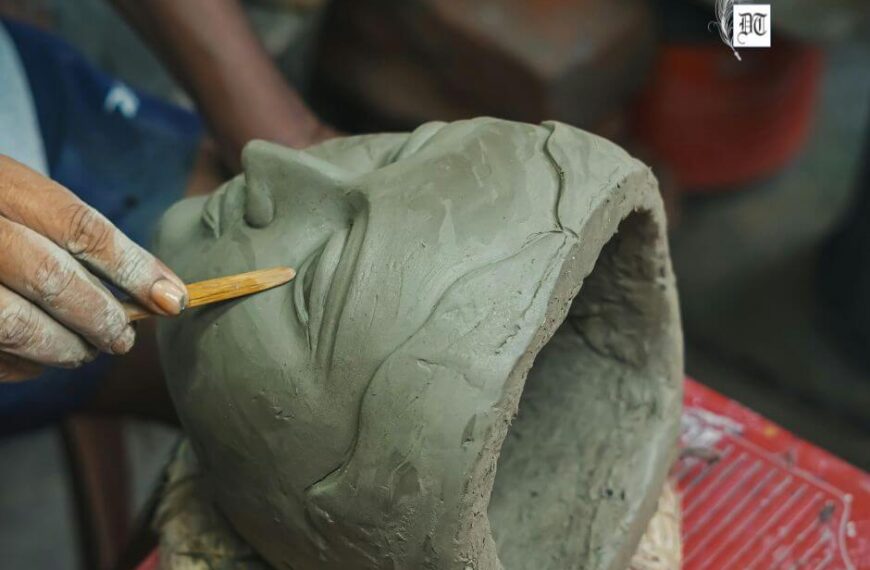
Nilanjana recounts the tale of Akrura’s vision, in the weekly column, exclusively for Different Truths.
“Akrura was so lucky that he got to ride Balarama and Krishna!” Parikshit observed.
Sukhadeva responded, “Yes, he was even blessed with a divine vision! When he was riding the chariot that was taking Balarama and Krishna to Mathura from Vrindavan,
they halted near the river Yamuna. It was a much-desired break. Both Balarama and Krishna went to the river to perform their morning ablutions. Since they were born as human beings, they had to follow the rules that mortals followed. They remembered their happy days on the banks of Yamuna. Somewhere both of them knew that those days are over now. After some time, they went back to the chariot.
Akrura, meanwhile, went to the river to perform his ablutions. He entered the river to take a bath. As he was chanting sacred mantras, he saw Balarama and Krishna in the water. Wondering how the two, who 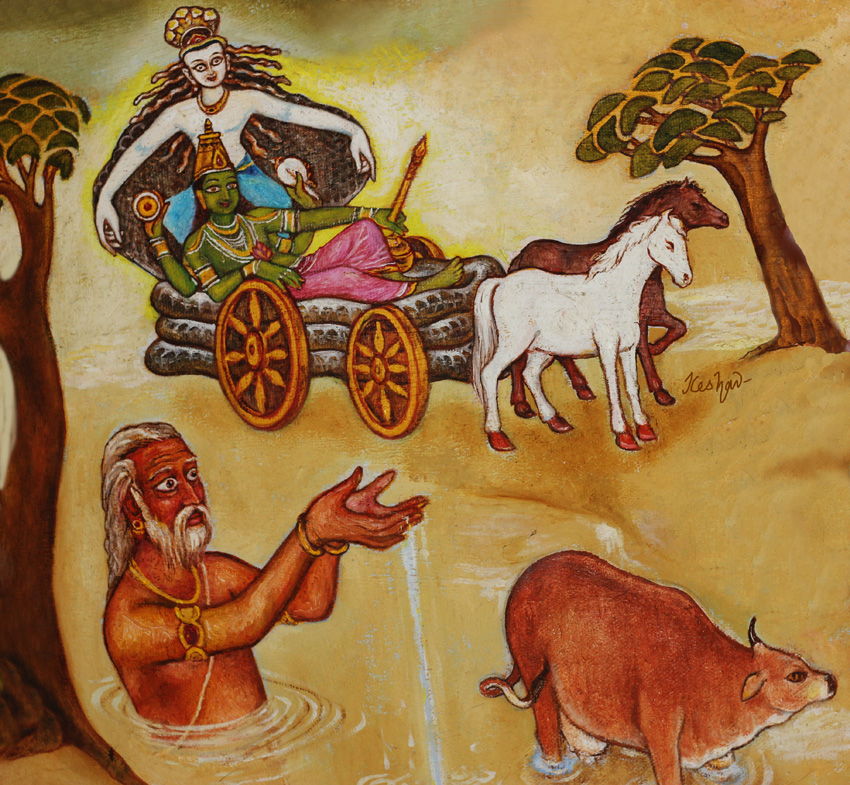 were seated in the chariot, entered the water so soon he went up to check on them. He found them in the chariot engaged in an animated discussion. Puzzled, he dived into the water again.
Akrura was now blessed with a vision. He saw the thousand-headed snake, Adisesha, coiled up comfortably and Vishnu (also known as Narayana) reclining on him. The seven sages and celestial beings were adorning him. Akrura was speechless; all that he had heard – that Adisesha and Narayana were born as the sons of Vasudeva – was true. He began to pray to the cosmic powers that chose to gift him this vision. Suddenly, the vision disappeared.
When Akrura went back to the chariot, Krishna asked him with a mischievous twinkle in his eyes, “Did you, by any chance, see something wonderful? Please share the reason for the ecstatic look on your face.”
Akrura replied, “Yes, I saw a vision that opened my eyes. I have seen you, your cosmic self. I am blessed indeed!” He then took the reins of the horses and rode the chariot towards Mathura.
They reached Mathura in the evening. The people around saw the two handsome boys and were completely charmed by their divine looks. Nanda and his friends had already reached the royal gardens and were waiting for the arrival of their children.
Krishna asked Akrura to inform Kamsa about their arrival. Meanwhile, Krishna expressed his desire to look around the city. Akrura was looking unhappy since he felt abandoned. He requested Balarama and Krishna to visit his house once and honour his family with their presence. But Krishna reminded him that he had more pressing tasks in hand – meeting his biological parents and relieving the earth of Kamsa. Once his tasks were accomplished, he would definitely visit Akrura’s house. He requested Akrura to inform Kamsa about Krishna. With a heavy heart, Akrura went to Kamsa’s palace.
Meanwhile, with the permission of Nanda and other elders, Balarama and Krishna set about visiting the city of Mathura…”
(To be continued)
Footnote: Srimad Bhagavatam is often called the Bhagavad Purana. Authored by Ved Vyasa, the stories are about the various avatars(incarnations) of Lord Vishnu, also known as Narayana. These stories are narrated by Ved Vyasa’s son Sukhadeva to King Parikshit.
©Nilanjana Dey
Photos from the Internet
#Religion #StoriesOfKrishna #SrimadBhagavatam #VedVyasa #Narayana #Akrura #Kamsa #AvatarsOfKrishna #MythAndMythology #DifferentTruths

A story-teller at heart, Nilanjana Dey is on a journey to experiment with fiction and poetry. Her first novel, largely aimed towards children, is titled ‘The Adventures of Puti – The Cheese Trail’. Her poems have been published at various prestigious portals. An alumni of English Literature from Jadavpur University (Kolkata), she is a marketing and communication professional based in Mumbai. She volunteers with a Mumbai based NGO working with the marginalised sections of the society.
 By
By
 By
By
 By
By