
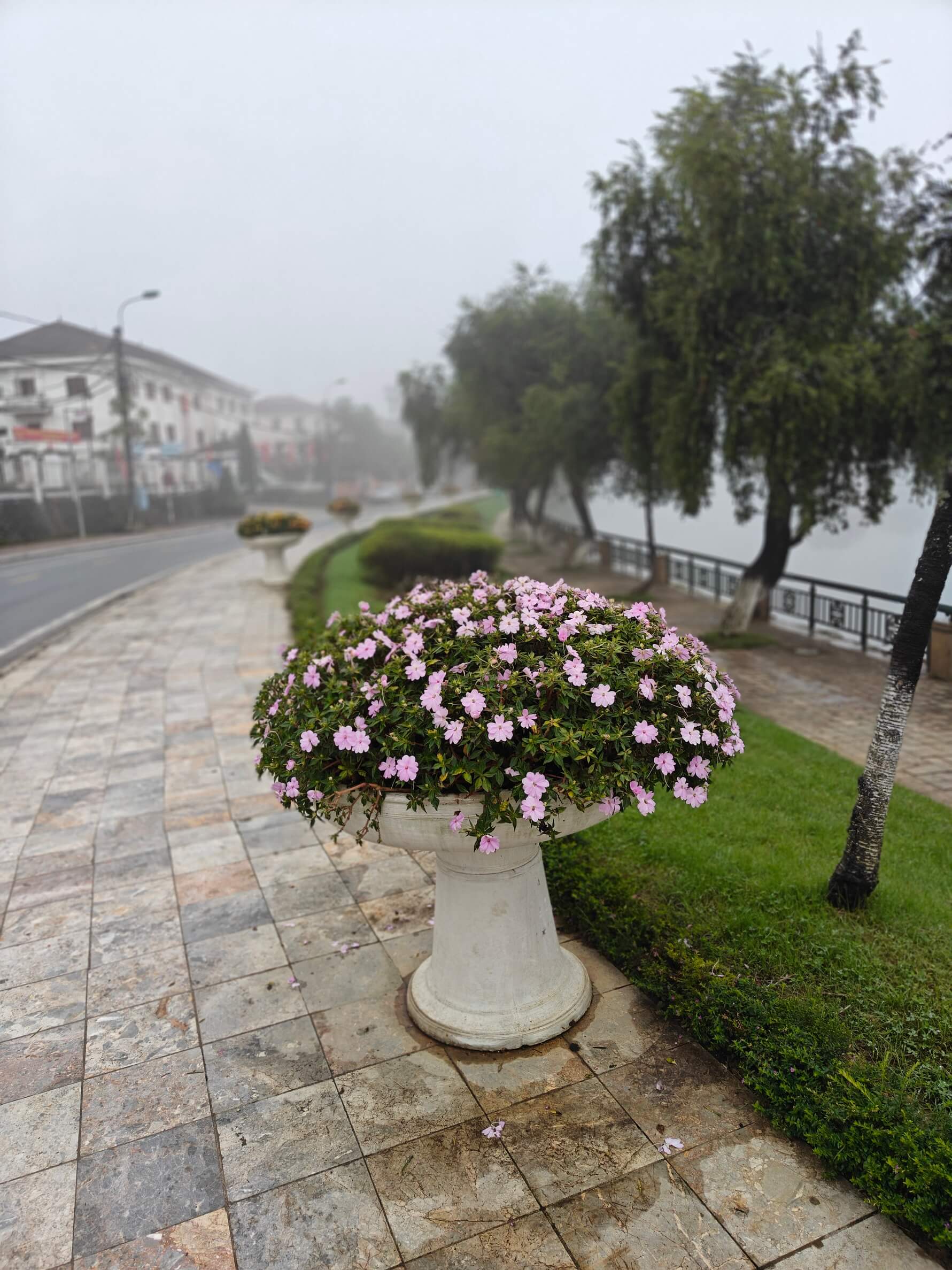
Debarati’s travelogue, for Different Truths, is lost in Sapa’s mist, waterfalls, rice terraces, and culture. This Vietnam escape healed grief, calmed chaos, and rekindled wonder within.
Sapa’s misty mornings, dreamy drizzles, emerald paddy fields, meandering roads, and cascading waterfalls feel like nature’s gift to a parched soul.
To escape the maddening city crowd and the noise that engulfs the streets during Diwali, my friend and I decided to fly to Vietnam in October this year. A three-hour direct flight from Kolkata took us to Hanoi International Airport. We spent a day exploring Hanoi’s vibrant streets and buzzing crowds, walking along the famous Train Street while sipping local Hanoi beer. The serene Hoan Kiem Lake and the ancient Ngoc Son Pagoda offered a peaceful contrast to the city’s cacophony.
However, contrary to popular belief, Vietnam is not just about Hanoi, Ha Long Bay, Ho Chi Minh City, or Da Nang. Nestled in the misty mountains of northern Vietnam lies Sapa — a picturesque hill station fondly called the City in the Fog.
Located at an altitude of about 1,500 metres, Sapa is a five-hour drive from Hanoi. It is a lesser-known gem, with its tapestry of lush green valleys, cloud-kissed mountains, and terraced rice fields. One can also reach Sapa via an overnight train or a sleeper bus from Hanoi.
The road from Hanoi to Sapa is a treat to the eyes. As the roads begin to steepen, the mercury dips. We were greeted by heavy downpours that made the journey thrilling. As our car raced through drenched streets and rolling thunder, our excitement knew no bounds. We took a shared transfer and reached Sapa at eight in the evening, checking into the magnificent Sapa Village Hotel, just a ten-minute walk from Sapa Lake. The weather was breezy, and after the long journey, we were famished. We treated ourselves to some hot Vietnamese delicacies — pumpkin soup and crispy phao rolls. We went to bed early, for the next day awaited us with a tour of the Silver Waterfall and Glass Bridge.
We woke up to an ethereal view — a latticework of clouds interspersing the hilltops, with the sun playing truant. After breakfast, we headed towards the Silver Waterfall. The roaring waterfall felt like a mountain ballad, while the glass bridge, suspended between valleys, offered a view that was both terrifying and exhilarating. With every faltering step on the transparent bridge, I felt an inch closer to the clouds. Just a pair of wings, and I could have floated on the bosom of the azure sky.
The next day took us to one of Sapa’s most majestic destinations—the Fansipan Mountain Peak, the Roof of Indo-China. A twenty-minute train ride from Sapa Station (Sun Plaza) took us to Muong Hoa Station, from where a cable car glided over drifting clouds and mountains toward Fansipan, perched at an altitude of 3,500 metres. Standing at the peak felt surreal, like stepping into a Van Gogh painting. As we climbed nearly 600 steps to reach the summit, the clouds brushed past us like whispers from a dream. The Fansipan peak also offers a breathtaking view of Asia’s tallest Buddha structure and the Indo-China border.
Our third day was reserved for Cat-Cat Village — a mesmerising hamlet where tradition breathes in harmony with nature. Wooden houses line cobbled pathways, waterfalls gush past bamboo bridges, and local artisans sell memoirs wrapped in curious tribal anecdotes. The village is home to the Hmong people, who migrated from China approximately 300 years ago. A small admission fee allows visitors to explore this fusion of natural splendour and cultural vibrancy. We witnessed a beautiful traditional dance performance there. The waterfalls running across the rice fields added to the village’s rural charm. We lazily strolled along the muddy trails, clicking endless pictures and drinking in the village’s beauty to the lees.
Life and Culture in Sapa
Sapa is not merely a destination; it’s an enthralling experience wrapped in misty memories that refuse to fade. The town square hums gently with life — Hmong and Dao women in traditional embroidered attire sell handwoven scarves, silver jewellery, and freshly picked herbs. Their laughter rings softly through the fog, blending with the distant rhythm of cathedral bells.
Early mornings are for mindless strolls across the Sapa Lake. The aroma of freshly brewed Vietnamese coffee fills the air as tourists gather around steaming bowls of Phở to satiate their mid-morning hunger pangs. While the Sapa Primary School rings with giggles, the Town Square buzzes with the local artisans selling handicrafts and souvenirs.
Sapa’s cafés deserve a special mention. I spent an afternoon at Le Gecko Café in Sapa Square—their orange-ginger tea is a must-try, and the apple pie sweetens your already-sweet memories of the town. You must also try the mouth-watering pizzas and creamy pumpkin soup at Chicago Pizza, as well as the crispy spring rolls. Sapa’s famous black chicken soup is truly one of a kind — a little unusual at first, but astonishingly flavourful.
Best Time to Visit Sapa:
The best times to visit Sapa are from March to May and September to November, when the weather is mild and the landscapes are stunning.
Reflections:
Sapa leaves behind a sweet aftertaste that lingers long after you leave. Despite the cold temperatures and the constant drizzles, its beauty refuses to fade into oblivion. The memories of this misty paradise remain etched in your heart — a sanctuary you can revisit on a sultry city noon.
This trip was much needed to soothe my heavy heart after I lost Dad at the beginning of 2025 — and Sapa’s valleys did not turn me down. In their scenic embrace, my grief found a space to soften, and my soul found an escape.
Photo by the author

Debarati Sen, an award-winning poet from Kolkata, published two solo poetry collections and contributed to more than 10 anthologies. She has recently made it to the top 50 poets in the NaPoWriMo 2023 writing challenge, and her poem, ‘Maple Dreams’, has been selected for the Yearbook 2022 to be published by Hawakal Publishers. Her haiku have been published in Haikuniverse, Five Fleas, Scarlet Dragonfly Journal, Suspect Device, Pan Haiku Review, and the Horror Senryu journal.


 By
By
 By
By
 By
By
Beautifully written.