

Dr Amitabh warns that the ban on hilsa fish exports from Bangladesh to India is escalating tensions between the two nations, potentially threatening diplomatic and economic cooperation. An exclusive for Different Truths.
The recent ban on hilsa or ilish fish exports from Bangladesh to India during the Durga Puja season has ignited a firestorm of controversy. The interim government in Bangladesh orchestrated this action, which has far-reaching effects outside of the culinary world.
The geopolitical implications of the hilsa fish ban are far-reaching.
A Strategic Gambit or a Miscalculation?
The timing of the ban, coinciding with a significant cultural and religious festival in India, has raised eyebrows. Some experts believe it’s a deliberate attempt to provoke India and to assert Bangladesh’s newfound assertiveness. However, others argue that it’s a short-sighted decision that could damage bilateral relations and harm the economies of both nations.
Economic Repercussions
The ban has severe economic consequences. Hilsa is a prized delicacy in India, and its absence during the festive season has disappointed consumers and impacted the livelihoods of fishermen and traders. Additionally, India’s investments in Bangladesh, including the Adani power project, are facing uncertainty amidst rising anti-India sentiments.
Historical Ties and Political Tensions
The historical ties between India and Bangladesh are complex and marked by periods of cooperation and conflict. The current political climate in Bangladesh, characterised by increasing authoritarianism and religious extremism, has strained the relationship. The vandalism of the statues of Rabindranath Tagore and Mujibur Rahman is a stark reminder of the growing intolerance and disrespect for cultural heritage.
India’s Eastern sector, which was quiet before, has become rough now. Extra brigades have been added, according to sources.
A Path Forward
To mitigate the damage caused by the hilsa fish ban and to restore cordial relations, both countries must prioritise diplomacy and dialogue. India should consider calibrated responses to avoid escalating tensions. Simultaneously, it’s imperative to engage with Bangladesh’s civil society and democratic forces to foster understanding and cooperation.
Cultural Exchange and People-to-People Contact
Cultural exchange and people-to-people contact can play a crucial role in bridging the gap between the two nations. By promoting educational and cultural programs, we can foster empathy and understanding.
Ultimately, the resolution of the hilsa fish dispute and the broader India-Bangladesh relationship requires a long-term perspective. Both countries must work together to address their shared challenges and build a future based on mutual respect and cooperation.
Hilsa Diplomacy, Memories of Bangladesh Border
Farida Akhtar, the interim advisor on Fisheries in Bangladesh, has banned exporting hilsa fish to West Bengal during the Durga Puja season. The hilsa or ilish, is considered an auspicious delicacy to be had by the Bengalis of India, especially during the Durga Puja and Kali Puja festival days.
The present interim government in Bangladesh is playing a dangerous game with India. Billions of US dollars in investment by India in Bangladesh continue to be trapped there. Adani’s electricity supply to Bangladesh is in jeopardy. There is a rising anti-India feeling, which will come out in the open on any day. One must remember that there is no stoppage of hilsa fish being exported to the US, UK, and other European countries.
In 1983, while serving in the high-altitude hospitals of Bhutan, I had access to the Indo-Bangladesh border at Pathatuli in Cooch Behar. Hilsa fish was presented to me regularly, cleaned and chopped for instant cooking. A telephonic message was given, and my driver went out of Bhutan to pick the parcel for ‘Doctor Saheb’.
I also got my first Funai video cassette player and a Sony TV from a Sadarji coolly stationed at the border. He spoke Bangla fluently. The chicken neck, starting from Siliguri and going right up till Jaigaon and beyond in Bhutan, I experienced the best of a gracious welcome attitude.
My batman would yell out the familiar order, “Ek chota peg burra sahab key liyey, juldi-juldi aur hilsa macchhi fry aur lao,” on evenings in the Dooars at colonial bungalows in tea gardens.
Picture design Anumita Roy

Amitabh Mitra is a poet, artist, and medical doctor based in East London, South Africa. He is the Head of the Trauma and Emergency Medicine Department of a tertiary hospital complex in the black township of Mdantsane. It is the second-biggest Black township after Soweto. Recently, the Department of Arts and Culture, in association with Oxfam, honoured him for his contribution and long-standing devotion to the people of Mdantsane.


 By
By
 By
By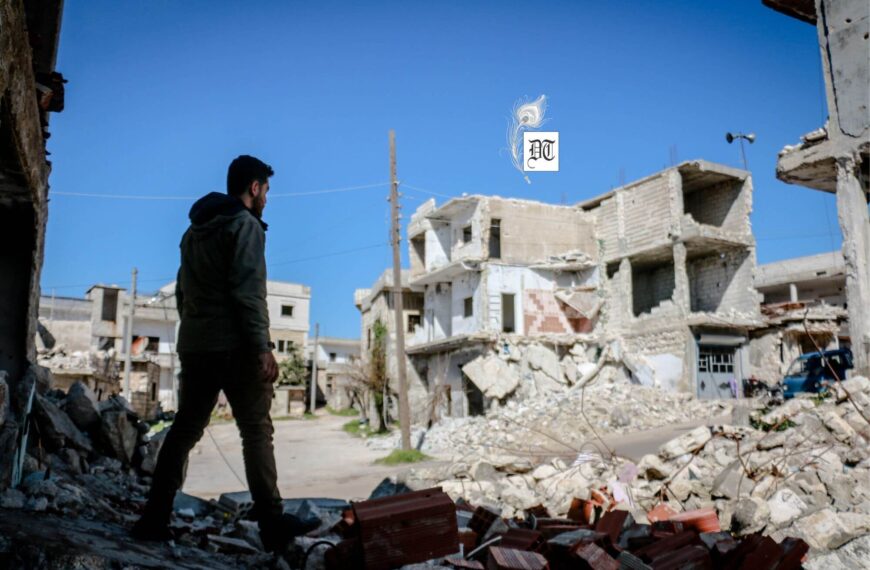
 By
By
 By
By
Beautiful write-up that reads like a prose-poem.
The current state of India-Bangladesh relations should be a cause of worry for right thinking people of both the neighbouring countries. But the rising tide of religious hatred may not allow much space for moderation and sagacity. As it is, statesmanship is vanishing from the international affairs; wars in the middle-east, between Russia and Ukraine, internecine internal conflicts in countries like Sudan and many African nations paint a grim picture of demagoguery replacing statesmanship. Quiet diplomacy has retreated giving rise to issuing open threats, flexing of nuclear muscles, and a very muscular kind of hyper nationalism, a dangerous cocktail that only portends an uncertain future. Hilsa isn’t the last straw, it’s the beginning.
True, it’s just the beginning Many thanks
A pleasure hearing the voice of sanity devoid of verbosity!
Many thanks, Azam ji Toppling the statues of Rabindranath Tagore and Mujibur Rehman are voices far from sanity