
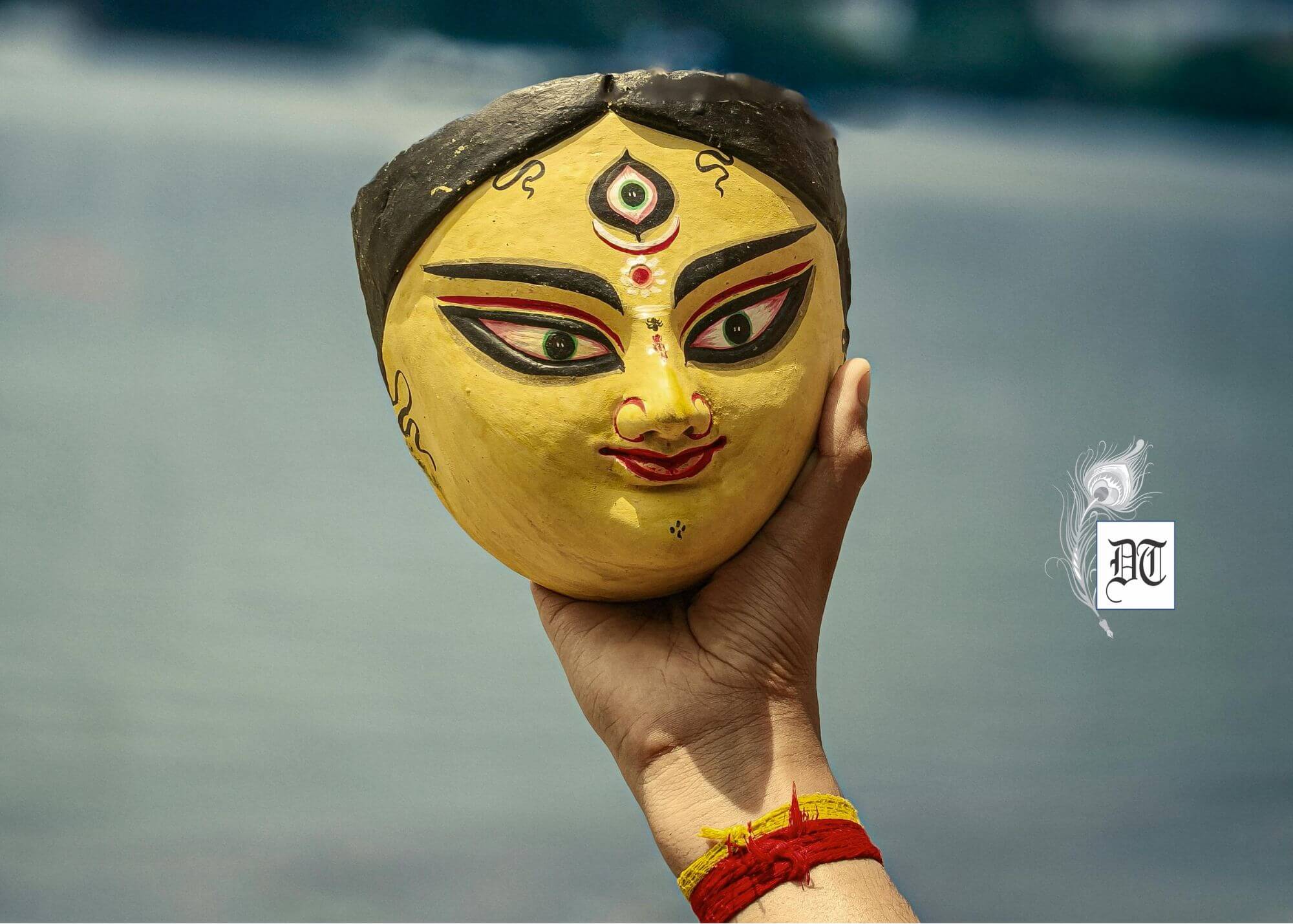

Looking back, Sayantani reminds us that Durga Puja’s end unveils Kolkata’s hidden truths—between devotion, despair, and ecological guilt, the lessons we still ignore, exclusively for Different Truths.
The dhaak (large war drums) beats rhythm fades away, the crowds disperse, the Goddess graces her with one final magical smile before she’s lowered into the Ganga. “Asche bochor abaar hobe” (next year the celebration will return) echoes through the dark night of Tilottama.
And suddenly, the city of joy resonates with another annual heartbreak. Durga Puja, Bengal’s grand carnival of celebration, empowerment, and devotion, ends with a strange stillness.
The Morning Kolkata Without Her Maa
Ma Durga leaves some untold, quieter stories behind all the glitter and shimmer. Between the aches of the not-up-to-the-mark paid artisans and the river gasping for fresh breath, we forget what the Goddess’s actual lesson was for us.
After the lights dimmed, the ghats resembled a battlefield after the celebration had ended. Babughat alone witnessed nearly 450 immersions, with a total of over 5,200 idols across 34 ghats in the city. The wilted garlands, paints, plastics, and garbage melt together with fragments of faith in the holy water. With the half-melted faces still showing here and there, it feels like every year the deity takes a part of us with her—and it is true.
Five Days Glory, 360 Days Guilt
For five spectacular days, Kolkata turns into a remarkable living cinema – where a multimillionaire dances with a rickshaw puller and the streets hum with the sound of Devi’s homecoming.
The time comes to a stasis as our deity boards her celestial flight – everything halts to the ‘aeroplane mode’. School stops, work is postponed, and WhatsApp groups are forgotten for those few enchanting days.
The celebration symbolises the victory of good over evil. But do we really accept the good or slip back into evil after the eternal journey of the deity?
When God Sleeps in Mud
Kumartuli, the well-known sculptor area, enters a state of hollowness after smelling the scent of wet clay and hay. The idol-making industry supports hundreds of families for generations, with a net worth of ₹150–200 crore per annum, yet struggles to make ends meet after a few days of the festive season. The cost of raw materials and the handmade ornaments cannot bring the much-needed profit. The clubs mostly still pay old rates, but the price has increased over the last five years, making it difficult for them to survive throughout the year.
A senior craftswoman voiced it, “We make Ma Durga strong every year, but we’re the ones left powerless after she leaves.” Once the artisans who bring life to the deities become helpless in the next moment, she leaves.
The River Never Forgets
We can forget our duty during the festival, but the river remembers everything. She silently swallows large amounts of chemicals, paints, thermocol, metals, and plastics during this time. In 2018, a significant spike in metal concentrations, including lead, mercury, and cadmium, was observed following the idol immersion in Kolkata, as reported by the University of Kolkata and ResearchGate.
The irony that we never realise is that we clean the way for the Goddess to send her home, but poison the home she leaves behind. Although the gods defeat the demon, we are losing the battle between devotion and sustainability every year.
Economy vs Ecology
Durga Puja brings hope to humans not only through devotion but also through economic benefits. In 2025, the festival is expected to generate more than 85,000 crore rupees, reflecting India’s one of the most significant cultural economies.
Every penny generated fuels the daily lives of people, from artisans to sweepers, yet it comes with many unseen ecological costs which are carried forcefully by the river and the planet.
If sustainability becomes the behind-the-scenes story of every theme of the Puja, then the Goddess might bless us more.
Do We Worship Real Feminine Power?
Durga is the symbol of ‘Shakiti’ – courage, symmetry and acceptance.
But the post-puja atmosphere does not reflect the power of women everywhere.
The women artisans are the most underrated and earn the least. The river, which is named the Ganga, is immensely polluted, raising a question for us to consider whether the worship of a feminine deity is ironically exploited. The Durga Puja is not just a five-day joy with selfies and food; it carries an untold story of the real daughters of society who remain invisible as the lights dim.
Accept Celebration Not on Cell Phone but in Your Heart
The festival of power is meaningless without soul-awakening awareness. We should carry the message of treating the environment in the right way, respecting the creators and worshipping humanity beyond those five glittering days.
Acceptance of the message the deity leaves for us is paramount, and it should fade as the idol sinks into the river. The real worship begins in what we do with the power Devi provides in the remaining 360 days beyond the festival.
Picture design by Anumita Roy




 By
By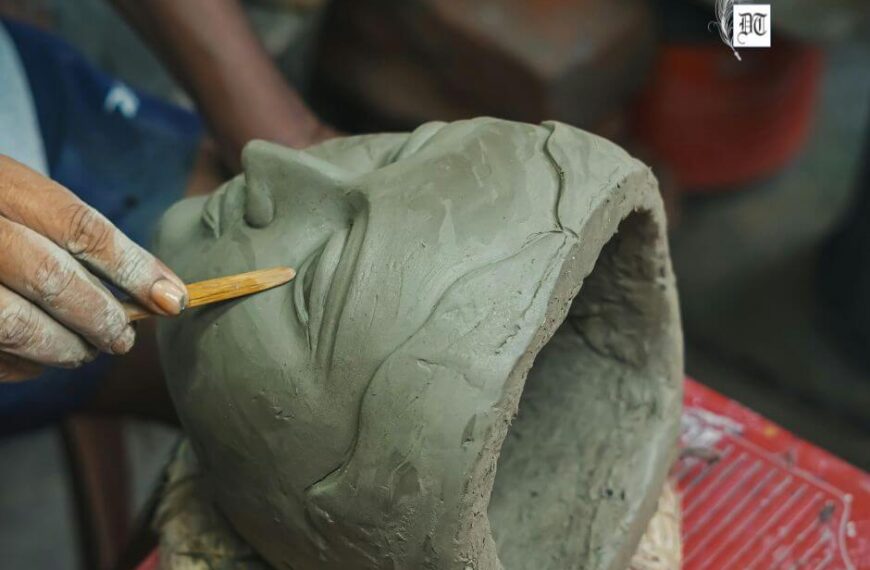
 By
By
 By
By
Very well written and succint. Should serve as a wake up call, but that alarm has stopped waking up anyone who matters, any longer.
In Delhi idols are being interred literally, by digging a small area, filling it will water and immersing the idols there but where is the place in Kolkata to do even that?