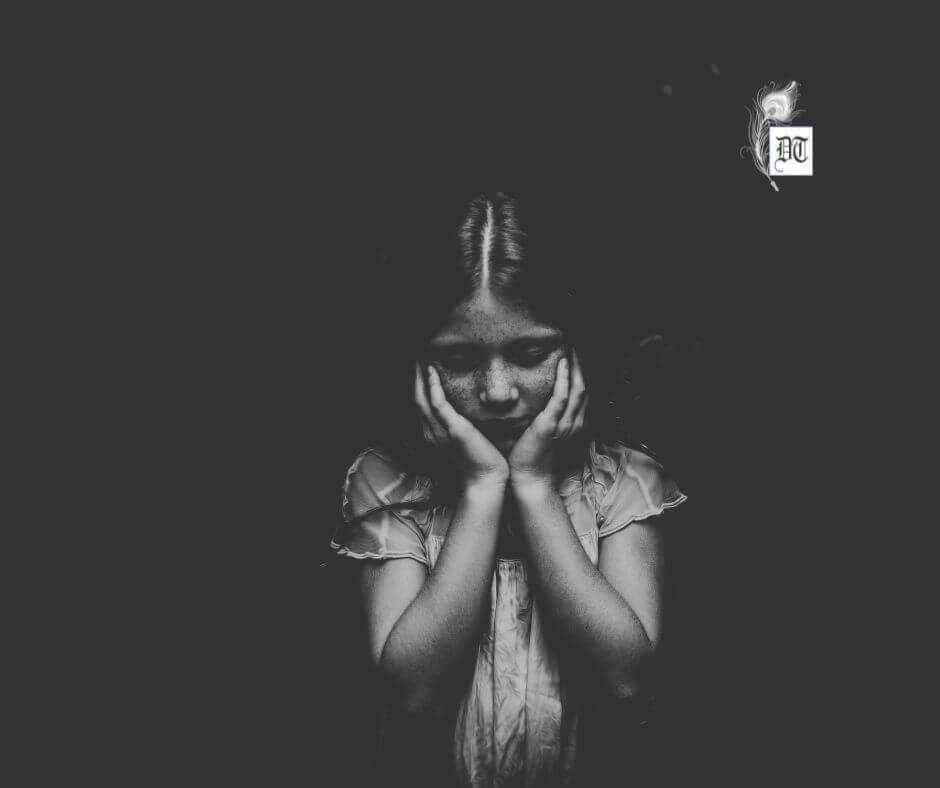
Lucía’s childhood ended at ten, shattered by betrayal, enforced silence, and laws valuing compliance over her pain. A sordid tale of rape and childhood pregnancy, states Mowmita, for Different Truths.

I’m Lucía (name and place changed to conceal identity), and I was ten when the world stopped believing I was a child. I grew up in Santa Esperanza, a forgotten town somewhere in the belly of South America—where dust clings to your feet and the church bells tell you when to kneel, when to speak, and when to stay quiet. My mother cleaned houses for people who never learned her name. My father was gone before I could remember the sound of his voice.
The man who destroyed me wasn’t a stranger. He was a family friend, someone everyone called Tío out of respect. One hot afternoon, he asked me to help him move boxes from the storeroom. I went—because in places like ours, good girls obey.
The rest comes in fragments. The slow hum of the fan. The smell of rust and sweat. My voice breaking against the walls.
Afterwards, I tried to wash the shame off my skin until it felt like it was burning. But it stayed. It moved into my bones, my breath, and my name.
When I began to feel sick, my mother took me to the clinic. The nurse looked at me with pity, then whispered the word that ended my childhood: pregnant.
My mother wept like the earth after a storm. The doctor didn’t look up. “The law allows termination only if her life is in danger,” he said.
But wasn’t it already?
The priest came to our house. He told me this was “God’s test”. I wanted to ask him what kind of God uses a child’s body to measure faith.
The neighbours whispered. The market women turned their faces away. My friends stopped visiting. I stopped going outside. My belly grew while the world shrank around me.
At night, I prayed to disappear. But the sky stayed deaf.
When the pain came, it was sharp and endless. My mother screamed for help. I remember the white light of the hospital, the smell of bleach, and the nurses whispering, “She’s only ten.”
When I woke, my mother was sitting by my bed, her eyes hollow. The baby hadn’t made it. The man who did this was gone. The police said there was “not enough evidence”. The priest blessed me and left.
That’s when I learnt: in my country, being born a girl was already a punishment.
Months passed in silence. I stopped dreaming. My body healed, but something inside me didn’t. I thought my story ended there—until I met Mariana.
She was a nurse from the city, young and fierce. She told me what happened wasn’t my fault. She said forcing a child to give birth is torture. I remember the word—how it landed like thunder. I had never thought of myself that way. Torture was something associated with prisons and dictatorships. But she said, “Lucía, when the state forces pain on your body, it’s the same thing.”
She told me about other girls—Rosa, eleven, who died in childbirth. Camila, twelve, was raped by her cousin and denied an abortion. Their names never reached the news. Only their graves did.
Mariana said women were marching in the capital, wearing green scarves, shouting “Mi cuerpo, mi decisión.” My body, my choice. I’d never believed my body was mine. But when she said it, something flickered inside — the faintest spark of defiance.
I’m seventeen now—seven years since the sky collapsed. People say time heals, but it doesn’t. It only teaches you how to live with ghosts.
In Santa Esperanza, no one says my name anymore. I’m that girl. The one the world forgot, the one they use as a warning.
Sometimes I pass the church. The same priest still stands there, preaching about forgiveness. I don’t go inside. I’ve made peace with my own kind of faith—one that doesn’t demand silence.
My mother’s hair turned grey too soon. She still blames herself, though she shouldn’t. Poverty left her without choices; the law left her without a voice. I was the price of both.
But Mariana still visits. She brings pamphlets and stories of change—of women who refuse to be quiet, of new laws being debated, of protests filling the streets. She says my story matters. Speaking is resistance.
Sometimes I believe her. Sometimes I don’t. But I write anyway.
I write in secret on scraps of paper I hide under my mattress. Words that bleed but breathe. Because silence is what they wanted from me, and I refuse to give it.
I still dream — not of escape, but of becoming a teacher, of standing in front of a blackboard, telling girls that their voices are not sins. That their bodies are their own. That the sky, no matter how heavy, can still break into light.
It was around that time I met Mateo. He came from another town, working at the new library. He had a quiet voice and kind eyes that never looked at me with pity — only with patience. For months, I avoided him. I didn’t believe in love, not after what love had taken from me.
But he stayed — gentle, consistent, never asking for more than I could give. He spoke to me as if I were whole, not broken. He taught me that love wasn’t something that demanded, but something that healed. That love could live in words, in silence, in the space between two wounded people learning to trust again.
One evening, under the same hill where I used to hide, he said, “Lucía, love isn’t for the body. It’s for the soul.” And for the first time, I didn’t flinch. I believed him.
We married quietly a year later. No priest, no ceremony, just a promise — that we would never let the world decide our worth again. He doesn’t erase my past; he holds it gently, like something fragile but sacred. With him, I’ve learnt that love can grow even from ruin.
At dusk, when the town quiets, I climb that hill again. The horizon burns red; the air smells like rain. I think of all the girls who never got to stand here.
The world hasn’t changed much. The laws still punish the poor. The powerful still hide behind religion. Another girl somewhere is praying for the sky to listen.
But now, when I look up, Mateo’s hand is in mine. And for the first time, the sky doesn’t feel so heavy anymore.
The sky was heavy once, but I found light in the ruins.
Picture design by Anumita Roy

Mowmita Sur is an educationist, author, poet, and content writer. She has received many accolades for her writings at both the national and international levels. She was awarded as one of the best 50 poets of India. Many of her published book gets effusive praise and good reviews. Her books are captivating, incredibly well-researched and evoke strong emotions. She writes witty fiction, non-fiction, horror and mysteries. Her characters are clever and fearless like her.

 By
By

 By
By