
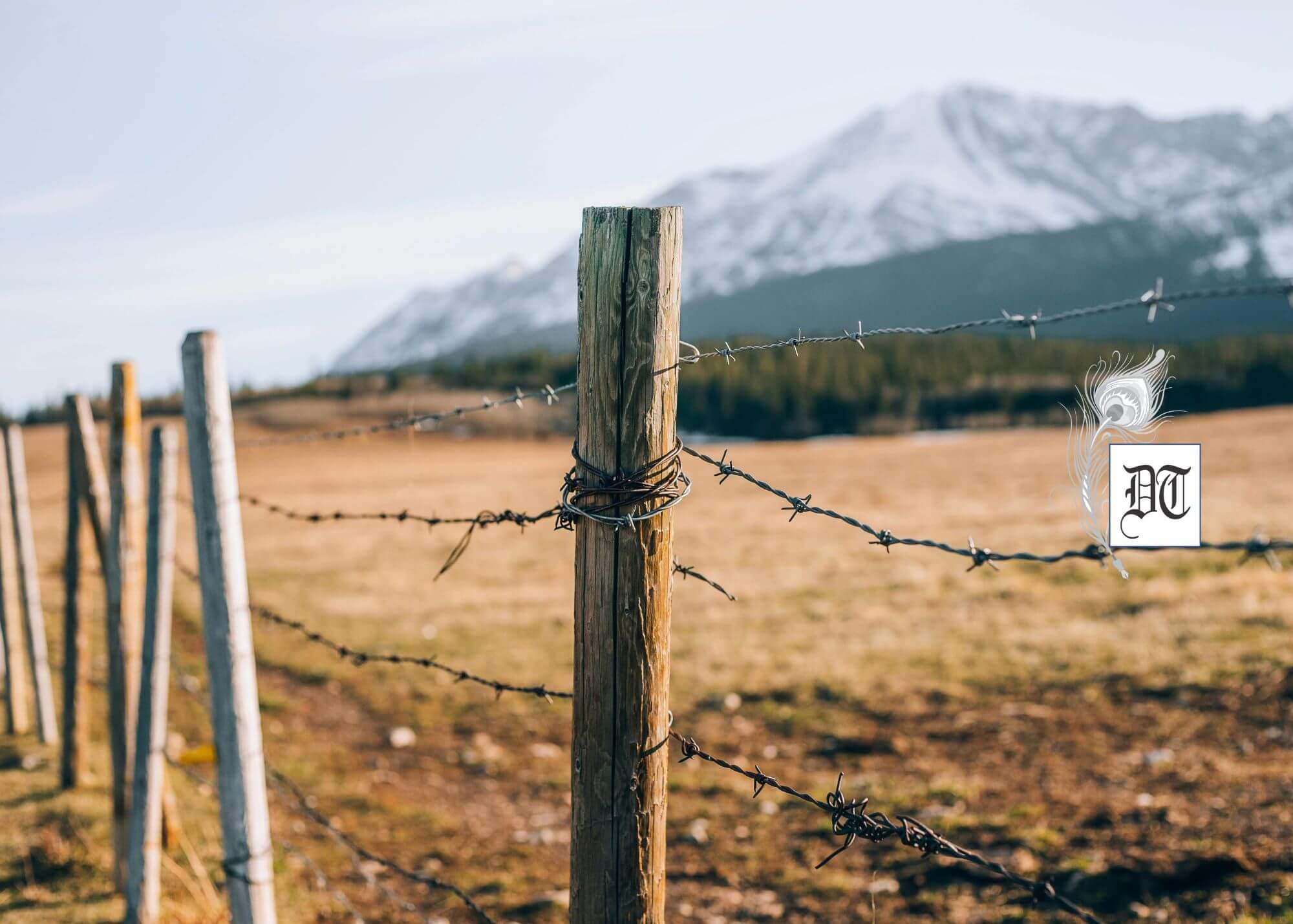

Arindam examines how India’s porous borders with Bangladesh, Nepal, and Pakistan enable illegal migration, creating complex challenges for security, economy, and demographic balance, exclusively for Different Truths.
India’s extensive land borders with Bangladesh (4,096 km), Nepal (1,751 km), and Pakistan (3,323 km) are among the most porous in the world, facilitating significant illegal migration that poses multifaceted challenges to national security, socio-economic stability, and demographic balance. These borders, characterised by diverse terrains including rivers, mountains, and plains, have historically been conduits for undocumented migrants, driven by factors such as economic disparities, political instability, religious persecution, and natural disasters in neighbouring countries. This article explores the causes, consequences, and potential solutions to illegal migration across these borders, drawing on recent studies and policy analyses.
Causes of Illegal Migration
1. Bangladesh: The India-Bangladesh border, the fifth-longest land border globally, is notoriously porous due to its riverine stretches (1,016 km), maritime sections (63 km), and densely populated border regions. Historical events, such as the 1947 partition and the 1971 Bangladesh Liberation War, triggered massive migrations, with an estimated 10 million refugees crossing into India during the latter. Economic disparities, overpopulation (Bangladesh’s density is 1,329 people per square kilometer compared to India’s 481), and climate-induced displacement from floods and cyclones continue to push migrants into India, particularly into West Bengal, Assam, and Tripura. Linguistic and ethnic similarities, coupled with inadequate border fencing, enable undocumented crossings, often facilitated by human trafficking networks and corrupt intermediaries charging exorbitant fees.
2. Nepal:The 1,751-km Indo-Nepal border, an open border under the 1950 Treaty of Peace and Friendship, allows visa-free movement, making it highly susceptible to illegal migration and smuggling. Socio-economic challenges in Nepal, including poverty and political instability, drive migrants to India in search of better livelihoods. The ethnic and cultural similarities across the border, particularly in states like Bihar and Uttar Pradesh, make it difficult to distinguish between legal and illegal residents. Additionally, the border’s use by smugglers and insurgents, including Maoist groups, exacerbates security concerns.
3. Pakistan: The Indo-Pakistan border, while heavily militarised in parts (e.g., Punjab), remains porous in regions like Rajasthan and Jammu & Kashmir due to challenging terrains. Political instability, economic hardship (with 40% of Pakistan’s population below the poverty line), and religious persecution of minorities (Hindus, Sikhs, and Christians) drive migration into India. Pakistan’s Inter-Services Intelligence (ISI) has exploited these vulnerabilities to facilitate cross-border terrorism, further complicating border management.
Consequences of Illegal Migration
1. Socio-Economic Impacts: Illegal migration strains resources in border states, particularly in Assam, West Bengal, and Tripura, where demographic shifts have sparked tensions. The 2019 National Register of Citizens (NRC) in Assam identified 31 million illegal Bangladeshi migrants, highlighting the scale of the issue. Migrants often compete for low-wage jobs, undercutting local labour and exacerbating economic inequality. Social tensions arise from perceived threats to cultural identity, as seen in the Assam Movement (1979–1985), which demanded the deportation of illegal immigrants.
2. Security Threats: Porous borders facilitate transnational crimes, including human trafficking, drug smuggling, and arms trafficking. For instance, a 2020 seizure of 3,800 kg of cannabis at the Mizoram-Bangladesh border underscored the drug trade’s prevalence. The infiltration of militants, such as those linked to Pakistan-based terror groups responsible for the Uri and Pulwama attacks, poses significant risks. In Assam, illegal migrants have been associated with radicalised groups like the Muslim United Liberation Tigers of Assam (MULTA).
3. Political and Legal Challenges: Illegal migrants, often integrated through fraudulent identity documents, influence electoral politics, with some political parties allegedly using them as vote banks. India’s non-signatory status to the 1951 UN Refugee Convention complicates the distinction between refugees and illegal migrants, leading to inconsistent deportation policies. The Citizenship Amendment Act (2019) grants citizenship to persecuted non-Muslim minorities from Bangladesh, Pakistan, and Afghanistan but excludes Muslims, sparking debates over fairness and secularism.
Proposed Solutions: Strengthening Border Infrastructure
- Complete Border Fencing: As of 2024, 3,180 km of the Indo-Bangladesh border is fenced, leaving 916 km vulnerable due to riverine and marshy areas. Completing fencing, particularly in Assam and Tripura, using durable materials resistant to natural wear, is critical. Similar efforts should be prioritised for porous sections of the Indo-Pakistan border.
- Integrated Check Posts (ICPs): Establishing multi-agency ICPs, as recommended in the 11th Five-Year Plan, can streamline border monitoring. These should include personnel from the Border Security Force (BSF), customs, and immigration services to curb cross-border crimes.
- Technological Surveillance: Deploying drones, thermal imaging, and motion sensors, as used on the Indo-Pakistan border, can enhance surveillance. Smart fencing with real-time alerts should be extended to the Indo-Bangladesh and Indo-Nepal borders.
Legal and Policy Reforms
- National Refugee Law: Enacting a national refugee law, as proposed by the UNHCR’s Eminent Persons Group in 1997, would differentiate refugees from illegal migrants, ensuring humane treatment while enabling deportations.
- Bilateral Agreements: India should negotiate repatriation agreements with Bangladesh and Nepal, like the 1974 Land Boundary Agreement, to verify and return illegal migrants. Cooperation with Pakistan is challenging. We must devise innovative methods and beef up vigilance to curb terrorism.
- Strengthen Domestic Laws: Amending the Foreigners Act (1946) to impose stricter penalties on human traffickers and fake document providers, as seen in Tripura’s inter-agency operations, can deter illegal migration.
Community and International Engagement
- Border Community Involvement: Engaging border residents through awareness campaigns and incentives for reporting illegal activities can enhance local vigilance. Issuing multipurpose photo identity cards to border populations, as suggested for Assam, can prevent fraudulent integration.
- International Cooperation: Collaborating with the UN and regional bodies like SAARC to address root causes, such as poverty and climate displacement in Bangladesh, can reduce migration pressures. India should also regulate travel agencies to curb illegal operations, as 2,925 illegal agents were identified in 2023.
- Economic Development in Border Areas: Investing in infrastructure and job creation in India’s border states can reduce the economic allure of illegal labour, while supporting development aid to Nepal and Bangladesh can mitigate push factors.
Conclusion
Illegal migration across India’s porous borders with Bangladesh, Nepal, and Pakistan is a complex issue rooted in historical, economic, and geopolitical factors. Its consequences—ranging from socio-economic strain to security threats—necessitate a comprehensive response. By combining robust border infrastructure, clear legal frameworks, and proactive community and international engagement, India can effectively manage this challenge. A balanced approach that respects human rights while prioritising national security is essential to safeguarding India’s sovereignty and social fabric.
References
- Poor and porous: Why India needs to tighten up its border management – www.newindianexpress.com
- Illegal Immigration from Bangladesh to India: Toward a Comprehensive Solution – carnegieendowment.org
- Influx from Bangladesh: Should India deal leniently with illegal migrants fleeing religious persecution? – indianexpress.com
- Bangladesh–India border – Wikipedia – en.wikipedia.org
- Illegal Immigration from Bangladesh to India: Toward a Comprehensive Solution – carnegieendowment.org
- Illegal immigration to India – Wikipedia – en.wikipedia.org
- How Far Are India’s Internal Security Challenges Linked With Border Management – pwonlyias.com
- Bangladesh Illegal Immigrants in India: Legal Stance and Regulations Explained – lawchakra.in
- Beyond dichotomies: Bangladesh’s complex migration landscape – mixedmigration.org
- Rjhssonline – rjhssonline.com
- Socio-Economic and Political Consequences of Illegal Migration – www.longdom.org
- Demographic changes in border areas and radicalisation in India – timesofindia.indiatimes.com
- Rising Populations in Pakistan and Bangladesh: A Looming Challenge for India’s Borders – idrw.org
Double Votes: Bengal’s Explosive Cross-Border Voting Crisis
The Hindu (Thiruvananthapuram), on June 9, 2025, in a report by Shiv Sahay Sharma, reported that a political row has erupted in West Bengal after Newton Das, a 2024 Bangladesh student protester, was found registered as a voter in Kakdwip, near the porous Sundarbans border.
Social media shows Das in protests that ousted Bangladesh’s government. “I went to Bangladesh in 2024 for ancestral property issues and got caught in the revolution. I’ve been a voter in Kakdwip since 2014,” Das said, admitting he voted in 2016.
His cousin Tapan Das said, “He was born in Bangladesh and votes in both countries.” The BJP accused Trinamool Congress of enrolling Bangladeshi voters, with Suvendu Adhikari claiming “lakhs” are on voter lists. Sukanta Majumdar criticised the “Egiye Bangla Model.”
TMC’s Kunal Ghosh blamed the BSF and the Union government for border security lapses. India’s 4,096-km Bangladesh border, with only 3,232 km fenced, enables illegal crossings. The 2019 Assam NRC flagged millions of illegal migrants. Solutions include better fencing, surveillance, and a refugee law.
Source: “Bangladesh student protester is a voter in Bengal,” The Hindu, 9 Jun 2025, https://www.thehindu.com/news/national/west-bengal/bangladesh-student-protester-is-a-
voter-in-bengal/article68251476.ece Additional Reference: Swarajya, “India’s Border Challenges,” 15 May 2025
Picture design by Anumita Roy

Arindam Roy has over four decades of experience in various newsrooms of renowned media houses. He is the Founder, Publishing Director, Editor-in-Chief of Different Truths, and Kavya Kumbh Publishing Consultant (KKPC). He has co-authored ten chapters in six Coffee Table Books (CTBs) of national and international repute and is the sole author of four forthcoming CTBs (Times Group). He has also published four international poetry anthologies as the Publisher and Editor-in-Chief, participated in several poetry and literary festivals, and won awards and accolades. Arindam co-authored the novel Rivers Run Back with an American writer. He stays in Bangalore and Prayagraj.



 By
By
 By
By
 By
By
 By
By
Excellent summing up of a difficult problem that has been dogging our country for long.