
Dr Molly’s journey through Europe, in the second part, unveils stunning landscapes, rich history, and cultural marvels, from Belgian canals to German cathedrals. An exclusive for Different Truths.
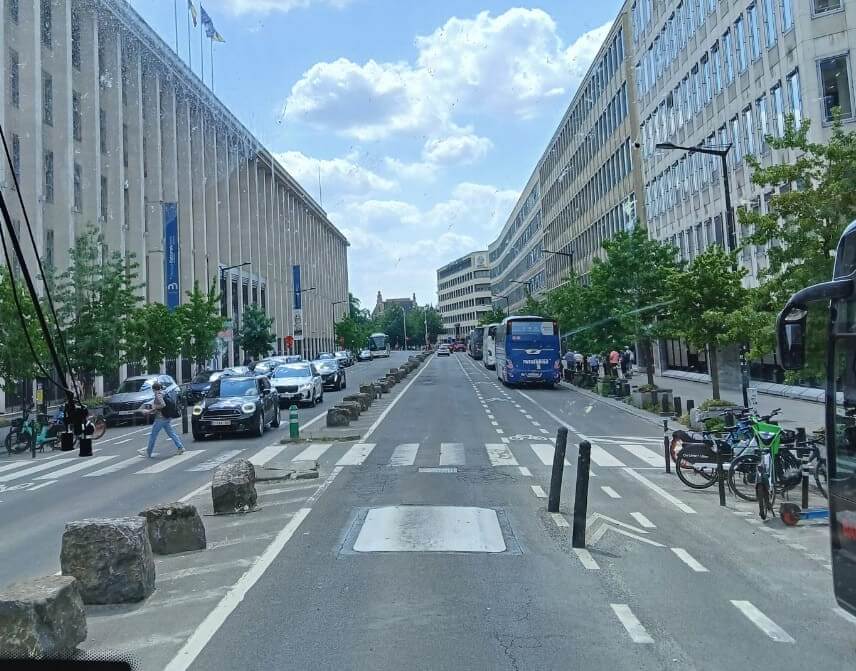
In each country a very good halt and accommodations were put up as per global standards. Early in the morning, we started travelling to Brussels, moving towards Belgium. We passed through well-laid roads which were very broad with cycle lanes, boulevarded by green trees, fields and canals. It seemed the roads were well planned out; at a stipulated distance, trees were planted, which made the forests; at a well-measured distance, level land fields with crops and well-designed pathways… then on one side canals showed up, and the visible landscapes on both sides repeated the pattern.
It seemed the canals were well visualised, the insightful manoeuvring of the water body’s potential for transportation of goods. Traffic was less on the roads through the smooth-flowing canals, and boats floated, carrying goods.
I wondered how my homeland, Kerala, so rich in water bodies and backwaters, could utilise this means to avoid our traffic jams with trucks and lorries.
The serene villages we passed through showed fewer human faces, but tractors were ploughing; somewhere, harvest was going on with machines.
I remembered how Belgium was once, reeling under so much encroachment by German troops.
The famous Waterloo, when Napoleon was defeated, showed how more than thirty thousand of his troops fought, struggled to survive against inclement weather, and starved and died. They were buried in those muddy fields that spread. Later, their bones were collected and kept in a memorial ground for those lost souls. There exists the village of bones.
Farmers, even to this day, come up with bones while they plough.
Hah! What are all the dark chapters of human history?
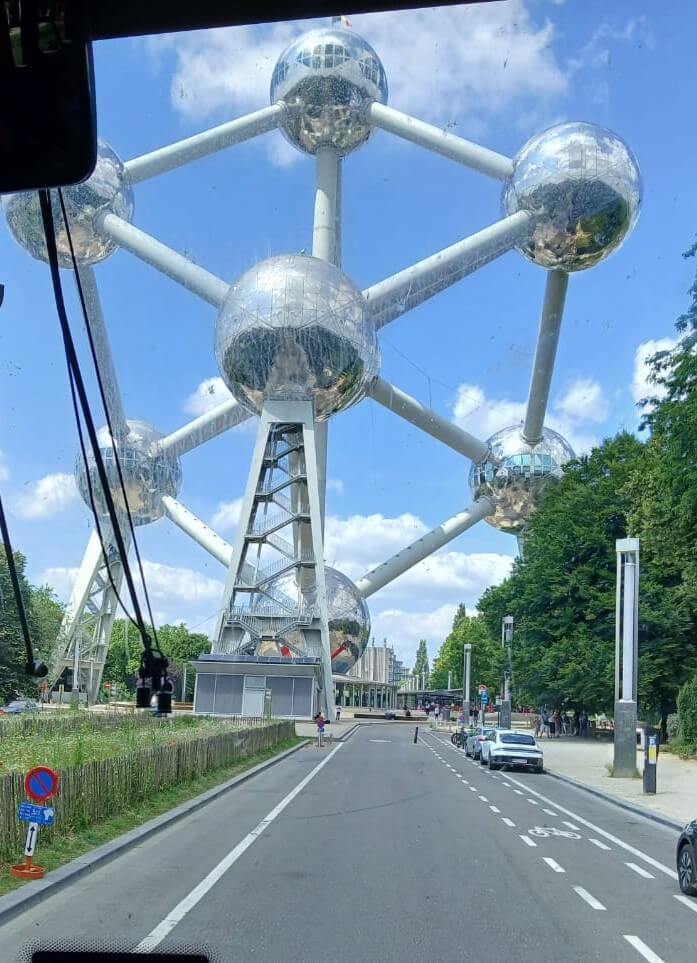
We saw an amazing structural marvel, the Atomium. A tall structure with huge glass caskets hanging around it, with enormous space for artistic and cultural events.
We had no time to climb up and explore each. It stands as Brussels, Belgium’s cultural epicentre for the world.
We were moving on to the Netherlands. The landscape remained the same.
Roads are neat as ever, the mountains and skies looking serene, the same. Only the day was longer. The sun, so much in love with the pure earth, refused to go into hiding even after long hours of eventide. We who were tuned to Indian time felt a little uneasy falling asleep as per their timings.
Visiting the Heineken Beer Factory in Amsterdam was fun.
We were ushered in through glass pathways that offered the light and sound show of beer bottles unleashed, the foam spurting out, dizzy music and steps through slanting pathways, jostling with jubilant music of people drinking and dancing on the glass side walls.
You felt your head reeling under the jolt till you arrived out where you were greeted and offered a full glass of Heineken beer. So cool and exciting!
Later, they took us around showing the making of this special beer with rare cereals while huge cauldrons rolled round, churning it out.
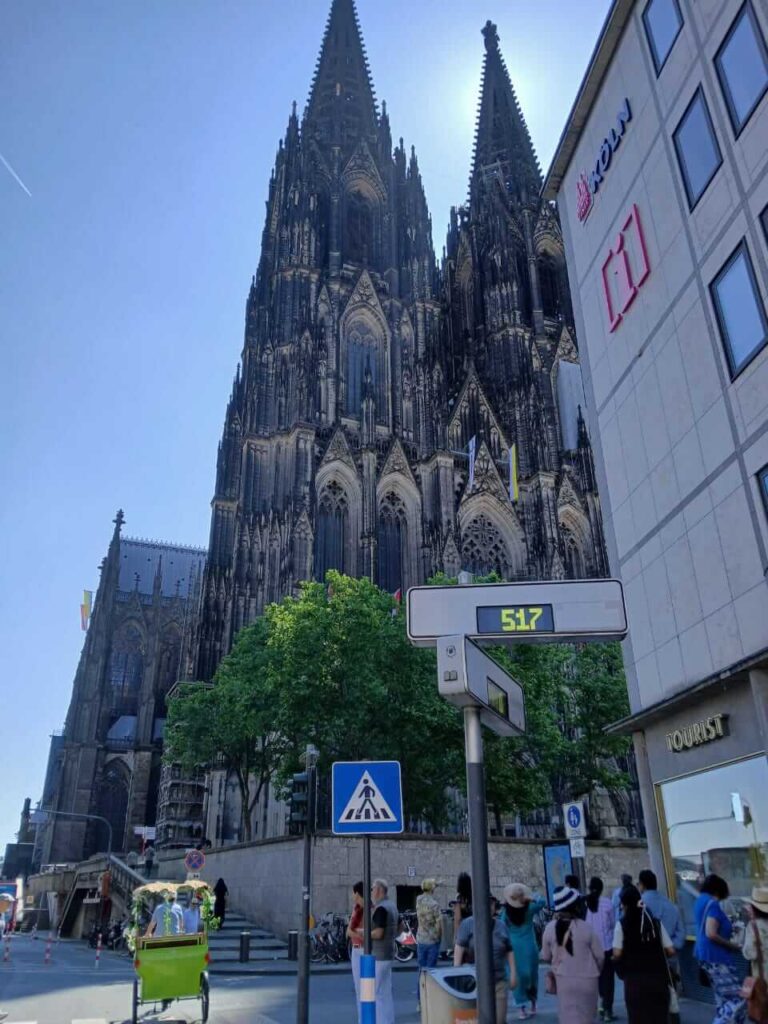
Slowly, we were moving on to Germany. We stayed that night in Stuttgart. On the next day, the city tour led us to Cologne. The Colone Cathedral was overwhelming with its Gothic grandeur…
History says it took 632 years to complete it. It is 157 m tall and the world’s third-largest Gothic-style cathedral, with 10,000 square metres of windows and 20,000 visitors daily. Some 300,000 tonnes of stone were used in its construction. Maintenance costs per day add up to around €30,000.
It seemed the church steeples were soaring up into the sky, taking the spirited prayers of humans up to heaven. That day, the celebration of the Holy Eucharist was going on.
Lucky we were to join the soul-stirring prayers; we could see the procession in motion, which started from the church to get into a boat to reach another church.
The dignified ways of celebration in discipline impressed me. Not bringing in sound pollution through drum bands or beats, nor ushering in pollution with crackers. They care for the upkeep of a clean environment. They respect the value of life, healthy living, and giving space for nature to be. It’s high time we learnt these lessons!
The visit to the Benz Museum in Stuttgart gave us a vivid picture of Benz vehicles, their evolution reaching up to contemporary times.
Photos by the author

Dr Molly Joseph, a bilingual professor and poet from Kerala, has published 26 books, including 18 poems, two novels, and two storybooks for children. She has edited “A Handbook of Contemporary Ethics” and works for values, global peace, and togetherness. Dr Joseph has won national and international accolades and represents India at SAARC and FOSWAL literature meets. She believes in the power of the word and writes boldly on contemporary matters.
 By
By
 By
By
Your visits to Belgium and Netherlands very interesting. Reflections on Waterloo was solemn .
Thank you so much Rabi Ranganathan and my readers
🙏
We were travelling with you, Molly Joseph, ma’am, such an interesting travelogue, highlighting the spectacular scenes….thanks for sharing.