
Ruchira explores the cinematic adaptation of Manik Bandopadhyay’s classic on DifferentTruths.com, delving into the clash between science and superstition.
AI Summary
- Conflict of Ideology: Dr Shashi struggles to introduce modern medicine to a pre-WWII village paralysed by fatalism and blind faith.
- Complex Characters: The narrative highlights the contrast between the flamboyant Kumud, the sensual Kusum, and the traditionalist Jadab Pundit.
- The Puppet Motif: Ultimately, the characters emerge as “puppets” of destiny, trapped by duty, tradition, and unrealised dreams of escape.
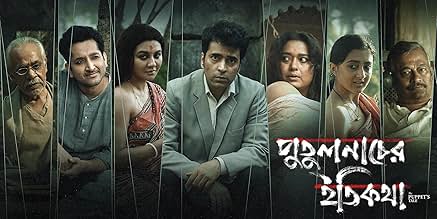
Recently, I watched the film “Putul Naacher Itikotha”, which is based on the eponymous novel by the acclaimed Bengali modernist author Manik Bandopadhyay. The director presents a serious interpretation of the mindset of a scientifically educated individual who is trying to navigate a world steeped in superstition and conservatism.
Set in a pre-World War II Indian village, the film’s pivot point is Shashi (Abir Chatterji), a principled doctor whose attempts to save lives are consistently thwarted by the villagers’ blind faith. As infants and children perish and women suffer, all the blame is placed on “bad hours” and planetary alignments.
Trapped between reason and tradition, he becomes a silent observer of a society gripped by superstition and decay. The film serves as a poignant reflection on themes of isolation, disillusionment, and the collapse of reformist dreams.
The arrival of Shashi’s college friend, Kumud (Parambrata Chatterjee) — who is also the charismatic head of a jatra troupe — disrupts the village’s dreary, somnolent atmosphere. With his theatrical flair and unconventional lifestyle, Kumud reignites Shashi’s long-buried dreams of escape, propelling him to question the value of his sacrifices.
Witnessing his former classmate and college topper play the lead role in a rural theatre troupe deepens Shashi’s internal conflict regarding the purpose of education and the futility of his own stagnation.
The mutual interactions among the other major characters are deeply significant and impactful. For example, the leading lady Kusum (Jaya Ahsan) embodies sensuality, jealousy, love, and longing. Her agony and despair, intensified by her barrenness, deepen her craving for love and fulfilment. She openly flirts with the doctor, often bordering on seduction, much to the dismay of her fellow villagers.
Kumud is portrayed as a flamboyant, debonair individual who falls in love with the coy and bashful Moti, who is Kusum’s sister-in-law. She reciprocates his love likewise. Towards the end of the movie, it becomes clear to us that the couple is fortunate to have the opportunity to shape their lives according to their own choices.
Yet another enigmatic character is Sen Didi (Ananya Chatterjee), who faces the lustful advances of the village’s menfolk. She is shown wavering between her desires to live and die despite her disfigurement caused by a virulent attack of smallpox.
Finally, we have Jadab Pundit (Dhritiman Chatterji). He is deeply religious, traditionalist and a staunch believer in the healing powers of the sun. Jadab serves as the conservative counterpart to Shashi, embodying the conflict between modern medicine and the superstitions which are deeply rooted in the village soil and the minds of the populace as well. He is the embodiment of the stubborn, old-world ideologies.
The film is a poignant reminder of how individuals turn puppets—trapped by inexorable fate, tradition, and their unrealised dreams. Though Shashi diligently restores the villagers to health, he is often shown airing his plans to leave for England. Often, his voice rings with optimism. “It’s only a matter of time…” is his catchphrase. But alas, he will never leave this remote, underdeveloped village. Bound by his sense of duty to the village folk and his ageing father, it is highly unlikely that the doctor will be able to escape the sordid ambience…
Picture from IMDb

Born in Guwahati and raised across Delhi and Punjab, Ruchira Adhikari Ghosh is an alumna of Sacred Heart Convent, Ludhiana. She holds a master’s degree in English literature from Punjab University, Chandigarh, and a postgraduate diploma in Journalism. With nearly 25 years of experience in print, web, and television media, she has carved a niche as a feature writer. Her writing focuses on women’s issues, food, travel, and literature, reflecting both versatility and depth.

 By
By

 By
By