
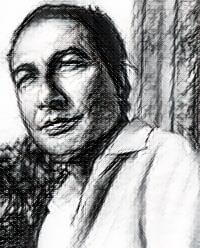

Dr Dhiraj elucidates that Sahir Ludhianvi’s lyrics, according to Javed Akhtar, embody protest, philosophy, and hope, deeply ingrained in Hindi cinema, exclusively for Different Truths.
Ever since I was a child, certain Hindi film songs just had a way of getting under my skin – their words painting vivid pictures, stirring up emotions that stayed with me long after the music stopped. I’m talking about songs like the bittersweet honesty of ‘Main pal do pal ka shayar hoon,’ (Kabhi Kabhie, Chopra, 1976), the searching sorrow in ‘Jaane woh kaise log the jinke pyaar ko pyaar mila,’ (Pyaasa, Dutt, 1957), or the sheer resilience in ‘Main zindagi ka saath nibhata chala gaya.’ (Hum Dono, Anand, 1961). And how could I forget the calming wisdom of “Man re tu kahe na dheer dhare” (Chitralekha, Maheshwary, 1964) or the angry cry of “Yeh duniya agar mil bhi jaye to kya hai”—again from Pyaasa (Dutt, 1957)—a song that still feels as relevant today as it must have felt when it was first written.
These weren’t just songs to me. They felt like conversations with someone who understood life, who had felt its pain, and yet still believed in something better. These, and so many others, became more than just favourite songs—they felt like life lessons, like old friends.
Much later, I found out that most of my favourite songs were written by the same man—Sahir Ludhianvi (1921-1980). That name stayed with me. I wanted to know who he was, where these words came from, and what kind of life he had lived to be able to write like that. So, I started researching—reading articles, watching interviews, listening to his songs more carefully, and trying to understand the man behind the poetry.
As I embarked on this journey of gathering information about Sahir, sifting through articles, recollections, and analyses, one voice consistently emerged with unparalleled authenticity, depth, and intimate understanding. This was the voice of the legend himself, Javed Akhtar.
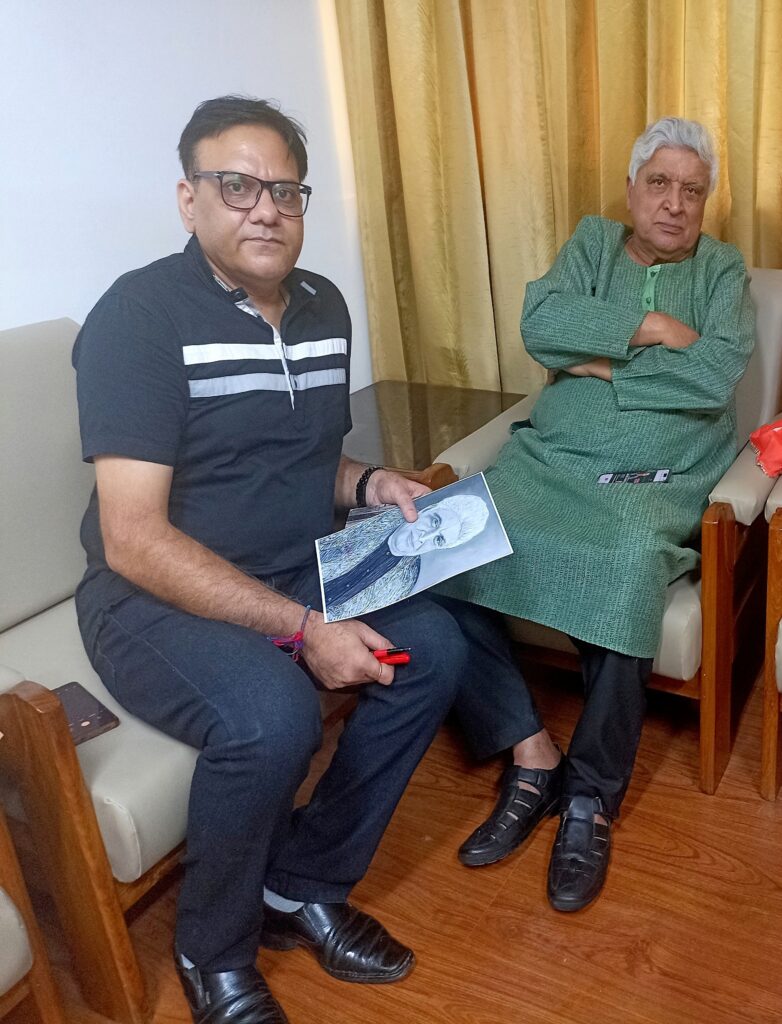
Given his close personal and professional association with Sahir Ludhianvi, his towering stature in poetry and songwriting, and his profound grasp of the socio-cultural tapestry they both navigated, Javed Akhtar’s insights offered the most lucid and reliable window into Sahir’s world. His published words, interviews, and public discourses became the basis of this research. Javed Akhtar didn’t just talk about Sahir’s talent. He talked about his courage, his struggles, and his refusal to write just to please others. He spoke about how Sahir brought poetry into films without ever letting go of its depth (Akhtar, 2005; Akhtar, 2020). Through Javed Akhtar’s eyes, Sahir became more real—more human.
Thus, it is from this rich vein of information, predominantly illuminated by Javed Akhtar’s perspectives, that this article draws most of its references and its primary angle. This piece is an attempt to synthesise these valuable accounts to present a portrait of Sahir Ludhianvi – the poet who courageously wrote of bitter truths while steadfastly hoping for a better tomorrow, largely as understood and remembered by one of his most perceptive contemporaries. Hopefully, this piece offers readers a richer, more intimate appreciation of the enduring phenomenon that is Sahir Ludhianvi.
Early Life: Seeds of Bitterness, Blossoms of Empathy
Abdul Hayee, who chose the pen name Sahir Ludhianvi, was born on March 8, 1921, in Ludhiana, Punjab, into a wealthy Gujjar zamindar family. His life was a tapestry woven with threads of personal anguish, profound social consciousness, and an unwavering poetic commitment to truth and justice. More than just a poet and lyricist, Sahir became an emblem of resistance and the voice for the marginalised, his words carving a permanent niche in Indian literature and cinema.
Sahir’s childhood was far from idyllic. Though born into affluence, his early years were deeply scarred by the acrimonious separation of his parents. His mother, Sardar Begum, made the courageous decision to leave her husband, thereby forfeiting all financial claims and subsequently enduring years of hardship with young Sahir (Wikipedia, 2025). The emotional turmoil was intensified by his father’s persistent and aggressive attempts to gain Sahir’s custody.
This turbulent upbringing profoundly shaped Sahir’s worldview. As Javed Akhtar poignantly questioned, ‘Do you think a man who led a relaxed life, the one with money and comfort, would name his book Talkhiyan (Bitterness)?’ (The Indian Express, 2019). Published in 1945, Talkhiyan, his first Urdu work, became a powerful testament to his inner world—a world suffused with pain, yet remarkably attuned to the suffering of others.
His rebellious streak and impassioned speeches made him popular during his student years at Government College, Ludhiana, but also reportedly led to his expulsion (Rekhta, n.d.). In 1943, Sahir moved to Lahore, a vibrant literary hub. There, he completed Talkhiyan and became involved with the Progressive Writers’ Association (PWA), a group whose Marxist ideals resonated deeply with his evolving socio-political awareness. His writings, often critical of the establishment, were soon deemed inflammatory by the Pakistani government, compelling him to seek refuge in Bombay (now Mumbai) in 1949, following the partition (Wikipedia, 2025; Rekhta, n.d.).
A Man of Contrasts: The Paradoxical Sahir
Javed Akhtar has described Sahir as ‘a very paradoxical man,’ observing, ‘He was not one man; there were several men inside him’ (The Indian Express, 2019). This internal duality was a hallmark of Sahir’s personality. Publicly, he could be fiercely assertive and bold, unafraid to challenge norms. Privately, especially concerning his mother, to whom he was deeply devoted, he revealed a gentler, more vulnerable side. Akhtar recounted how the 45-year-old Sahir, a man who could admonish powerful figures, would still seek his mother’s approval for small matters, narrating incidents to her and valuing her opinion above all (The Indian Express, 2023; Jashn-e-Rekhta, 2020).
A touching anecdote shared by Akhtar illustrates Sahir’s quiet generosity. Early in his career, Akhtar borrowed ₹200 from Sahir. Despite Akhtar’s attempts to repay the sum, Sahir always brushed it off, saying he would ask for it when he needed it. Years later, at Sahir’s funeral, Akhtar was approached and asked for exactly ₹200 to pay the gravedigger, bringing a poignant closure to this act of kindness (The Times of India, 2022).
Championing the Lyricist: A Fight for Recognition
In the Hindi film industry of the 1950s and 60s, lyricists were often relegated to the background, overshadowed by composers and singers. Sahir Ludhianvi was a trailblazer in demanding recognition and respect for his craft. He famously insisted that All India Radio (AIR) announce the lyricist’s name alongside the singer and music director during song broadcasts. He even stood his ground by delaying recordings until this demand was met (The Indian Express, 2023).
Furthermore, in a bold move to assert the importance of the writer, Sahir demanded that he be paid at least one rupee more than the singers for a song, underscoring his belief that the lyrics formed the soul of the song (The Indian Express, 2023). Figures like Gulzar and Javed Akhtar have acknowledged that Sahir’s unwavering stance fundamentally altered the industry’s perception and treatment of its lyricists.
Poetry with a Purpose: A Voice for the Voiceless
Sahir’s deep involvement with the Progressive Writers’ Association cemented his conviction that poetry should serve as a vehicle for social critique. His lyrics fearlessly tackled themes of poverty, exploitation, war, communalism, and societal hypocrisy. Perhaps one of his most potent critiques is the song ‘Jinhe Naaz Hai Hind Par Woh Kahan Hain?’ (Who are these people proud of India, where are they?) from Guru Dutt’s classic film Pyaasa (1957). In this song, he questions blind nationalism that ignores the grim realities of inequality and injustice. Javed Akhtar has lamented the song’s continued relevance, stating, ‘It’s sad that Sahir Ludhianvi’s words are still relevant today’ (The Times of India, 2019).
Yet, amidst the despair, Sahir’s poetry also carried a flame of hope for a better future, as seen in songs like ‘Woh Subah Kabhi Toh Aayegi’ (That morning will dawn someday) from Phir Subah Hogi (1958). He challenged romanticised notions of history and art in his iconic poem ‘Taj Mahal,’ where he urged his beloved to meet him elsewhere (‘Meri mehboob, kahin aur mila kar mujhse’), highlighting the exploitation of the labourers who built the monument, rather than glorifying imperial love (Rekhta Foundation, n.d.).
A Feminist Voice Ahead of Its Time
Sahir’s progressive ideology extended significantly to issues of gender. His poetry and lyrics consistently portrayed women with empathy and highlighted their struggles in a patriarchal society. The song ‘Aurat Ne Janam Diya Mardon Ko, Mardon Ne Use Bazaar Diya’ (Woman gave birth to men, men gave her the marketplace) from the film Sadhna (1958) is a scathing critique of the commodification and objectification of women. His poem ‘Chakle’ (Brothels) unflinchingly exposed the hypocrisy of a society that ostracised sex workers while creating the conditions for their existence.
Javed Akhtar has often noted that Sahir’s portrayal of women was revolutionary for its time, consistently respectful and empowering, a stark contrast to the often objectifying gaze prevalent in contemporary literature and cinema (Jashn-e-Rekhta, 2020; The Indian Express, 2023). He did not merely write about women; he gave voice to their pain, their strength, and their dignity.
Enduring Legacy: A Poet for All Seasons
In his later years, Sahir’s health deteriorated, exacerbated by increased alcohol and tobacco consumption, particularly after the death of his mother, to whom he was deeply attached. On October 25, 1980, while engaged in a card game with friends, he suffered a fatal heart attack. Sahir was laid to rest at the Juhu Muslim Cemetery in Mumbai. However, in 2010, his tomb was reportedly demolished to make space for new interments (Wikipedia, 2025).
He once penned the lines, ‘Main pal do pal ka shayar hoon, pal do pal meri kahani hai’ (I am a poet of a moment or two, my story too is but for a moment). Yet, these poetic moments have proved timeless. He was honoured with the Padma Shri in 1971 and won two Filmfare Awards for Best Lyricist – for Taj Mahal (1964, for the song ‘Jo Wada Kiya Woh Nibhana Padega’) and Kabhie Kabhie (1977, for ‘Kabhi Kabhie Mere Dil Mein’) (Wikipedia, 2025).
However, Sahir’s true legacy transcends awards. It lies in the enduring power of his words to resonate with successive generations, to provoke thought, and to inspire action. Sahir Ludhianvi’s contributions to Indian literature and cinema remain unparalleled. His poignant lyrics and poetry continue to resonate, reflecting themes of love, social justice, and humanism. His works have inspired generations and remain integral to India’s cultural and artistic heritage.
As Javed Akhtar aptly described him, ‘Sahir was not just a poet but a ‘public philosopher’’ (The Indian Express, 2023), a moral compass in an often-compromised world. His life and work stand as a powerful testament to the idea that art, when rooted in empathy and a fierce commitment to justice, never truly fades—it only deepens its impact with time.
References
Akhtar, J. (2005). Talking films: Conversations on Hindi cinema with Javed Akhtar (N. M. Kabir, Ed.). Oxford University Press.
Akhtar, J. (2020, November 8). Remembering Sahir Ludhianvi [Video]. Rekhta Foundation. https://www.youtube.com/watch?v=ZH46xnU1jW4
Anand, A. (Director). (1961). Hum Dono [Film]. Navketan Films. Lyrics by Sahir Ludhianvi. Music by Jaidev.
Chopra, Y. (Director). (1976). Kabhi Kabhie [Film]. Yash Raj Films. Lyrics by Sahir Ludhianvi. Music by Khayyam.
Dutt, G. (Director). (1957). Pyaasa [Film]. Guru Dutt Films Pvt. Ltd. Lyrics by Sahir Ludhianvi. Music by S.D. Burman.
IANS. (2019, December 20). Javed Akhtar: Sad that Sahir Ludhianvi’s ‘Jinhe Naaz Hai Hind Par Woh Kahan Hain’ is still relevant today. The Times of India. https://timesofindia.indiatimes.com/entertainment/hindi/bollywood/news/javed-akhtar-sad-that-sahir-ludhianvis-jinhe-naaz-hai-hind-par-woh-kahan-hain-is-still-relevant-today/articleshow/72832856.cms
Jashn-e-Rekhta. (2020, January 3). Revisiting Sahir Ludhianvi With Javed Akhtar | [Video]. YouTube. https://www.youtube.com/watch?v=9_fRkS4isen
Jashn-e-Rekhta. (2020, July 9). Maa Bete Ka Rishta : Sahir Ki Zindagi Ka Andekha Pehlu | Javed Akhtar at Jashn-e-Rekhta [Video]. YouTube. https://www.youtube.com/watch?v=18z1Lb0T5kM
Maheshwary, K. (Director). (1964). Chitralekha [Film]. Maheshwary Productions. Lyrics by Sahir Ludhianvi. Music by Roshan.
Rekhta Foundation. (n.d.). Sahir Ludhianvi – Profile & Biography. Rekhta. Retrieved May 21, 2025, from https://www.rekhta.org/poets/sahir-ludhianvi/profile
Rekhta Foundation. (n.d.). Taj Mahal – Nazm by Sahir Ludhianvi. Rekhta. Retrieved May 21, 2025, from https://www.rekhta.org/nazms/taj-mahal-sahir-ludhianvi-nazms
Sahir Ludhianvi. (2025, May 21). In Wikipedia. Retrieved May 21, 2025, from https://en.wikipedia.org/wiki/Sahir_Ludhianvi
The Indian Express. (2019, December 15). Sahir Ludhianvi was a paradoxical man: Javed Akhtar. https://indianexpress.com/article/entertainment/bollywood/javed-akhtar-jashn-e-rekhta-festival-sahir-ludhianvi-6167713/
The Indian Express. (2023, March 8). When Javed Akhtar said Sahir Ludhianvi was a ‘paradoxical man’, he talked about his love for his mother: ‘He was 45 but…’. The Indian Express. https://indianexpress.com/article/entertainment/music/sahir-ludhianvi-birth-anniversary-lyricist-poet-javed-akhtar-gulzar-8470858/
The Times of India. (2022, March 6). Akhtar recalls a debt from Ludhianvi & how it hurts. https://timesofindia.indiatimes.com/city/pune/akhtar-recalls-a-debt-from-ludhianvi-how-it-hurts/articleshow/90023231.cms
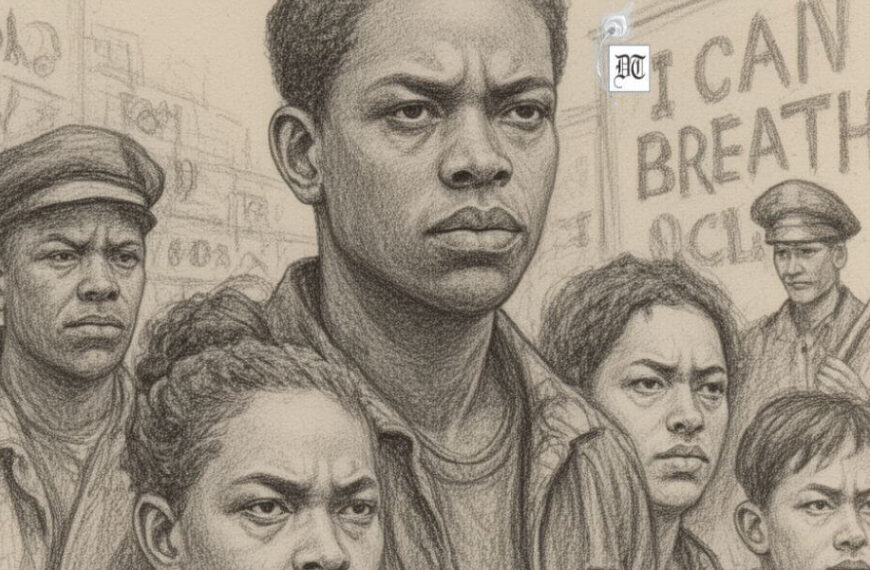
Picture from sketch

Dr Dhiraj Sharma is a faculty member in the Department of Management Studies at Punjabi University, Patiala. He has authored fourteen books and published over a hundred research papers, articles, and book-chapters in reputed national and international journals, books, magazines, and web portals. Beyond academia, he is a nature and wildlife photographer and a realistic and semi-impressionist painter.

 By
By
 By
By
 By
By