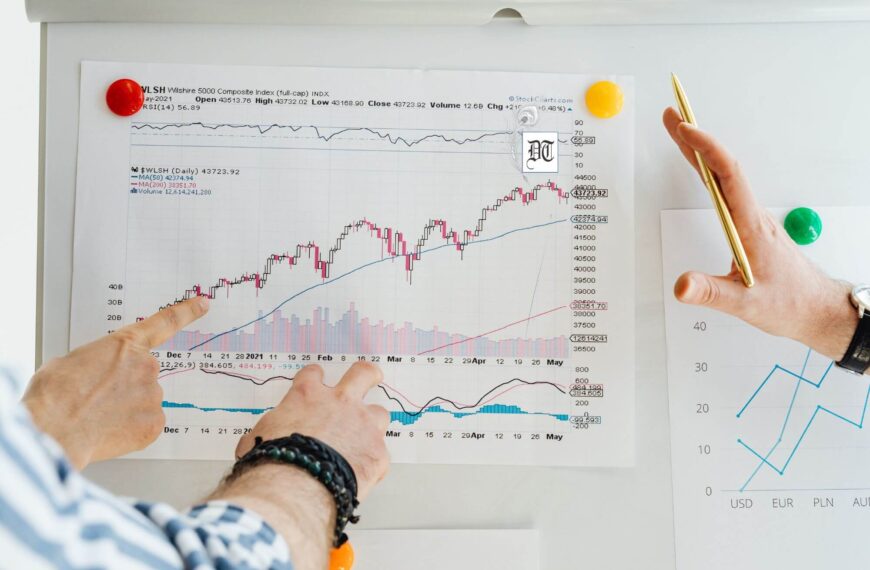

Dr Dhiraj on DifferentTruths.com explores safe assets like gold, debt, and liquidity amid March 2026’s equity market correction.

AI Summary
- Gold hedges equity losses with 8-10% avg. returns, ideal for diversification.
- Debt instruments offer stable 6-8% yields via bonds and funds.
- Liquidity ensures flexibility, funding emergencies without selling assets at lows.
In recent weeks, particularly through March 2026, equity markets have seen a noticeable correction, with benchmark indices such as the Nifty 50 and Sensex declining by roughly seven to nine per cent from their recent highs. Such phases serve as a reminder of how quickly market sentiment can shift. For investors who track their portfolios closely, even these routine corrections can feel unsettling. It is during such moments that a familiar question begins to surface: where is safety? While equity markets are inherently prone to short-term fluctuations, certain assets are perceived to offer relative stability. These are commonly referred to as “safe assets”, not because they are entirely risk-free, but because they tend to behave more predictably during periods of uncertainty.
For Indian investors, three such categories repeatedly come into focus—gold, debt instruments, and liquidity. Each serves a different purpose. Understanding how they behave, when they help, and where their limitations lie is essential before relying on them.
Gold: The Psychological and Financial Anchor
Gold has held a unique place in Indian households for generations. Beyond its cultural significance, it has historically acted as a financial stabiliser during uncertain periods. When global risk rises, investors across the world often move towards gold, which tends to support its price.
Over the last two decades, gold has delivered average annual returns in the range of eight to ten per cent in rupee terms, though these returns have not been consistent year to year. There have been phases—such as 2013 to 2018—when gold delivered relatively muted returns, followed by periods like 2020 when it rose sharply amid global uncertainty.
One of gold’s key roles is not high return generation but portfolio protection. It often behaves differently from equities. When stock markets fall sharply, gold may either remain stable or rise, helping offset losses elsewhere. A practical example illustrates this. During periods when equity markets corrected significantly, investors holding a small allocation to gold often saw less overall portfolio decline compared to those fully invested in equities. This balancing effect is why financial planners often recommend a modest allocation to gold rather than a large concentrated exposure.
However, gold is not without limitations. It does not generate income like interest or dividends. Its returns depend entirely on price movement. Over very long periods, equities have historically outperformed gold. This is why gold is best viewed as a stabiliser, not a growth engine.
For modern investors, gold is also accessible in multiple forms—physical gold, Gold ETFs, and sovereign Gold Bonds. Each comes with its own features, but the underlying role remains the same: diversification and protection.
Debt Instruments: Stability with Structure
Debt instruments form the backbone of stability in most portfolios. These include government securities, treasury bills, high-quality corporate bonds, and debt mutual funds. Unlike equities, where returns depend on business performance, debt instruments offer predictable income in the form of interest.
In India, government bonds are considered among the safest financial instruments because they are backed by the sovereign. Their returns are typically lower than equities but more stable. Over long periods, high-quality debt instruments have delivered returns broadly in the range of six to eight per cent, depending on interest rate cycles.
Debt plays a critical role in reducing overall portfolio volatility. When equity markets fluctuate, debt investments usually remain relatively stable. This stability provides psychological comfort and financial balance. However, debt is not entirely risk-free. Its performance is influenced by interest rates and inflation. When interest rates rise, existing bond prices may fall. Similarly, if inflation rises significantly, the real return from debt may decline.
For example, if an investor holds a fixed-income instrument yielding six per cent while inflation is also around six per cent, the real purchasing power of that return is effectively neutral. This is why debt alone cannot build long-term wealth, but it can preserve capital and provide stability. Debt mutual funds also come in different categories—liquid funds, short-duration funds, and longer-duration funds—each with varying levels of interest rate sensitivity. For conservative investors, shorter-duration and high-quality debt instruments are generally more suitable.
Liquidity: The Most Underrated Safety Net
Among all “safe assets”, liquidity is often the least discussed and the most misunderstood. Liquidity simply means having access to money when you need it, without having to sell long-term investments. This may take the form of savings accounts, fixed deposits, or liquid mutual funds. While returns on these instruments are relatively low, their importance lies not in return but in flexibility.
A simple real-life situation highlights this. Suppose an investor faces an unexpected expense during a market downturn. If all their money is invested in equities, they may be forced to sell investments at depressed prices. However, if they have maintained a separate liquid reserve, they can meet their needs without disturbing long-term investments.
Financial planners often suggest maintaining an emergency fund equivalent to at least six months of expenses. This buffer ensures that temporary financial needs do not disrupt long-term investment plans. Liquidity also provides what is sometimes called “dry powder”—the ability to invest when opportunities arise. During periods of market correction, investors with available liquidity are in a position to deploy capital, while others may be constrained.
How Do These Assets Work Together?
Each of these assets—gold, debt, and liquidity—serves a different role. Gold provides diversification and acts as a hedge. Debt provides stability and predictable income. Liquidity provides flexibility and financial security.
A balanced portfolio does not depend entirely on any one of these. Instead, it combines them thoughtfully alongside equity exposure. For example, a moderate investor may hold a portfolio where equity drives long-term growth, debt reduces volatility, gold adds diversification, and liquidity ensures short-term stability. The exact proportion depends on individual risk tolerance and life stage.
Data over long periods shows that portfolios with a mix of assets tend to perform more consistently than those concentrated in a single category. They may not deliver the highest returns in the best years, but they often avoid the sharpest losses in difficult years.
Common Mistakes to Avoid
One of the most common mistakes investors make is shifting entirely into so-called safe assets during uncertain times. This often happens after markets have already fallen, meaning investors exit growth assets at lower prices and enter defensive assets at relatively higher valuations.
Another mistake is overestimating safety. No financial asset is completely risk-free. Gold can be volatile, debt can be affected by inflation and interest rates, and cash can lose value over time due to rising prices. Safety, therefore, should not be understood as the absence of risk but as the management of risk.
Balance, Not Reaction
Safe assets play an essential role in investing, but their effectiveness depends on how they are used. They are most useful when they are part of a planned allocation, not when they are used as a reaction to market events.
Investors who build balanced portfolios in advance often find that they do not need to make drastic changes during uncertain periods. Their portfolios are already designed to absorb shocks.
The Final Words…
In investing, safety is not found in any single asset but in how different assets work together. Gold may protect, debt may stabilise, and liquidity may provide comfort—but it is balance that ultimately creates resilience.
Picture design by Anumita Roy

Dr Dhiraj Sharma is a faculty member in the Department of Management Studies at Punjabi University, Patiala. He has authored fourteen books and published over a hundred research papers, articles, and book-chapters in reputed national and international journals, books, magazines, and web portals. Beyond academia, he is a nature and wildlife photographer and a realistic and semi-impressionist painter.


 By
By
 By
By