
Akash’s story, exclusively for Different Truths, is about 1970s Calcutta, amidst the Naxalite movement. Did Khogen aid a comrade’s escape while facing imminent arrest?
It was winter, four in the dawn. Khogen sitting alone in the party office, smoking a cigarrete and scribbling something on a piece of paper. Suddenly, there were three knocks on the door, counted distinctly.
Thak…Thak… Thak…
Khogen understood immediately- this was not the police; it was one of their own. He opened the door. Haru entered, looking utterly terrified. Khogen could sense that something bad has happened. Preparing himself for the worst, he asked, ‘’ What happened, Haru? How did you get into this condition?’’
Despite the chill of January’s winter, a cold sweat was running down Haru’s spine. Wiping his face with a handkerchief, Haru said, ‘’Bad news, Guru. Charu da has been arrested.’’
It was the 1970s. The Calcutta Police were relentlessly hunting down Maoists. Anyone connected with the Naxalite movement was arrested and often killed. A shoot-at-sight order was in effect against the Naxalites. At a time when capitalism was rearing its head, the Naxalites had begun their struggle for the rights of farmers. The Naxalite movement had become a fight for the farmers’ freedom.
This year was 1972. Charu Majumdar had just been arrested.
Khogen turned back. Just yesterday, Charu da had been sitting in that chair. With a sigh, Khogen looked at Haru.
“We’re no longer safe here, Haru. You can’t stay here anymore. Yesterday, Charu da said the same thing.’’
Haru, still sweating, asked, ‘’What do we do now, Guru?’’
“Run away, Haru. I’ll make the arrangements.’’ Khogen said, coldly and decisively.
Haru, surprised, said, “No, Guru. I can’t leave you alone.’’
Losing his temper, Khogen snapped, “Don’t argue! Do as I say. You can’t endure their torture. You’re still young; you have a bright future ahead of you.”
Taking a deep breath, he continued, “Besides, when we’re gone, it’ll be up to you to carry forward this movement. That’s why you must go.”
Haru broke down at these words. Unable to control his tears, he slumped into a chair and cried bitterly. “Will this ever end, Guru? How long will this go on?”
Khogen, struggling to keep his own emotions in check, approached Haru and said, “Why are you crying, comrade? It will end-when the farmers get their rights, our fight will be over. Don’t lose hope.” Saying this, he handed two papers to Haru.
Wiping his tears, Haru took the papers. And asked, “What are these, Guru?”
“This has an address-my maternal uncle’s house. I’ve written to him about everything. He’ll ensure you to reach Bihar safely. From there, he’ll guide you on where to go next,” Khogen explained.
Haru had been listening intently. Then, pointing to an envelope, he asked, “And what’s inside this, comrade?”
Khogen, who had been looking into Haru’s eyes until now, looked away. He said, “Give this letter to Malati before you leave.”
Khogen and Malati had been in love since college. Malati’s capitalist father refused to let her marry Khogen solely because of his involvement in the Naxalite movement. Yet, their love had endured. They would meet secretly.
Haru left shortly thereafter. Khogen suddenly remembered one such secret meeting. Even in the chill of winter, the memory brought warmth to his heart.
Holding Malati’s hand and looking into her eyes, he had said, “Just a little longer, Malati. We’ll win this fight. The farmers will get their rights. After that, we’ll run away somewhere far and get married.”
The thought brought a smile to Khogen’s face. But he couldn’t savour it for long. Suddenly, the door was broken down by a group of policemen. Yes, it was Inspector Ranjit Guha.
Pointing a gun at Khogen, the inspector smirked and said, “Well, comrade, your game is over. Come with us.”
Without a word, Khogen stood up, grabbed the capsule hanging from the locket around his neck and swallowed it. Potassium cyanide. Instant death.
Inspector Guha and his entire special team were stunned. No one had anticipated such a turn of events.
Malati eventually received Khogen’s letter. It contained only a few lines:
“Dear Malati,
I hope you are well. It’s been so long since I last saw you. I miss your face and the beautiful moments we shared.
What I’m about to say might hurt you, but I have no choice. We might win this fight, but it may not happen now. Perhaps I’ll never see you again. Stay well. I’ll love you forever. Marry someone your father chooses- someone you’ll like. Don’t wait for me, okay?
With all my love,
Your comrade, Khogen.”
As Malati read the letter, she broke down. Tears didn’t fall from her eyes- perhaps she had expected this all along.
The next morning, the newspaper carried the headline:
“Charu Majumdar Arrested; Khogen Sen Commits Suicide with Potassium Cyanide.”
Below it was another headline: “Renowned Businessman Ranjan Dasgupta’s Daughter Malati Found Dead-Suspected Suicide.”
Today, fifty years have passed. But no one ever knew that another comrade had died that day-not just for love, but for the rights of the farmers.
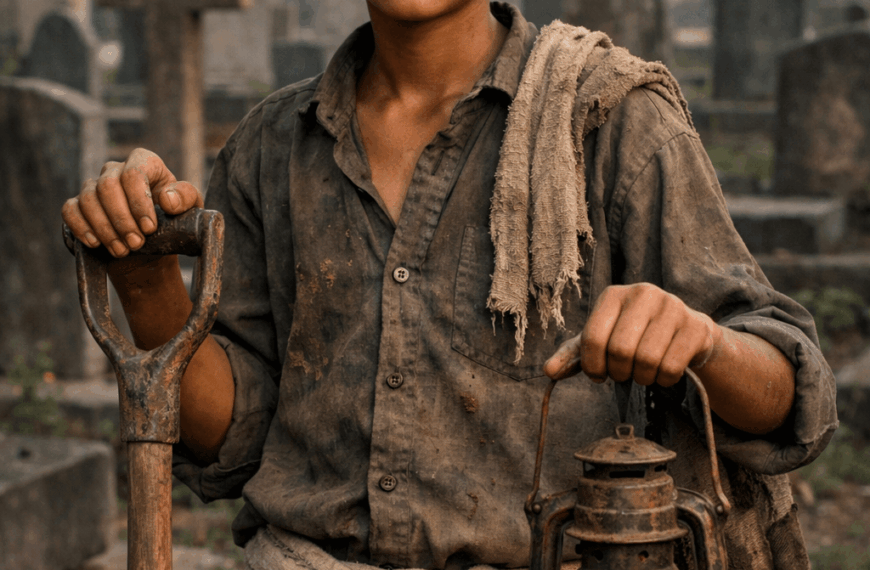
Picture design by Anumita Roy

Akash Paul, a renowned criminologist, theologian, and demonologist, and the author of two globally acclaimed textbooks, pioneered post-crime analysis in criminology and comparative religious studies in theology. His expertise spans criminal profiling, sexual offenses, Christianity, and religious history, with notable contributions to each of these fields. An insightful critic of contemporary society, he also writes poetry, short stories, and novels, blending creativity with profound societal analysis.
 By
By
 By
By

 By
By
Khub vlo hyeche re story ta…erom r o onek story lekh😊
Beautiful storyline 💗khub khub khub bhalo hoyeche 😌❤️
Another exciting, heart wrenching story my son…. 🍬❤️
Keep goin….
Golpo ta pore kende fellam 💗💖💖 khub sundor hoyeche golpota…emon aro onek golpo lekh💕💕💕💕