
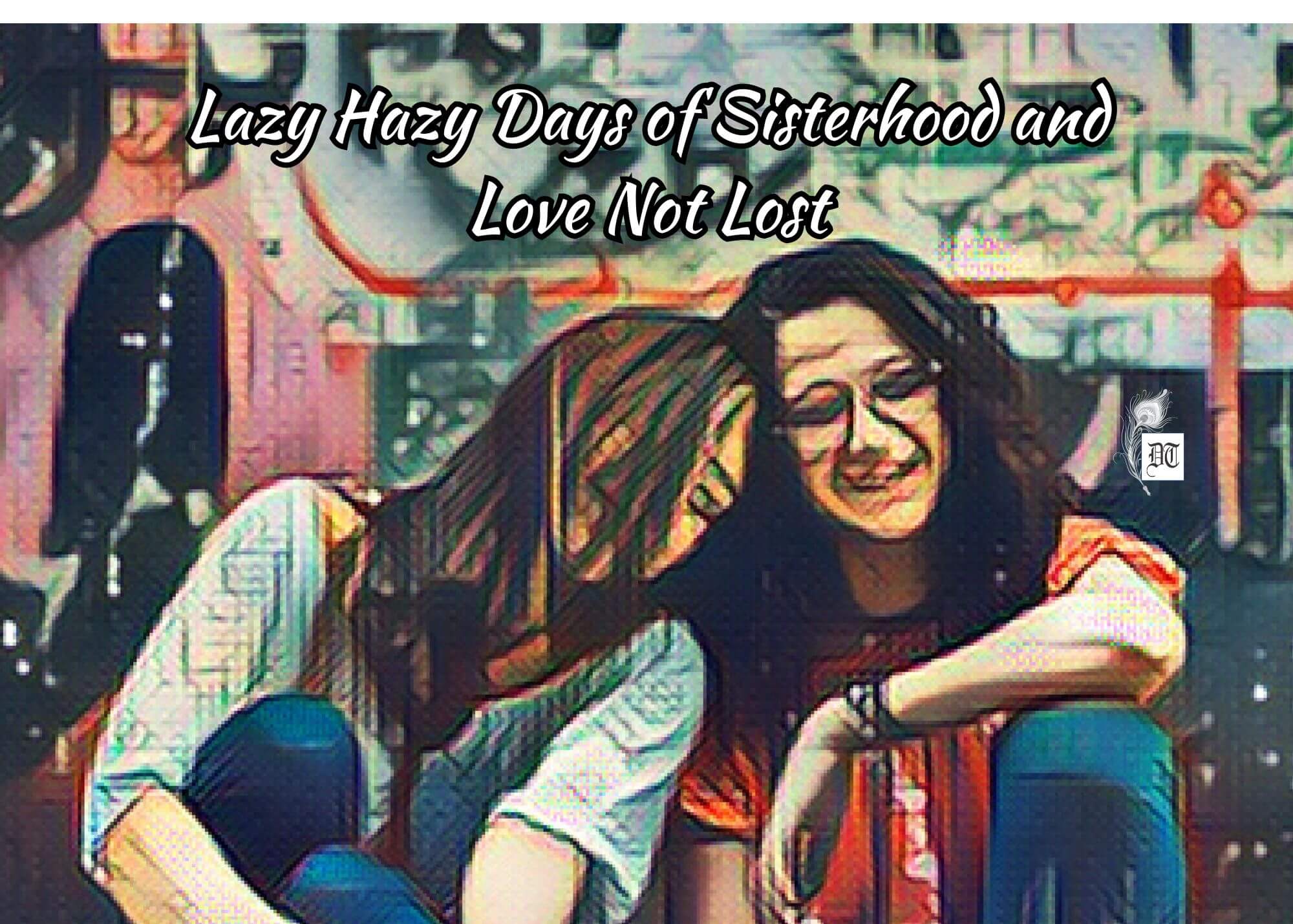

Ruchira shares her childhood memories with Kolkata cousins, highlighting their support and happiness, but also the decline in sibling bonding in adulthood and more, exclusively for Different Truths.
The best part about my childhood and growing up was the presence of many “cousins,” who are also known as the first friends that an individual acquires in his or her life. I hail from a quintessential joint family. However, owing to my Dad’s transferable job, I have lived in many places across the country. Nonetheless for me, “home” was always the family house located in a suburb of Kolkata. My father’s brother had three daughters—they have always been closest to me. Although there were boys in the family as well, I will keep them out of the ambit of this sorority.
My sisters were Dolly, who was closest to me in age, Molly five years my junior, and Polly the youngest one who was almost a decade younger. It was sheer good fortune for me that all of them were always (and still are) devoted and loyal to me. Loving and caring by nature, they used to be agog with excitement when we went home, generally during summer and occasionally winter vacations.
As I write this fragment, memories flood my mind, some clear and others blurred.
As I write this fragment, memories flood my mind, some clear and others blurred. Hence, they may appear a tad disjointed and chaotic.
My earliest memories are of our ancestral family home, which had an adjoining pond. It was accessible to our family and neighbours as well. As I never learned to swim, I would chill out in the cool green waters (like a buffalo) while the siblings swam, splashing madly about. There were numerous trees around the house, but our particular favourite was a sturdy guava tree. We would often climb up halfway and sit on the branches. our legs dangling and chattering like simians until an elder would come out and holler for us to climb down.
We made ovens with bricks, baked mud pies, cooked with toy utensils, pretended to be doctors using toy kits, and held weddings of rag dolls and so forth. During those blissful days, our standard breakfast comprised piping hot plain rice doused in dollops of ghee, a little salt and aloo bhaja (fried potatoes) or mashed potatoes, which tasted so heavenly!
Polly was an expert in pinching cigarettes from her dad’s closet…
Years passed by… we stepped into adolescence, learnt of birds and bees, grabbed forbidden (read adult books) on the sly and shared ideas amongst ourselves. Polly was an expert in pinching cigarettes from her dad’s closet, which we smoked gleefully. Till now I can’t fathom whether kaka (uncle/chacha) discovered the theft. Even if he did, he was generous enough not to react.
Our dearest confidante-friend-philosopher-guide being thamma (daadi/ paternal grandma) we frequently went into huddles with her, sharing giggling, cracking jokes, and indulging in girly talks. It was she who protected us from the wrath of our guardians when we got into mischief.
… Molly, who was the most pampered among us, threw tantrums often and landed me into soup.
Talking of mischief, Molly, who was the most pampered among us, threw tantrums often and landed me into soup. Once when I took a tiny pinch of rabri from her plate she began howling and threw the saucer on the floor; it fell into pieces. I got a dressing down from the adults. Another time while she fought with me over a fancy hairclip, my Dad noticed and tweaked my ear. Ahh, the joys of being the oldest kid in the family!
Many a time escorted by adults we the foursome visited museums zoos, and parks, besides homes of our extended family members, friends of the family and such like – to attend socio-religious ceremonies.
One of our favourite haunts was the sprawling rooftop terrace of the house shaded by coconut, palm and jamun (java plum) trees; there lolling on mats or groundsheets we chased our dreams hopes aspirations, shared joys, and sorrows… songs, dance, and mimicry were components of such sessions.
During these family vacation-cum-reunions Dolly would take me along during her ‘paara berano’ sprees.
During these family vacation-cum-reunions Dolly would take me along during her ‘paara berano’ sprees. This is a practice common among Bengalis: you stroll into houses in the neighbourhood without prior information, hold a tiny chit-chat and then leave. Luckily the homes she took me to were inhabited by distant relatives or family friends; hence I was always warmly received.
One year during Xmas break the ‘four sisters’ went shopping on their own. On the way home Dolly stubbornly refused to hire two rickshaws So we clambered up into one. Dolly and I were slightly overweight. It was no surprise that barely a few yards from home the rickshaw turned turtle. The long and short of it was Polly had a concussion and blacked out; Molly had a cut on her temple which was bleeding; miraculously the ‘fatso’ s escaped with minor bruises and bumps. Upon reaching home we found Kaka in a thunderous mood; he fumed and fretted, blasting me for my callousness and irresponsible behaviour. I shall never forget the incident.
The last time the foursome was together was on Dolly’s wedding day.
Alas, all good things must come to an end. So also, our affectionate, sentimental bonding. The last time the foursome was together was on Dolly’s wedding day. Thirty-five years ago! Barely six months later, she died under mysterious circumstances (but that’s another story). A lovely flower nipped in the bud!
Picture design by Anumita Roy

Born in Guwahati and raised across Delhi and Punjab, Ruchira Adhikari Ghosh is an alumna of Sacred Heart Convent, Ludhiana. She holds a master’s degree in English literature from Punjab University, Chandigarh, and a postgraduate diploma in Journalism. With nearly 25 years of experience in print, web, and television media, she has carved a niche as a feature writer. Her writing focuses on women’s issues, food, travel, and literature, reflecting both versatility and depth.


 By
By
 By
By
 By
By
 By
By