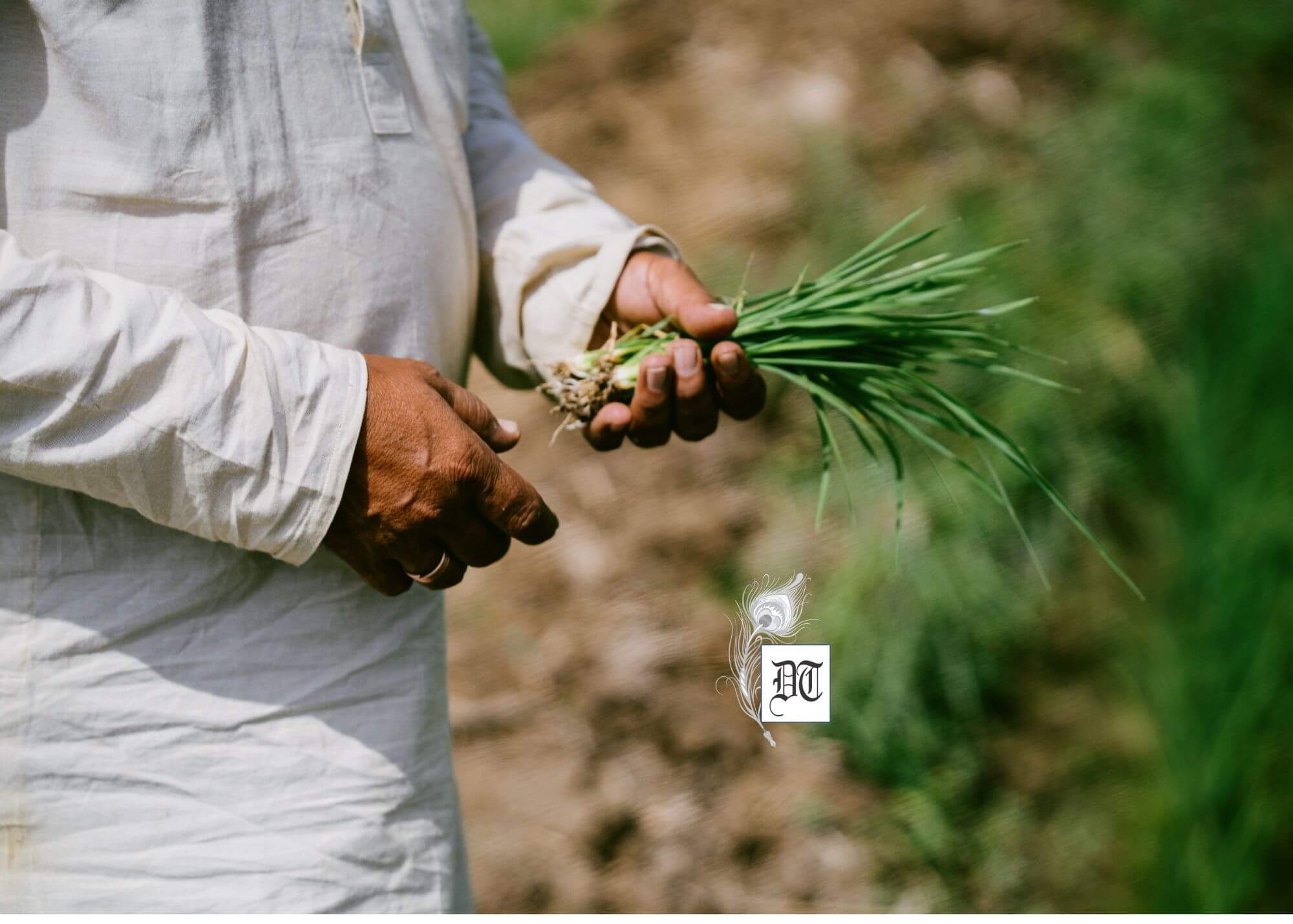

Shyamal argues about the US-India tariff war, highlighting the potential for farmers to face economic challenges due to past food scarcity, exclusively for Different Truths.
A proverb in rural Bengal says, “Bador piriti balir baandh, Khane hathe dari khanekchand” (rapport with a superior is like a sand embankment—while honeymoon, while entrapment)—very aptly describes the current tug-of-tariff-war with Uncle Sam. Most of our senior citizens may prefer to forego the dark past, days in the 60s when our country faced acute food scarcity and relied heavily on American wheat imported under US PL480. But for liberal terms of import, the inferior quality of food grains created fierce outcries throughout the country. Due to widespread unrest against PL 480, India eventually scrapped the deal, but in hindsight, our country did step towards food sufficiency with projects resulting in the Green Revolution, as called.
Indian foreign trade, barring the service sector, largely consists of agricultural produce, and to the USA, our exports include rice, sugar, onions, fruits, and wheat principally, along with other items from our farmland estimated at around US$ 48 billion during 2023-24, of which basmati rice shares over $300 million in value. The point of conflict initiated by the Trump administration has been to remove disparity in tariff imposition rates between the two countries. India has been continuing to impose an import tariff of around 37% on American goods, whereas the US, as the most preferred nation, charges 5% to 5`20 % on India – the disparity, according to President Trump, is not in the interest of his MAGA programme, and India needs to address it or else faces reciprocal tariffs on its exports.
Much ado about trade impact has been whirling around diplomatic tables, but no positive response so far sans short deferment as offered to Canada and Mexico in line. Despite the periodical embargo imposed on exports of agricultural products, an air of uncertainty now looms large as a large section of exporting farmers would be hit hard. Already within the country, farmers are now on the warpath for better pricing and support, albeit under the protectionist umbrella of the government, to continue.
It reminds the well-known Stolper-Samuelson remedy suggesting that countries rich in capital prefer trade liberalisation more and more, whereas labour-abundant nations move towards protectionism in the context of the political economy of international trade. The determined imposition of a cent percent tariff on agricultural products from India ought to wipe off favourable trade balances we enjoyed from exports in this sector, notwithstanding the consequential fall in the income of export-engaged farmers and allied farm activities. As of now, trade negotiations are in progress on bilateral terms, including tariff issues.
In retrospect, the odds and adversities faced while importing under PL480 and huge national protests in the American administration culminated in the process of food sustenance, heralding the Indian Green Revolution. Since then, many a page unfurled in the saga of the Indian economy.
No denying the fact our agrarian arena reforms – improving farming efficiency with better productivity and profitability; introducing computer-based technology and infrastructural changes; uplifting the lives and livelihoods of farmers with special initiatives to marginal and debt-trapped sections; supporting against market disadvantages and free market sharks; and finally enacting legislative statutes post-forum deliberations with all stakeholders with open and free dialogue to iron out grey areas from repealed farm laws – are long overdue.
The world is no doubt fast rewinding power politics where food is a sharp weapon. As suggested by Prof Bhagwati, an open economy experiencing expansion of productive capacity due to economic growth may become worsened if its terms of trade deteriorate sufficiently to offset benefits of economic growth – calling it immiserating growth. The point here is that roads diverged in international trade deals, but which way we choose would make a difference in strategy.
Picture design by Anumita Roy

Shyamal Mukhopadhyay writes bilingual poems and stories, which get published in magazines like Tuck, Indian Periodicals, Spillwords and many other national and international anthologies. He was a bank executive with a short spell initially as lecturer in economics. His college days` passion to write for Little Magazines had so long been latent to find ways out post-retirement. Jointly authored with daughter Dr. Paromita a book of poems, Sylvan Fragrance.


 By
By
 By
By
 By
By