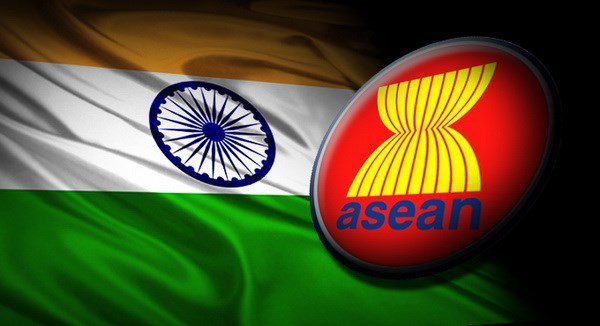


In September 2009 India had signed a free trade agreement (FTA) with the ASEAN to promote economic ties. It was seen as a major foray into a formidable regional trade block. Officials are working on the re-activation of the ASEAN-India Business Council (AIBC), the holding of the ASEAN-India Business Summit (AIBS) and an ASEAN-India Business Fair (AIBF). While FTA may benefit India, it seems to benefit the ASEAN countries more, analyses Navodita, our Associate Editor, in the weekly column, exclusively for Different Truths.
External Affairs Minister Sushma Swaraj was on a five-day visit to Thailand, Indonesia and Singapore to boost economic ties with India with the three founding member-states of the ASEAN (Association of Southeast Asian Nations). It was viewed as a part of India’s Act East policy. India is ASEAN’s seventh largest trading partner.
As a way to promote ties, Singapore’s Deputy Prime Minister Teo Chee Hean said his country could 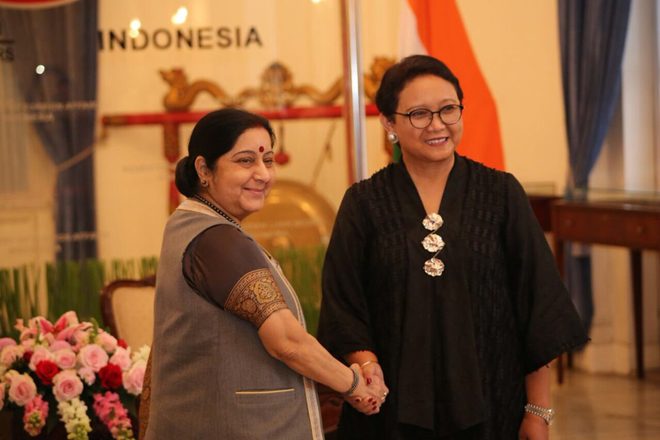 provide a good base for Indian companies in civil aviation, trading and as a financial hub. Sushma Swaraj also inaugurated, along with Foreign Minister Retno, the ASEAN India Think Tanks Forum. This Forum brings key thinkers of India and the ASEAN countries under one roof to brainstorm on pressing challenges and future orientation of India’s engagement. A press statement issued by MEA said that ASEAN region is a key priority of India.
Let us remind the readers that earlier in November 2017 PM Narendra Modi had addressed the ASEAN Business & Investment Summit at Manila highlighting trade and inclusive growth as the key themes of the visit. He even focused on entrepreneurship and increasing land, sea and air connectivity to the region from India. PM spoke about boosting tourism between the two countries and introducing electronic visa system to promote it.
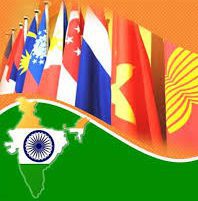 The ASEAN comprises Brunei, Cambodia, Indonesia, Laos, Malaysia, Myanmar, the Philippines, Singapore, Thailand, and Vietnam. In September 2009 India had signed a free trade agreement (FTA) with the ASEAN to promote economic ties. It was seen as a major foray into a formidable regional trade block. Officials are working on the re-activation of the ASEAN-India Business Council (AIBC), the holding of the ASEAN-India Business Summit (AIBS) and an ASEAN-India Business Fair (AIBF). While FTA may benefit India, it seems to benefit the ASEAN countries more. Before the agreement was signed, V.S. Achutanandan, then chief minister of Kerala, protested before PM Manmohan Singh against the FTA. Kerala is an important exporter in the national export of plantation products. It fears that cheap imports of rubber, coffee and fish would lower domestic production, adversely affecting farmers and ultimately its economy. Kerala had already experienced a flooding of its market with inexpensive imports under SAFTA of 2006. Cheap coconuts from Sri Lanka and palm oil from Malaysia had hindered Kerala’s coconut cultivation.
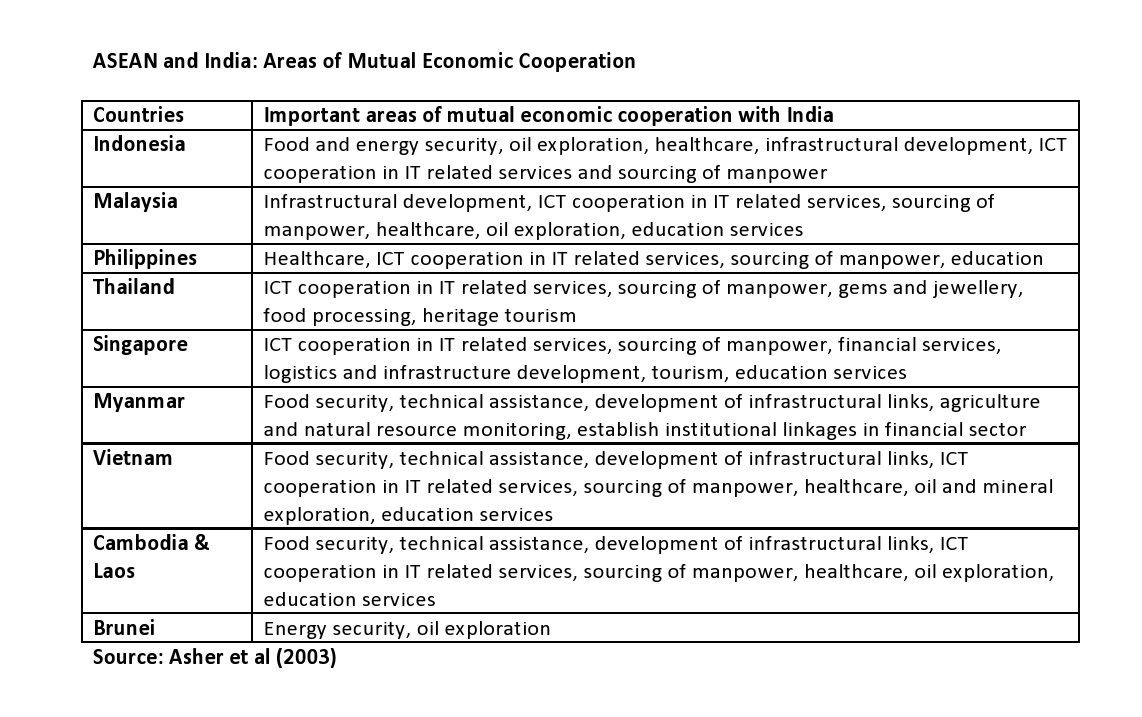
Moreover, there have been some limited Indian investments in ASEAN countries, some dating as early as the 1960s, their presence continues to remain marginal in aggregate terms. Between 1995 and 2001, there is a distinct upward trend in investment from India to ASEAN regions until these economies went into a crisis in 1997-98, after which there has been a declining trend in inflows. Singapore has generally attracted the bulk of Indian FDI flowing into ASEAN. A major reason for such paltry levels of Indian investments in these countries is the inability of Indian diaspora here to attract anything substantial. India now has the capacity, resources, and competitiveness to contribute to ASEAN’s inward FDI inflows. However, ASEAN countries need to be proactive in attracting Indian companies.
Regarding manpower flows, there are no available data detailing the extent of manpower flows between 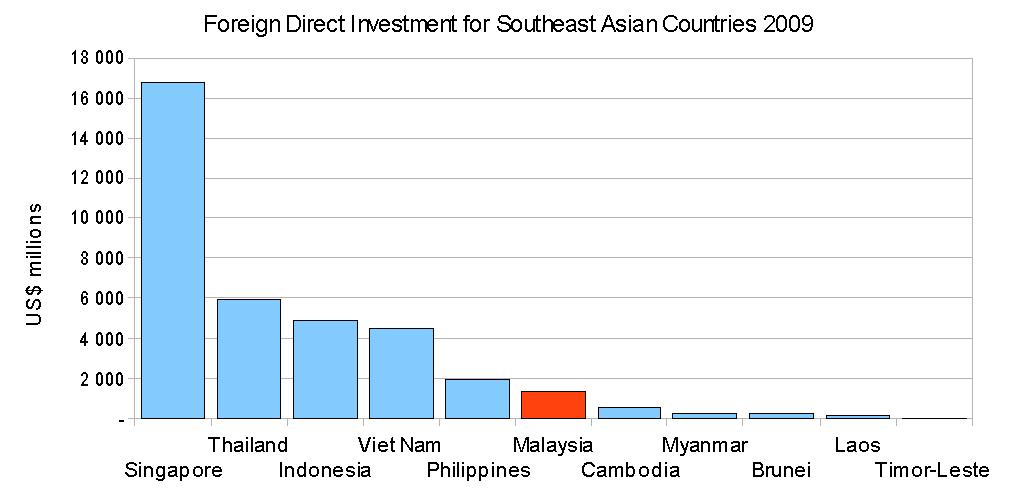 India and ASEAN. Even though skilled labour from India has been helping the US, the UK and some other western European countries offset their shortages of such workers, about thousands were residing in Singapore and Malaysia a decade ago. Indian professional and technical manpower are contributing positively to sustain the competitiveness of many ASEAN countries. There still remain many areas where there is scope for improvement of economic ties between India and ASEAN. Food security is one; cooperation in the civilian nuclear power sector for energy is also feasible. India has also expressed its willingness to assist less developed ASEAN countries in enhancing their capacity to apply IT (Information Technology). Myanmar is a strategically important geo-political ASEAN country to develop ties with for India. The main emphasis with them is developing road and banking links.
Ahead of the Republic Day where the ten Heads of State of ASEAN countries will be present as chief guests, preparations should be made to sustain the dynamics of an emerging economic relationship to develop trust and confidence in each other and work towards a stronger Asian economic community.
©Navodita Pande
Photos from the Internet
#ASEAN #IndianAndASEAN #SusmaSwaraj #RepublicDay #ManPowerFlow #InformationTechnology #AgriculturalGrowth #ForeignDirectInvestmentPolicies #DifferentTruths

Navodita Pande teaches Mass Media and Communication and English to ICSE/ISC school in Assam. She also trains students in Yoga, gratitude and healing. She loves to paint, write and read as her pastimes. She lives in Assam with her daughter.

 By
By
 By
By