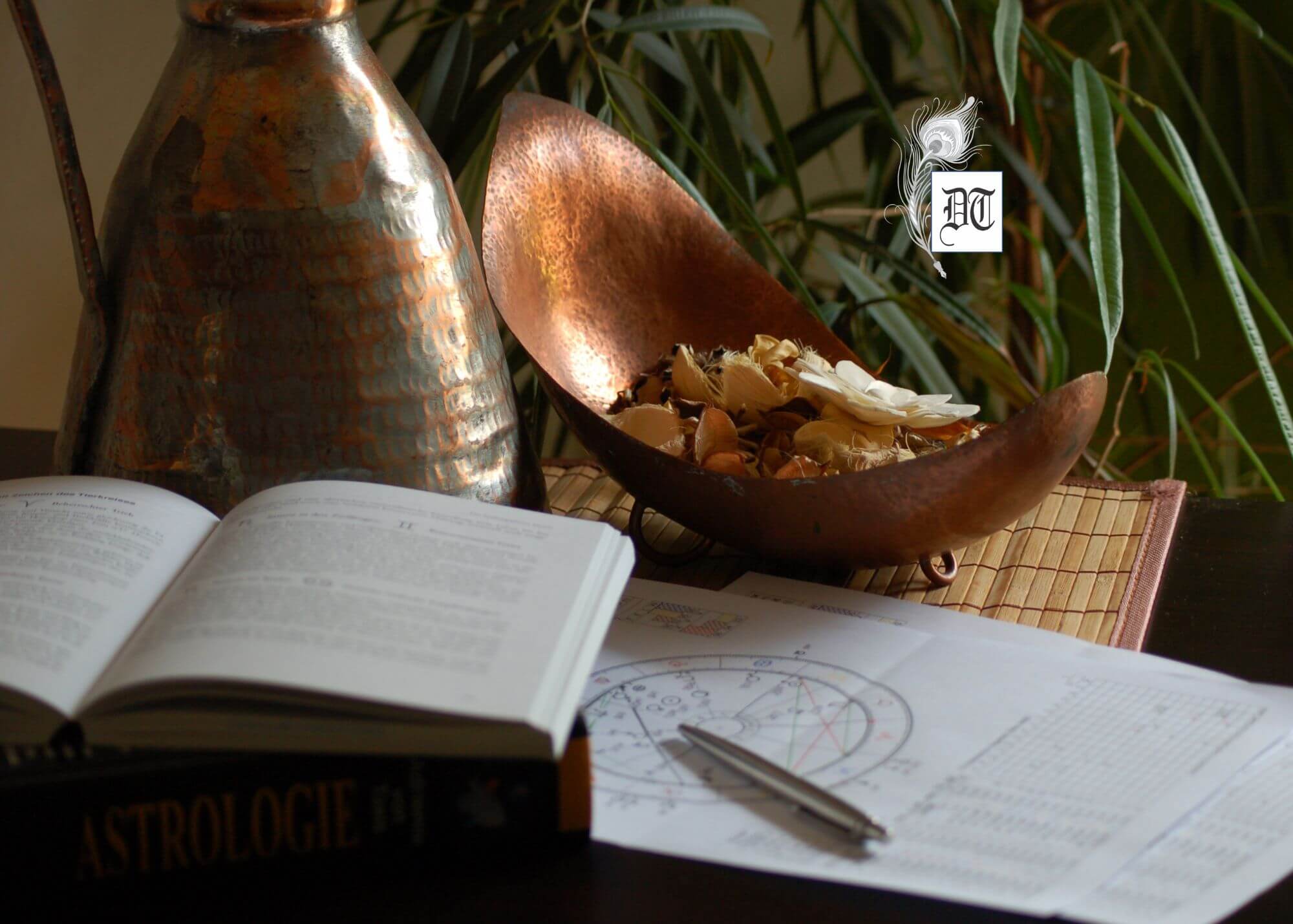
Dr Bhaduri suggests that astrology, a complex science, can be misunderstood, praised, or dismissed, but it holds significant potential as a life-guiding tool, exclusively for Different Truths.
The seemingly supernatural presents a double-edged sword of sorts. When it jibes with our unreasoning inner convictions, it gains our unquestioning acceptance, and few of us bat an eyelid whether or not it is founded on evidence. On the other hand, it is as easily and viscerally denounced when it fails to enchant our minds, again, with little regard to possible evidence. It is therefore that nothing of consequence to humanity must ever be left to human caprices. Astrology, with its highly complex regimen, becomes particularly vulnerable to such caprices, and little wonder that they condemn it to its contemporary fate.
Not very long ago, getting a horoscope made soon after the arrival of a new member would be a confirmed tradition among a large segment of Indian families. This, coupled with some obsolescent etiquettes and values that were inculcated since childhood, ensured that Jyotish was put to its most appropriate use—that of being a forward-looking, preventive, guiding tool for life’s eccentricities. Fast forward to today, and what remains of it is little more than flippant forecasting and quick, situational fixes, while ridicule and derision simmer within all along. And given spirituality’s increasingly populist hue, it isn’t rare to find Vedic Jyotish being trivialised by some of the very apostles of the Vedic tradition.
But how come this contemporary degeneracy? History’s been witness to numerous occasions where a new discovery was so resounding that everything around it had to be redefined per the terms dictated by it. This is what occurred with Newtonian physics when Einstein came along. The rampage of science resulted in everything that couldn’t be rewritten in its otherwise evolving language being buried under the rubble of superstition. And then came upon astrologers the demand of astrologers to retain and cater to a market whose increasing scientific scepticism couldn’t help with their aversion towards complexity. And the inevitable ramification of such a complexity aversion is that things that are scarcely understood get labelled as divination or an utter hoax.
The result is that very few attempts have so far been made to delineate and promulgate the pragmatic underpinnings of astrology, which one may expect to spur a mainstream attitudinal shift in its favour. Neither the market nor our parochial intellectual dispositions offer visible incentives in this direction. But there is a whole lot more than what meets the eye. None is a stranger to the consequences of picking the low-hanging fruit while slighting potentially baleful long-term implications.
Astrology can be thought to be predicated on complexity science, a paradigm used extensively across the hard and soft sciences to understand how complex systems function. A complex system comprises innumerable elements and processes interacting with one another in largely unpredictable ways. Absolute certainty and determinism are antipodal to such a complex system. Astrology deals with arguably the most complex system there is—that is, the world we inhabit – thus inflating the level of uncertainty inherent in its projections and dealings. It purports to help us navigate part of our complex and unpredictable world by indicating the probabilities that are likelier than others to manifest in our lives. Therefore, astrology is best suited as a tool that can prospectively inform life improvements rather than one aimed at oracular prophesying or retrospective fixes. Another corollary is that the real utility of astrology derives less from accurate but inconsequential prediction-making and more from the fact that it deals with some of the most crucial areas of life.
The bracketing of astrology with things like divination and the occult has dealt it irrevocable levels of damage over the entire modern scientific epoch. Astrologers and the wider lay community have a larger stake in fixing this than they realise, lest a one-of-a-kind tool for mapping life may never fulfil its raison d’être.
Picture design by Anumita Roy

Dr Soham D Bhaduri is a public health physician, researcher, Vedic astrologer, and inner change life coach. His work, spanning healthcare and spirituality, has appeared in The Lancet, BMJ, The Hindu, The Huffington Post, and more. Formerly Chief Editor of The Indian Practitioner for over six years, he is an advocate of existential monism. His rational approach to astrology blends philosophy and science, viewing it as a tool for navigating life through a balance of reason and intuition.